



Period Mahogany Box
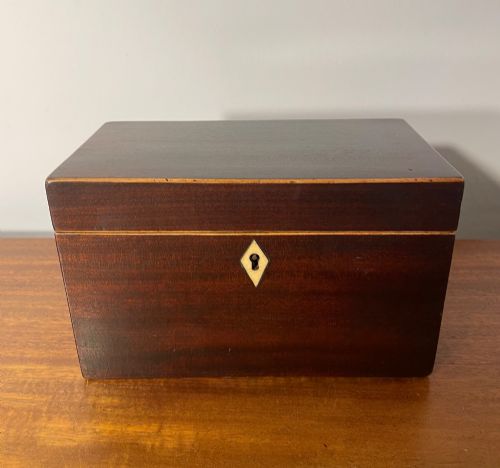
A period mahogany box brings practical elegance to a room, holding everything from tea and cutlery to personal correspondence.
Period Mahogany Box
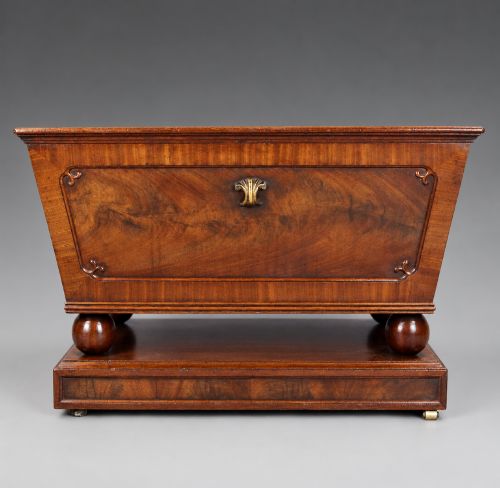
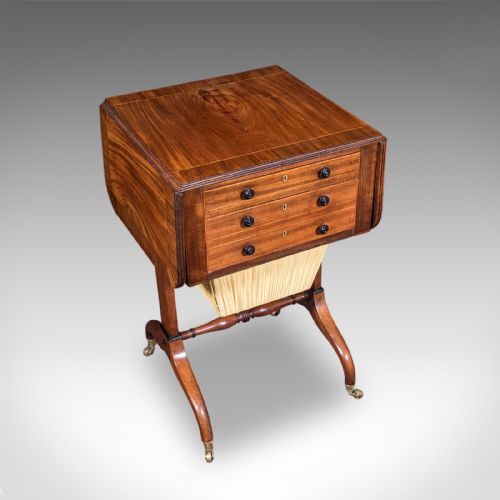
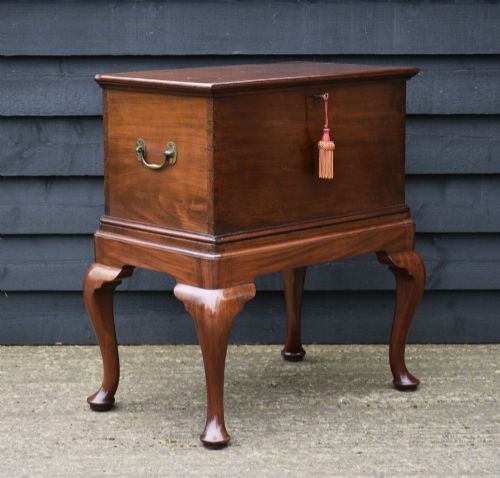
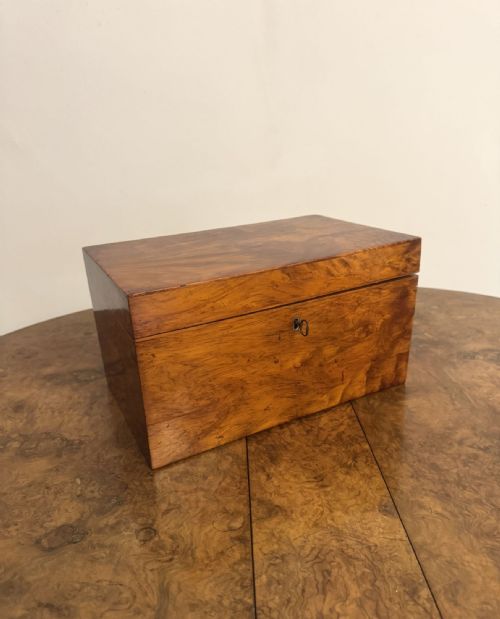
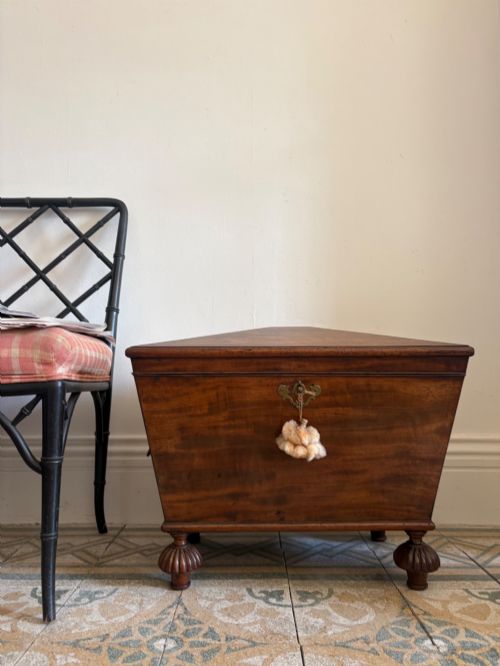
A period mahogany box encompasses a diverse group of fitted receptacles designed for domestic utility and storage across the eighteenth and nineteenth centuries. When searching for a period mahogany box, buyers encounter tea caddies, writing slopes, knife boxes, and larger sarcophagus cellarettes originating primarily from the Georgian, Regency, and Victorian eras.
The selection ranges from tabletop tea canisters with internal compartments to heavy cellarettes lined with lead for cooling wine. Many examples retain their original internal fittings, such as glass bottles, bone handles, or velvet-lined trays intended to protect precious contents.
Makers constructed these pieces to serve specific household functions, combining robust timber framing with neat internal carpentry. Whether formed as a compact stationery box or an elaborate campaign writing desk with brass banding, each item reflects the interior habits of its period.
How they were made
Cabinet makers utilised dense tropical timber, frequently selecting figured flame mahogany or Cuban mahogany to face visible surfaces. Panels were carefully joined and sometimes reinforced with boxwood and satinwood inlay or ebony stringing to frame the lids and drawers.
Hardware played a structural and decorative role, with heavy brass carrying handles, escutcheons, and paw feet fastened securely to the timber body. Internal compartments utilised thin secondary woods, glass inserts, and fitted velvet or fabric linings tailored to the exact dimensions of the object stored within.
A medical cupping set from the Strand sits among the tea caddies and wine coolers, ready for unexpected Victorian emergencies.
What varies in quality
Quality rests in the selection of the timber veneer and the precision of the joinery used to construct the carcass. Finer examples display symmetrical flame mahogany figuring across the entire lid and crisp, unrubbed crossbanding at the borders.
The complexity and preservation of the interior fittings also distinguish the pieces. Boxes that retain complete original interiors, such as lead liners in wine coolers or bone-handled jars in medical sets, demonstrate superior original design and careful ownership.
John Millikin·Thomas Hope
The Period Mahogany Box Glossary
- Cellarette
- A large freestanding or floor-standing box used for storing and cooling bottles of wine. These receptacles often feature lead linings and sarcophagus shapes.
- Writing slope
- A portable desk with a hinged, slanted lid that folds down to reveal a baize-lined writing surface and internal pigeonholes for stationery.
- Crossbanded
- A decorative technique where veneer strips are applied across the grain of the primary wood to form a contrasting border around the edge of a lid.
- Escutcheon
- A small protective plate surrounding a keyhole, commonly cast from brass or carved from bone and ivory.
- Sarcophagus
- A monumental coffin-like form with a rounded or stepped lid, popular during the Regency period for large wine coolers and tea caddies.
Period Mahogany Box: Frequently Asked Questions
What were tea caddies used for?
Tea caddies served as secure storage containers for expensive imported tea leaves, which were kept under lock and key in the parlour or dining room.
Inside, divided compartments separated different varieties of leaf, often accompanied by a small mixing bowl.
How do I distinguish Georgian from Regency boxes?
Georgian boxes tend to feature restrained proportions with straight lines, subtle mahogany veneers, and delicate brass handles. Regency examples lean toward heavier architectural forms like the sarcophagus, utilising bold brass paw feet and striking flame mahogany.
Both periods employ high-grade tropical timbers, but the Regency aesthetic favours classical antiquity and grander decorative presence.
Did these boxes travel with their owners?
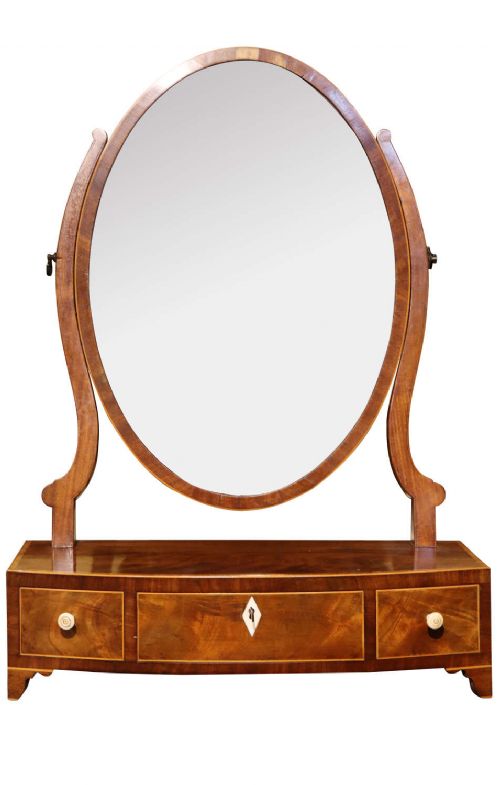
Certain types, such as campaign writing slopes and medical chests, were explicitly built for travel with flush-fitting brass handles and reinforced corners. Other forms, including knife boxes and dressing mirrors, remained static fixtures on sideboards and tables within the home.
Portable examples contain secure locking mechanisms to protect contents during transit.
How should I care for mahogany timber?
Keep wooden boxes away from direct sunlight and sudden changes in temperature to prevent the mahogany veneer from warping or splitting. Occasional light dusting and careful waxing preserve the natural sheen of the grain.
Avoid placing damp items directly onto the polished surfaces.