






Period Mahogany Bedside Cupboards
Period mahogany bedside cupboards bring practical storage and rich timber grain to a bedroom, shaped by Georgian, Regency and Victorian hands.
Period Mahogany Bedside Cupboards
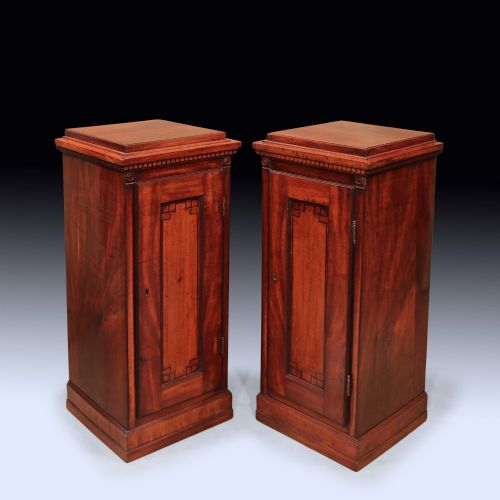
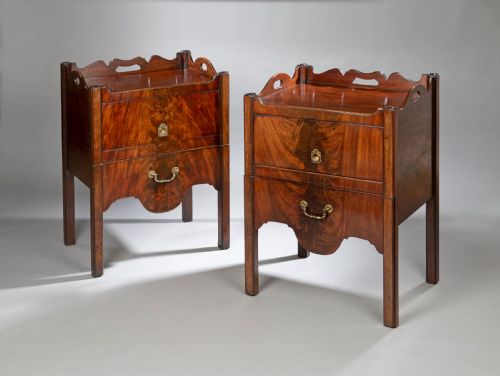
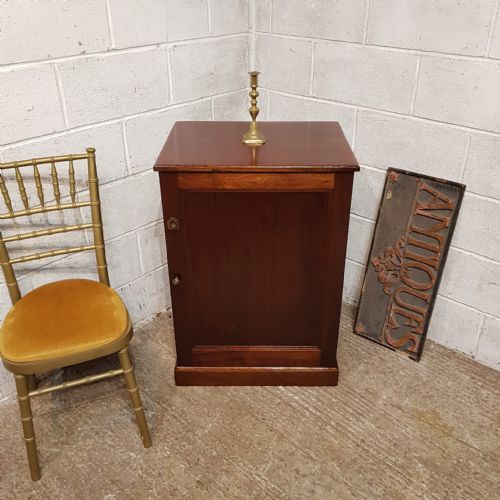
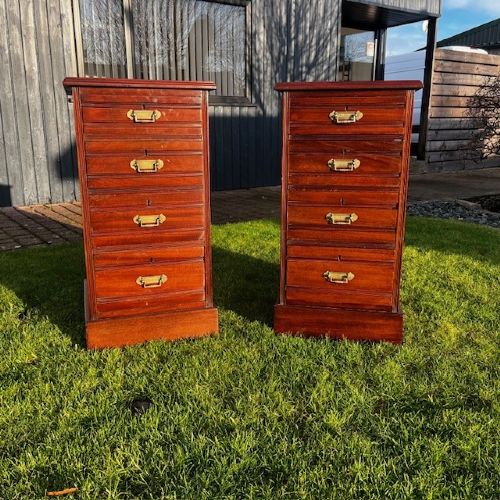
When you search for period mahogany bedside cupboards, you encounter a variety of forms including tray top commodes, pedestal cupboards, and cylindrical cabinets. These items span the Georgian, Regency, and Victorian eras, reflecting shifting domestic habits and tastes in bedroom furniture.
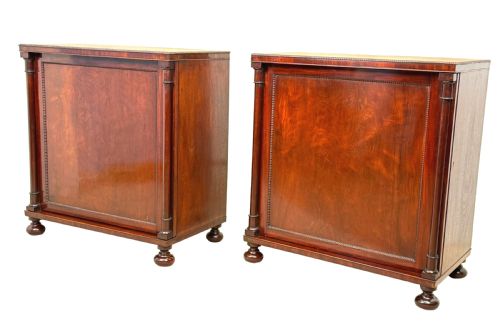
The versions most commonly met on this page are George III and Regency pieces executed in solid timber or flame mahogany veneers. Alongside single cabinets, pairs appear frequently, offering symmetrical storage for traditional bedroom schemes.
How they were made
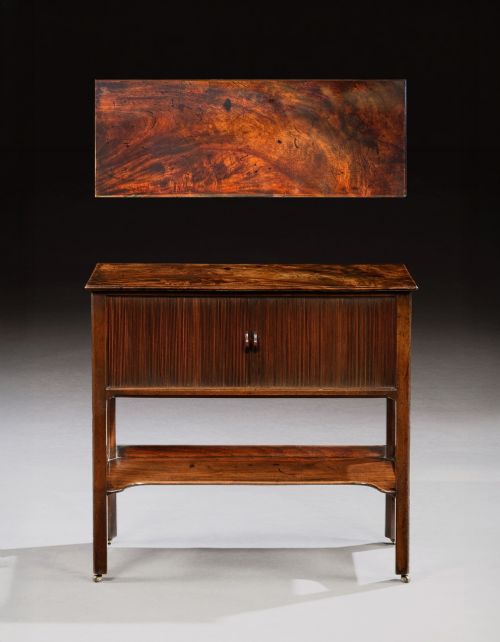
Cabinet makers relied primarily on mahogany, frequently selecting figured flame mahogany for door panels and drawer fronts to create striking visual movement. Secondary woods provided internal structure while brass handles, pulls, and mounts added functional contrast.
Specialised construction details define these pieces, such as tray tops designed to contain items safely and pull-out steps or architectural column designs. Joinery techniques varied from simple dovetailed drawers to curved cylindrical carcases that demanded advanced woodworking skill.
One exceptional Regency cabinet includes a pull-out step, offering early morning elevation for owners facing high-post beds.
What varies in quality
The calibre of a piece rests heavily on the selection of timber and the preservation of its original surface patination. Superior examples display carefully matched grain patterns across primary visible areas without disruptive repairs or heavy restoration.
Proportion and ingenuity of design further separate standard items from finer works. Pieces featuring intelligent additions like pull-out steps, tambour doors, or subtle serpentine fronts demonstrate a higher level of cabinet-making ambition.
The Period Mahogany Bedside Cupboards Glossary
- Flame mahogany
- A veneer cut from timber where the branch meets the trunk, producing a distinctive flickering flame-like pattern. It was widely utilised on prominent surfaces during the Regency period.
- Tray top commode
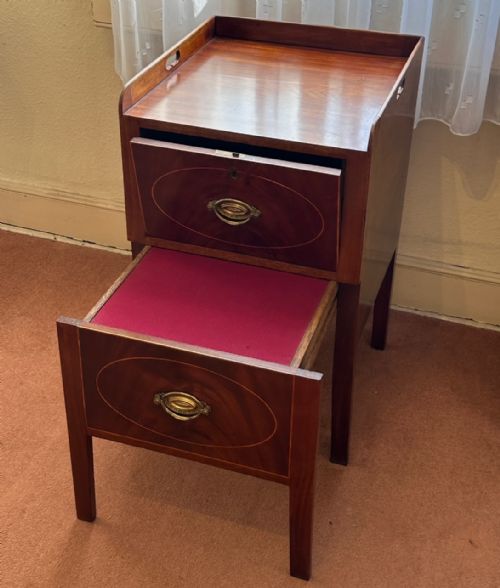
- A bedside cabinet featuring a raised gallery edge around the top surface to prevent items from rolling off. These often incorporate enclosed lower compartments or pull-out sections.
- Pedestal cupboard
- A tall, narrow cabinet designed to stand beside a bed, usually housing a single door that conceals interior shelving or storage space. They frequently adopt square or cylindrical proportions.
- Serpentine
- A front profile characterised by a gentle convex curve flanked by two concave curves. This contour requires precise hand-shaping and appears on select 18th-century cabinets.
Period Mahogany Bedside Cupboards: Frequently Asked Questions
What is a tray top commode?
A tray top commode is a compact bedside cabinet featuring a raised wooden gallery around the top surface. This edge was originally designed to keep chamber pots or personal items secure.
Over time, these versatile pieces transitioned into standard bedside storage while retaining their distinctive bordered tops. Many examples incorporate cupboards or pull-out sections beneath the main surface.
How do I distinguish George III from Regency styles?
George III pieces typically exhibit straight architectural lines, subtle bracket feet, and classical proportions influenced by Chippendale designs. Mahogany grain was often left to speak for itself through careful polishing.
Regency items lean towards bolder decorative statements, frequently incorporating brass inlay, cylindrical forms, and architectural column motifs. Flame mahogany veneers became prominent during this later era, creating more dramatic visual movement.
Are pairs difficult to find?
Matching pairs appear regularly among older bedroom furniture, though single cabinets remain common due to historical usage patterns. Surviving pairs often command higher interest from collectors seeking bedroom symmetry.
When evaluating a pair, check that the timber grain and internal construction methods correspond closely. Minor variations can occur in hand-built antique items even when they were manufactured together.
Where should I place a cylindrical cupboard?
Cylindrical cupboards suit tight spaces beside low beds because their curved carcases eliminate sharp corners. Their rounded footprint makes them adaptable as standalone lamp tables in hallways or sitting rooms.
Ensure the door swing has adequate clearance from surrounding walls or bedframes. The internal depth of these circular cabinets can accommodate small books and bedside necessities.