



Period Jewellery Chest
These period jewellery chest pieces are compact repositories of wood, lacquer, and leather designed to safeguard precious trinkets, bringing traditional craftsmanship directly to your dressing table.
Period Jewellery Chest
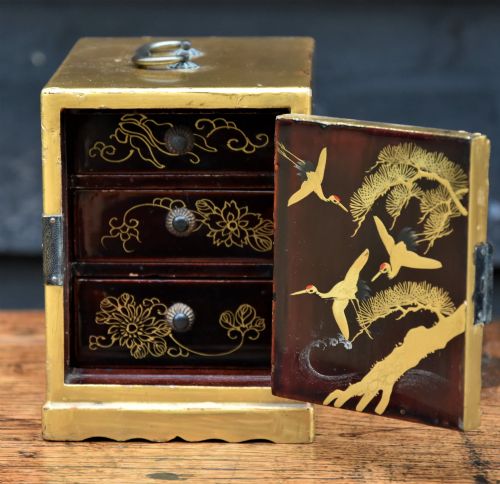
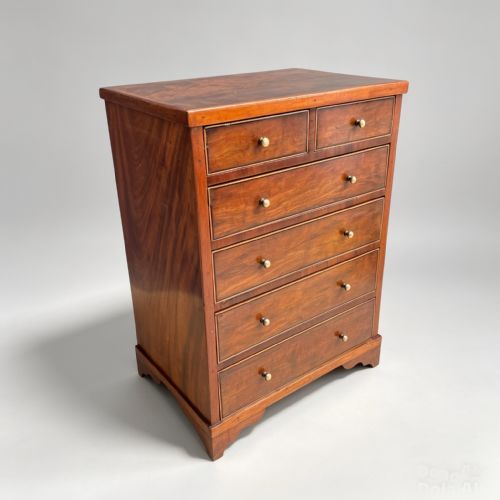
A period jewellery chest typically manifests as a tabletop cabinet, miniature chest of drawers, or decorative box designed to store small valuables. When searching for a period jewellery chest, buyers encounter items ranging from Georgian miniature chests to Japanese lacquer kodansu cabinets.
The materials span mahogany, yew, hardwood, and lacquered surfaces, often paired with brass or iron hardware. Styles vary from Grand Regency and Early Victorian to Japanese Meiji and Arts and Crafts periods, reflecting diverse international design movements.
Forms include compartmentalised caskets, desktop collector cases, and multi-drawer miniature furniture. These vessels served practical storage roles for past owners, doubling as decorative objects of substantial presence.
Materials and construction methods
Construction relies heavily on timbers such as mahogany, yew, and assorted hardwoods, shaped into miniature chests and boxes with fitted drawers or compartments. Lacquer work appears on Japanese pieces, providing smooth protective surfaces adorned with metallic gilt details.
Period Jewellery Chest Retail Price Guide 2026
Typical asking prices for period jewellery chest among the pieces listed under this phrase on Sellingantiques today, from the lower quarter to the upper quarter. They describe what is for sale here now, not the wider market.
Several miniature chests once sat on master craftsmen's desks, serving as tiny proof that great things truly come in small packages.
Understanding quality differences
Quality reveals itself in the precision of the joinery and the integrity of the materials, from closely grained mahogany to meticulously applied lacquer finishes. Superior pieces display harmonious proportions in miniature furniture and clean, deliberate execution in decorative metalwork or penwork.
The refinement of internal fittings, such as smoothly sliding miniature drawers and intact interior linings, distinguishes finer specimens. Age-related patination should appear organic rather than forced, preserving the character earned through long usage.
The Period Jewellery Chest Glossary
- Kodansu
- A small Japanese cabinet featuring multiple drawers and compartments, traditionally utilised for storing precious documents or personal valuables. They frequently display intricate lacquer finishes and decorative metal hardware.
- Bow-front
- A furniture design where the front facade curves outward in a convex arc. This shape appears on Georgian miniature chests of drawers.
- Penwork
- A decorative technique involving intricate ink drawings applied directly to a wooden surface, often sealed with a clear protective glaze. This ornamentation style surfaces on Georgian jewellery boxes.
- Humidor
- A specialised box or cabinet designed to maintain optimal humidity for storing cigars. Some Regency desktop collector cases double in function as cigar humidors.
- Apprentice piece
- A miniature furniture item created by a craftsman to demonstrate skill and secure entry into a trade guild. These display the exact joinery techniques found in full-scale furniture.
Period Jewellery Chest: Frequently Asked Questions
How were Japanese kodansu cabinets used?
Japanese kodansu cabinets functioned as desktop storage for personal trinkets, documents, and valuables.
Their multiple small drawers and compartments kept delicate personal items organised and secure.
How do I care for antique leather boxes?
Antique leather boxes require stable environmental conditions away from direct sunlight and excessive moisture to prevent drying and cracking.
Gentle dusting with a dry cloth helps maintain the surface without damaging historic leather finishes.
What distinguishes Regency desktop cabinets?
Regency desktop cabinets typically feature clean classical lines, refined timber selections such as mahogany or satinwood, and understated brass fittings.
They were designed for writing desks to organise correspondence, collector items, or small personal effects.