

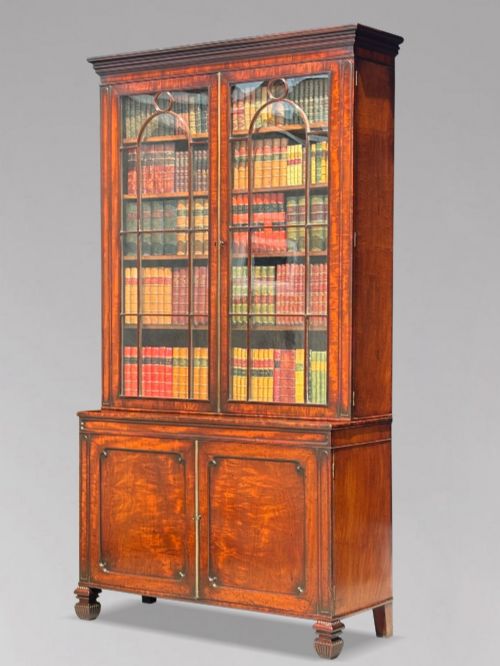


Period Glass Cabinet
A period glass cabinet brings a room together by displaying collections behind clear panes while anchoring the floor space with timber.
Period Glass Cabinet
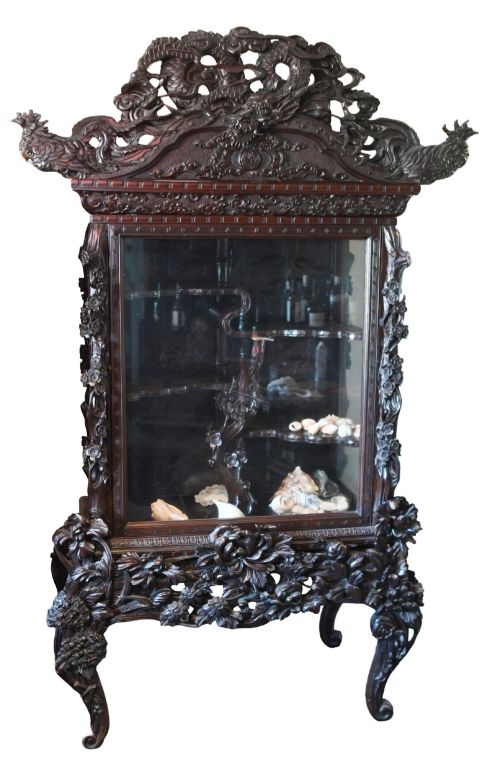
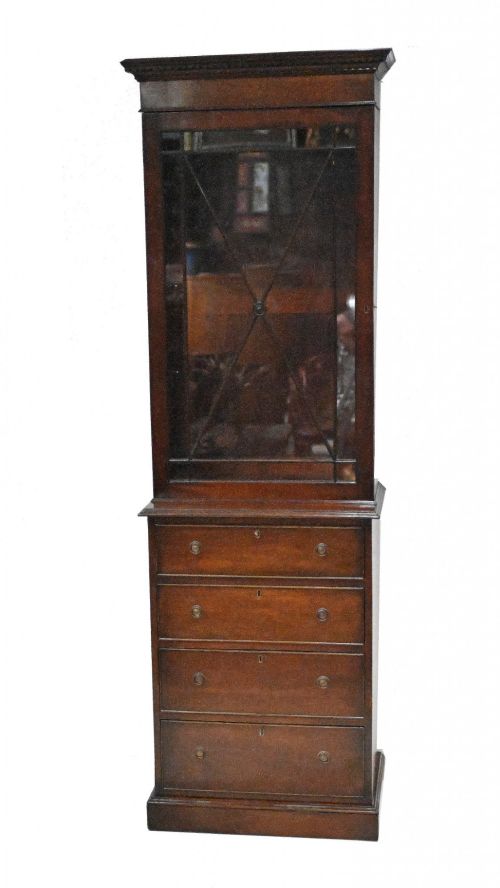
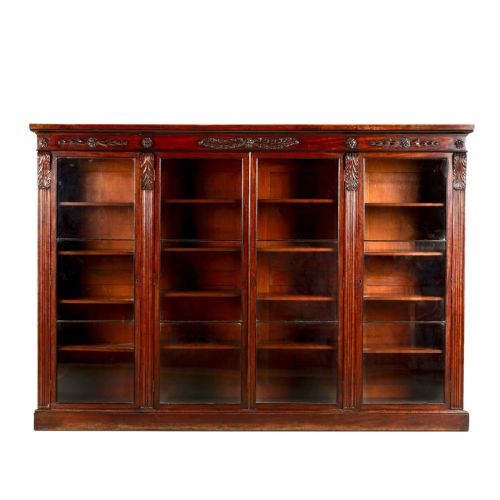
A period glass cabinet encompasses tall bookcases, glazed display pieces, side cabinets, and corner units originating from the eighteenth, nineteenth, and early twentieth centuries. These forms serve to protect and exhibit books, china, and curated curiosities within domestic interiors.
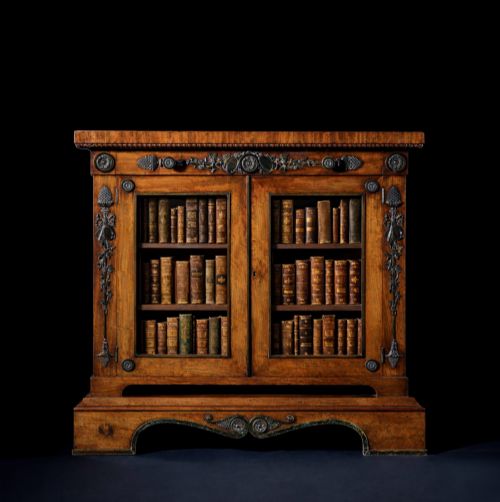
Regency rosewood and mahogany examples appear frequently alongside Georgian and Victorian pieces. Buyers encounter various formats, including tall bookcases, side cabinets, and specialised display units fitted with glass doors.
Origins span British workshops of the Georgian and Regency eras, extending to Edwardian designs and Arts and Crafts pieces. Makers utilised hardwoods and brass mounts to finish these functional display structures.
How they were made
Cabinet makers constructed these pieces using dense timbers such as mahogany, rosewood, oak, and general hardwoods. Selected wood inlay and brass mounts frequently enhance the primary timber structures.
Glazing techniques involve fitted glass panes held within wooden frames to form the cabinet doors and display domes. Brass fittings and mounts secure the structural elements and doors.
Period Glass Cabinet Retail Price Guide 2026
Typical asking prices for period glass cabinet among the pieces listed under this phrase on Sellingantiques today, from the lower quarter to the upper quarter. They describe what is for sale here now, not the wider market.
One unexpected inclusion among the wooden furniture is a child's shipwreck shoe preserved inside a glass display dome.
What varies in quality
The selection of timber grain and the precision of the wood inlay establish the visual standard of a piece. Finer examples display carefully matched veneers and robust internal shelving.
The integration of brass mounts and the clarity of the original glass panes differentiate standard production from finer craftsmanship. Structural integrity in the door framing and joints determines daily utility.
Liberty and Co.
The Period Glass Cabinet Glossary
- Chiffonier
- A low sideboard or cabinet featuring shelves or enclosed storage beneath, often fitted with glass doors in later periods.
- Tantalus
- A locked wooden stand holding decanters within a visible framework, typically secured with brass mounts and a locking mechanism.
- Marquetry
- Decorative veneer work created by fitting small pieces of wood inlay into a timber background to form geometric or floral patterns.
- Bow front
- A convex curved cabinet front that projects outward, common in Georgian corner cabinets and side units.
Period Glass Cabinet: Frequently Asked Questions
Where should I place a period glass cabinet?
Position these cabinets in living rooms or dining spaces away from direct sunlight to protect timber finishes and displayed items.
Ensure the floor surface is level to prevent distortion in tall bookcase and display cabinet structures over time.
How do I clean the glass and timber?
Use a dry or slightly damp cloth for timber surfaces, avoiding modern chemical polishes that can degrade older finishes. Clean the glass panes with standard solutions while protecting the surrounding wood frames from excess moisture.
Can these cabinets support heavy books?
Most period bookcases and display cabinets accommodate substantial volumes, provided the internal wooden shelves rest securely on their original supports.
Heavier sets should occupy the lower shelves to maintain overall balance within the cabinet structure.
How do I identify a Regency period piece?
Regency cabinets often feature dark timbers like rosewood or mahogany combined with distinctive brass inlay and classical proportions. Look for balanced glazed doors and symmetrical brass mounts typical of the early nineteenth century.