

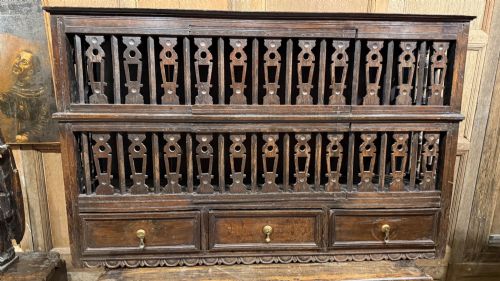
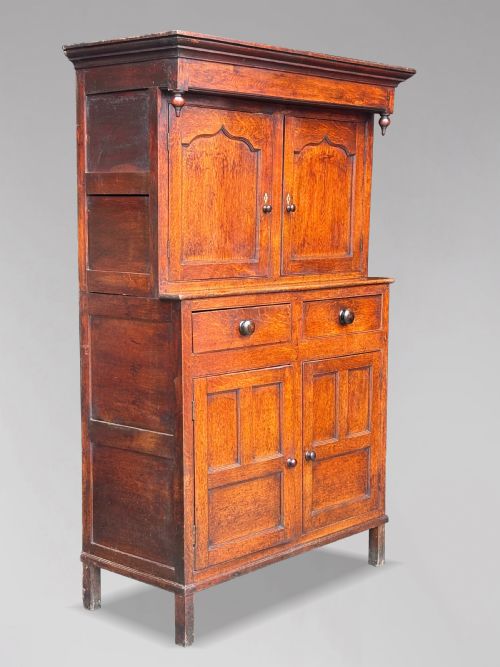


Period Food Cupboard
A period food cupboard offers honest vernacular storage, built from solid oak with iron and brass hardware to keep provisions secure.
Period Food Cupboard
A period food cupboard provides practical storage rooted in centuries of domestic life, spanning diverse forms from wall cabinets to large court cupboards. When you search for a period food cupboard, you encounter robust items shaped by regional British vernacular traditions and occasional international cabinet-making.
The pieces appearing on this page range from seventeenth-century hanging cupboards and panelled vestment pieces to eighteenth-century George III examples and nineteenth-century kitchen tansu. Oak dominates these forms, accompanied by elm and cypress, reflecting the utilitarian origins of early storage furniture.
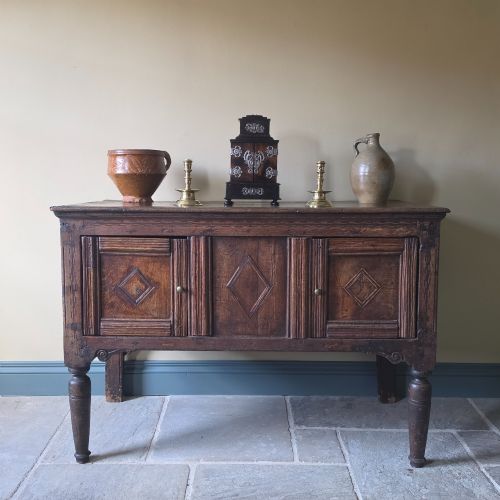
Buyers meet sturdy court cupboards alongside compact wall-hanging variants, each fulfilling domestic storage needs with straightforward joinery. These cabinets bridge the gap between heavy utility and decorative panelling, carrying the marks of regional British workshops and traditional craftsmanship.
How they were made
Makers constructed these cupboards primarily from solid oak, sometimes utilising elm or cypress for secondary timbers and internal shelving. Panels were typically held in frames using traditional pegged joinery that allowed the wood to move naturally with seasonal humidity changes.
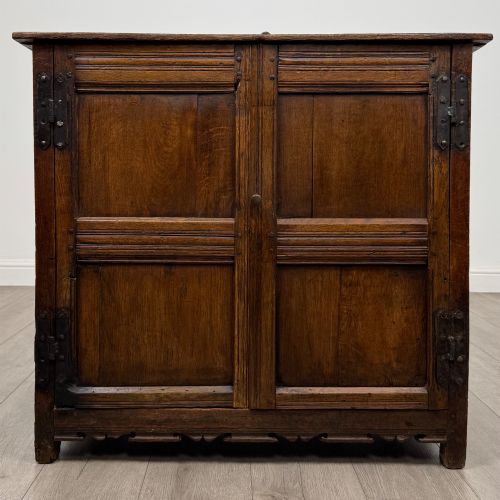
Hardware played a functional and structural role, with wrought iron hinges and brass fittings securing doors and fastening lids. Carved details appeared on select Georgian and seventeenth-century pieces, contrasting with the plain, utilitarian surfaces of vernacular housekeepers' and wall-hanging cupboards.
Period Food Cupboard Retail Price Guide 2026
Typical asking prices for period food cupboard among the pieces listed under this phrase on Sellingantiques today, from the lower quarter to the upper quarter. They describe what is for sale here now, not the wider market.
Some seventeenth-century food hutches still carry the faint, sweet aroma of stored dried herbs tucked away in their dark corners centuries ago.
What varies in quality
Quality in these cupboards rests in the integrity of the timber and the retention of original hardware such as brass handles and iron hinges. Pieces that maintain their primary oak structure without extensive timber replacement stand apart from heavily restored examples.
The sophistication of the joinery and any carved enrichment separate standard utility pieces from high-status court cupboards of the seventeenth and eighteenth centuries. Depth of colour in the aged oak and crispness in panel mouldings also define the upper tier of the range.
The Period Food Cupboard Glossary
- Court cupboard
- An antique open-backed or enclosed side table with tiers, used historically for displaying plate or storing provisions. These pieces often feature heavy oak construction and panelled doors.
- Livery cupboard
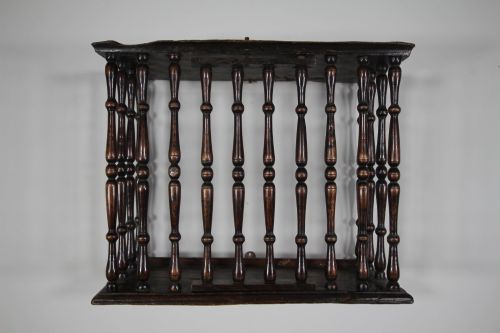
- A small ventilated cupboard used in early domestic settings to store food rations or candles. They frequently incorporate turned spindles or pierced panels for air circulation.
- Vestment cupboard
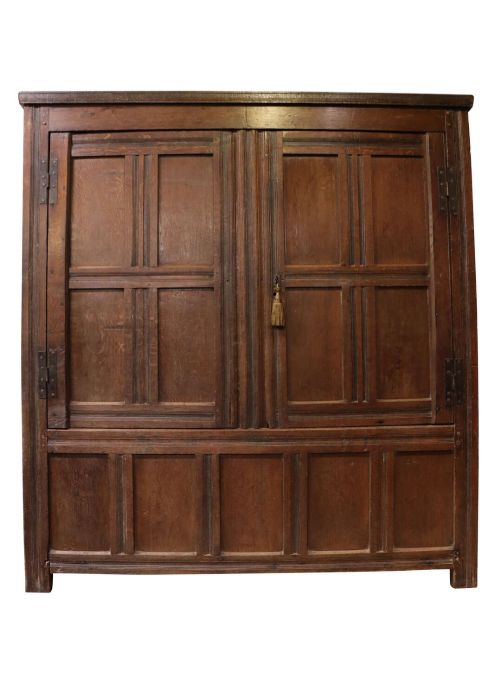
- A tall piece of storage furniture originally designed to house ecclesiastical garments or church linen. In domestic contexts, they served as heavy-duty oak storage cabinets.
- Hutch
- A basic chest or cabinet raised on legs or set directly on the floor, featuring doors or a lifting lid. Early versions served as general provision stores.
- Tansu
- A traditional Japanese mobile storage chest or cabinet utilised for domestic organisation. Examples such as the Mizuya bring distinct regional joinery traditions to kitchen storage.
Period Food Cupboard: Frequently Asked Questions
What is a period food cupboard?
A period food cupboard is a historic storage cabinet built to hold provisions, utensils, or household goods. These pieces date from the seventeenth century through to the nineteenth century, utilising solid timbers like oak and elm.
Most examples reflect regional British vernacular styles, though the category also accommodates traditional Japanese tansu forms. Their primary function was domestic utility, translated through sturdy joinery and functional iron or brass hardware.
How were early cupboards used?
Early cupboards functioned as secure storage for perishable food items, dried goods, and household textiles. Ventilated designs allowed air to circulate around provisions before refrigeration existed.
Larger court cupboards and housekeeper's cupboards held tableware and linens in addition to food stores. Their placement varied from kitchens and pantries to grand halls depending on the social status of the household.
How do I identify seventeenth-century oak?
Seventeenth-century oak displays distinctive medullary rays, often called silver grain, visible across quartersawn surfaces. The timber has darkened over centuries into deep, warm brown tones.
Construction relies on pegged mortise and tenon joints rather than modern mechanical fasteners. Tool marks left by adzes and pits from hand-sawing remain evident on the internal boards.
Where should I place a wall cabinet?
Wall cabinets require secure anchoring to masonry or stud walls due to the heavy weight of old oak construction. They suit kitchens, dining rooms, or hallways where floor space is limited.
Ensure the mounting height accommodates the swing of panelled doors and provides comfortable access to internal shelves. Placing them away from direct heat sources protects the historic timber from drying out.