



Period Figurative Wall Art
Period figurative wall art brings human stories, interiors and historical scenes onto canvas and paper through centuries of brushwork.
Period Figurative Wall Art
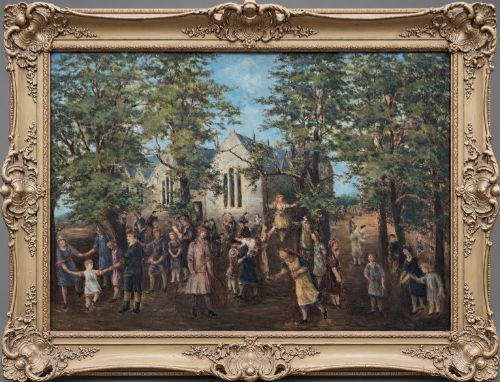
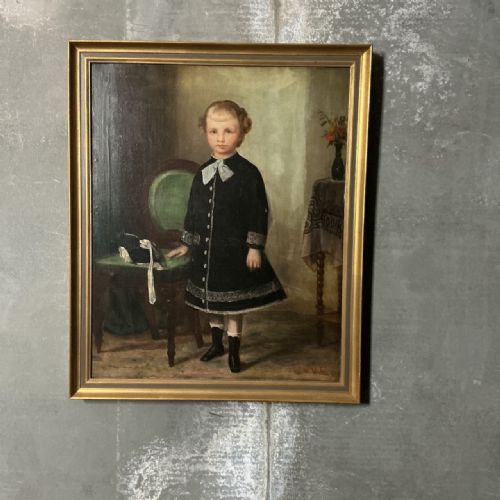
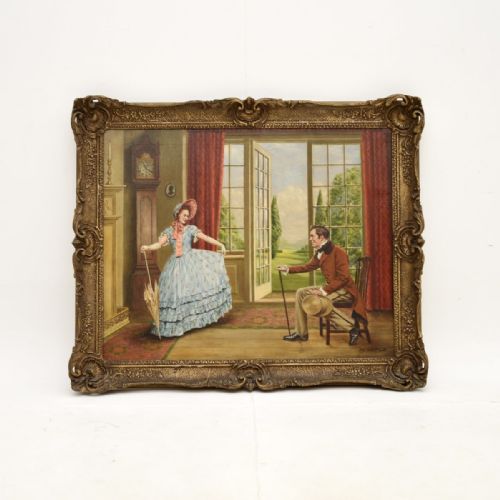
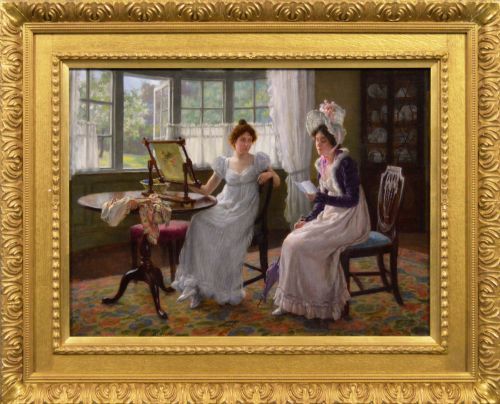
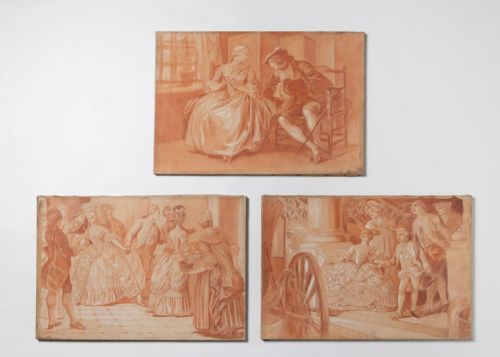
Period figurative wall art encompasses oil paintings, watercolours, drawings and prints that place human figures at the centre of the composition. These works record domestic interiors, social gatherings, mythological narratives and historical genre scenes from the nineteenth and early twentieth centuries.
The pieces on this page lean heavily towards nineteenth-century and early twentieth-century British and French works, alongside Japanese prints and earlier carved panels. Buyers encounter country house scenes, courtly interior settings and individual portraits framed in wood and gilt.
Oil on canvas remains the dominant medium, supported by paper drawings, watercolours and woodblock prints. Each format preserves human interaction and storytelling through varied academic and decorative traditions.
How they were made
Painters applied oil paint to stretched canvas or panel, building narrative scenes through layered brushwork and tonal contrast. Draftsmen worked with ink and pencil on paper for studies and finished drawings.
Carved panels utilise dense timber shaped with chisels to form relief figures. Woodblock prints rely on inked blocks pressed onto paper within traditional publishing methods.
Frames combine wood, gesso and gilt finishes to protect and complete the presentation of these works.
Period Figurative Wall Art Retail Price Guide 2026
Typical asking prices for period figurative wall art among the pieces listed under this phrase on Sellingantiques today, from the lower quarter to the upper quarter. They describe what is for sale here now, not the wider market.
Listings span periods from the seventeenth century through the Victorian era to the mid-twentieth century, using canvas, paper and wood.
What varies in quality
The precision of facial expression and anatomical drawing separates accomplished figurative work from more mechanical studio production. Master painters handle light, shadow and fabric texture with confidence that brings interior spaces to life.
The integrity of the original support, whether canvas, panel or paper, influences the stability of the surface. Surviving original frames in giltwood and gesso also add structural and aesthetic weight to the piece.
Stephen Samuel Lewin·Alfred Lyndon Grace·Charles Zacharie Landelle·Antoine Calbet·Charles Haigh Wood·John Sanderson Wells·Sydney Kendrick·Frederick Thomas Baynes·Frank Moss Bennett
The Period Figurative Wall Art Glossary
- Genre painting
- Painting that depicts scenes from everyday life, ordinary people, and domestic interiors rather than grand historical or religious subjects. These works offer a window into past social customs and household habits.
- Gesso
- A plaster-like mixture applied to wood frames or panels as a smooth base for gilding and paint. It provides the crisp surface needed for moulded decorative details.
- Ukiyo-e
- A genre of Japanese art produced through woodblock prints and paintings depicting scenes of everyday life and popular culture. The term translates as pictures of the floating world.
- Giltwood
- Timber that has been coated with a thin layer of gold leaf or gilt powder. It provides a reflective, decorative border for traditional paintings.
- Oil on canvas
- Pigments bound in a drying oil applied to a woven fabric support stretched across a wooden frame. This combination allows for rich colour blending and texture.
Period Figurative Wall Art: Frequently Asked Questions
What subjects appear in these paintings?
These works focus primarily on human figures engaged in daily activities, social calls, historical scenes and domestic leisure. Interiors of country houses and courtly settings dominate the compositions.
Mythological tales and literary references also provide narratives for nineteenth-century figurative painters to explore.
How should I hang oil on canvas?
Oil paintings on canvas require stable indoor environments away from direct sunlight and damp walls. Keep them clear of radiators to prevent the canvas and wooden stretcher from warping.
Use secure picture hooks rated for the combined weight of the painting and its frame.
Are these works original paintings?
The selection includes original oil paintings, watercolours and hand-drawn studies alongside period woodblock prints and carved panels. Each listing specifies the exact medium used by the maker.
Signatures and period documentation help distinguish unique painted works from printed reproductions.
How do I identify the period?
Stylistic clues such as costume, interior decoration and framing methods point towards specific decades like the Victorian era or the Edwardian period. Artist signatures and biographical dates narrow down the year of creation.
Materials like gesso frames and canvas types also offer evidence of age.