




Period Fall Front Desk
A period fall front desk brings centuries of cabinet-making skill into a room, offering a private writing surface that drops down to conceal fitted compartments.
Period Fall Front Desk
A period fall front desk, commonly called a bureau or escritoire, combines a compact writing slope with functional storage drawers beneath. When you search for this phrase, you encounter substantial writing furniture designed to keep correspondence secure behind a hinged lid.
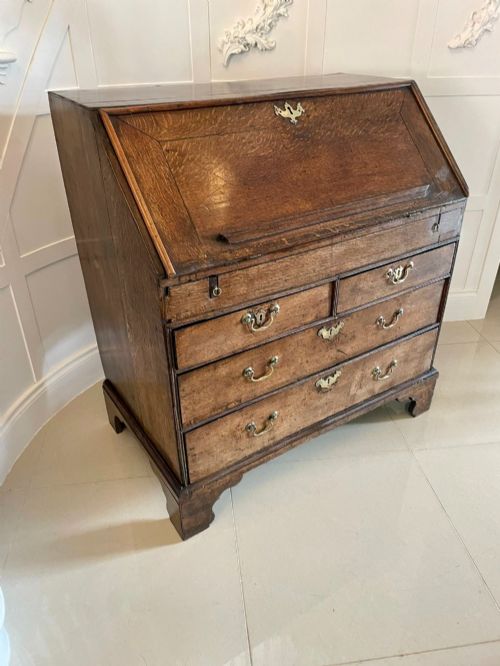
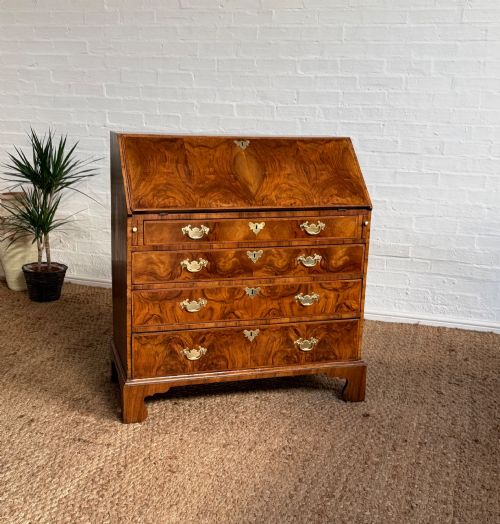
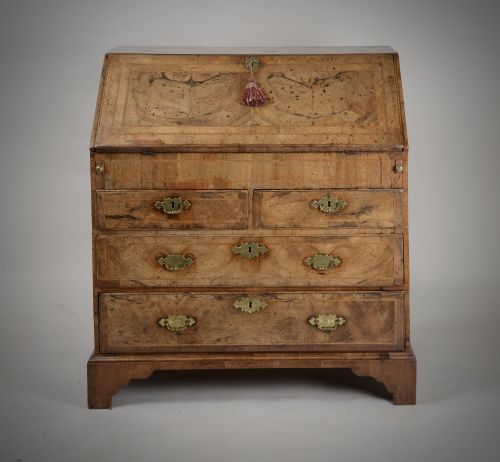
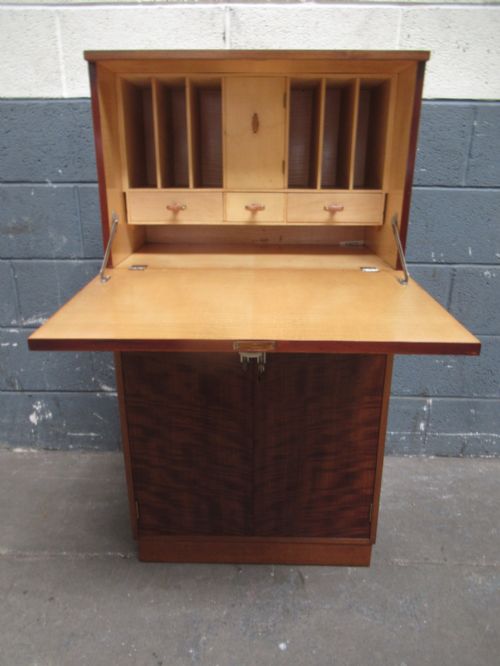
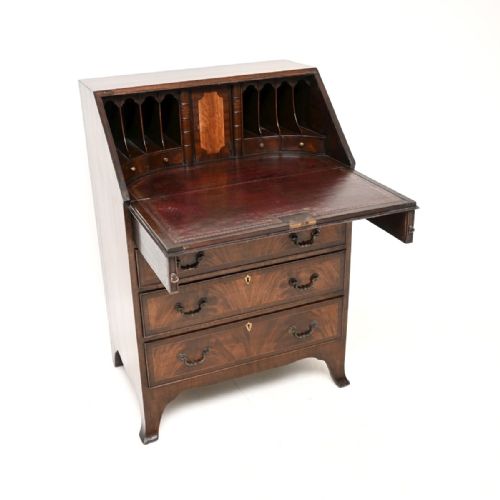
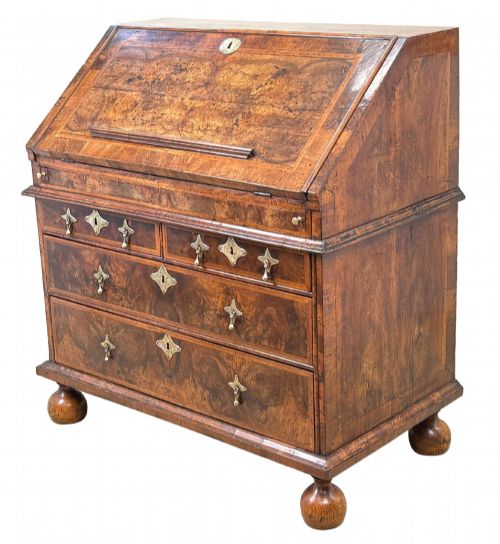
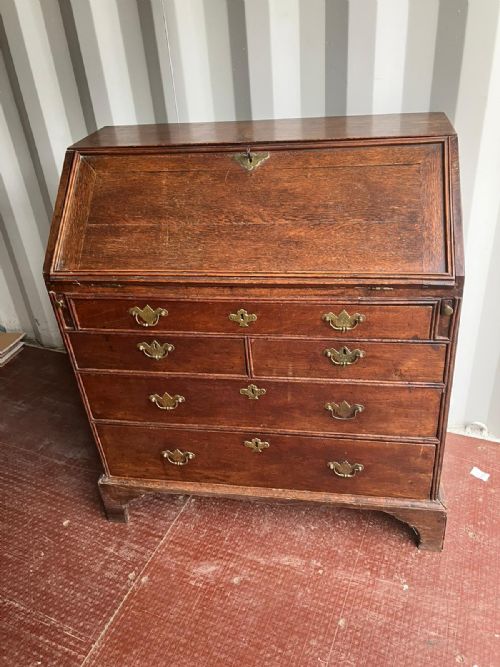
The examples available here span several centuries, with particular strength in walnut pieces from the Queen Anne and George I eras, alongside robust oak and mahogany variations from the Georgian period. Most items date from the eighteenth century, though select William and Mary examples and twentieth-century Art Deco interpretations also appear.
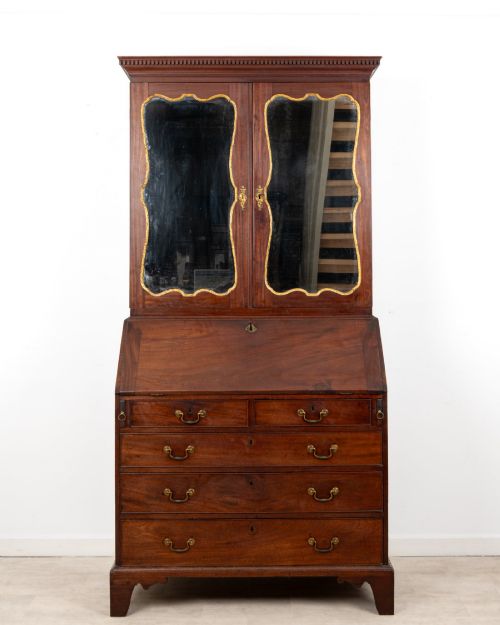
Forms range from simple table-top bureaux to grand bureau bookcases and secretaire cabinets fitted with mirrored doors or pigeonholes. These pieces served as the administrative centre of the home long before modern desks existed.
What varies in quality
The standard of a period fall front desk rests on the selection of timber veneers and the complexity of the internal arrangement. Pieces featuring figured walnut or detailed pigeonholes and secret drawers demonstrate higher levels of artisanal ambition.
The survival of original surface finishes, brass hardware, and structural integrity separates standard examples from exceptional cabinet work. Proportion and the precision of the dovetailed drawer construction further distinguish the grade of each desk.
Period Fall Front Desk Retail Price Guide 2026
Typical asking prices for period fall front desk among the pieces listed under this phrase on Sellingantiques today, from the lower quarter to the upper quarter. They describe what is for sale here now, not the wider market.
Listings feature walnut, oak, and mahogany across periods spanning from the seventeenth century to Art Deco.
Giles Grendey·Gillows
The Period Fall Front Desk Glossary
- Escritoire
- A writing cabinet featuring a fall front that drops down to reveal drawers and pigeonholes. These pieces often date from the seventeenth and eighteenth centuries.
- Bureau bookcase
- A tall dual-purpose item combining a lower writing desk with an upper bookcase or cabinet section, sometimes featuring mirrored doors.
- Fall front
- The hinged wooden panel on a desk that drops down into a horizontal position to serve as a writing surface.
- Veneer
- A thin layer of figured wood, such as walnut or burr walnut, applied to a secondary timber base to create decorative patterns.
Period Fall Front Desk: Frequently Asked Questions
How do I use a fall front desk?
Release the brass catches and lower the hinged wooden flap to create a stable writing surface. The internal compartments provide dedicated space for letters, inkwells, and small documents.
Close and lock the fall front when finished to keep correspondence private and tidy the room instantly.
What woods were used for these desks?
Early examples rely heavily on oak and walnut, with burr walnut veneers frequently chosen for high-status pieces. Mahogany becomes prominent during the Georgian period.
Secondary timbers like satinwood and occasional brass accents appear in the internal fittings and hardware.
How do I date a walnut bureau?
Examine the construction methods of the internal drawers, the thickness of the timber, and the style of the brass hardware. Queen Anne and George I pieces from the early eighteenth century typically display rich walnut veneers and stepped pigeonhole interiors.
Later Georgian items shift toward mahogany, while seventeenth-century pieces like William and Mary escritoires show distinct cabinet proportions.
Where should I place a bureau in my home?
These compact desks suit reception rooms, studies, or quiet corners where their polished wood finishes can be appreciated. Ensure the room has stable humidity to protect antique wood and veneer.
Allow sufficient clearance in front of the desk for the fall front to open fully without blocking walkways.