




Period Display Shelving
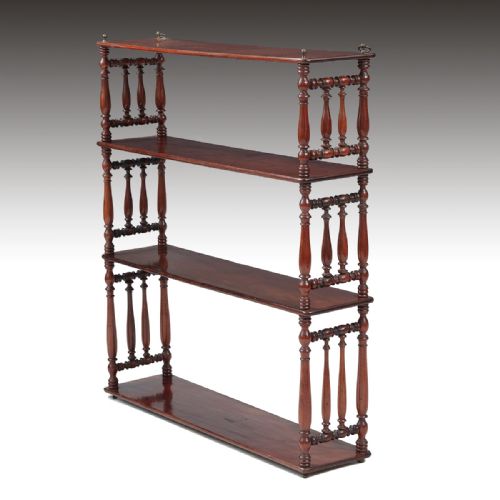
Period display shelving brings together centuries of timber forms designed to hold books, collections and ornaments with practical grace.
Period Display Shelving
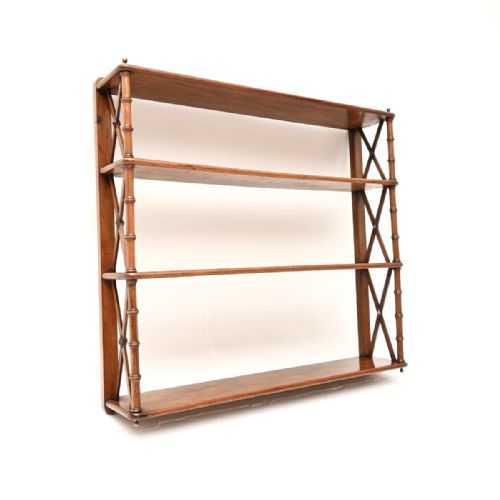
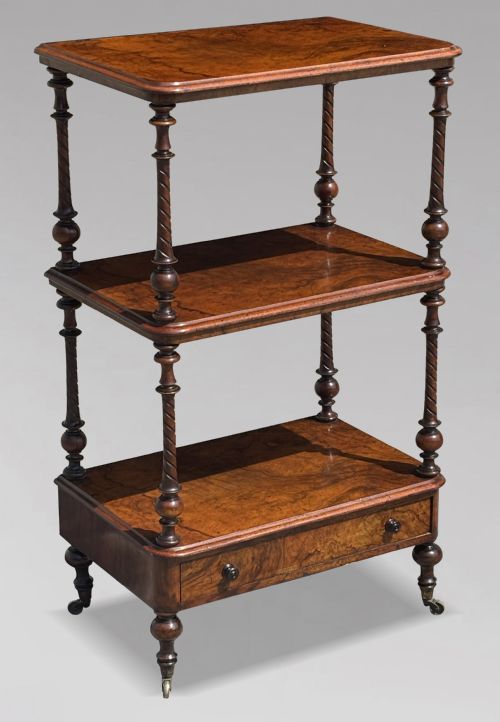
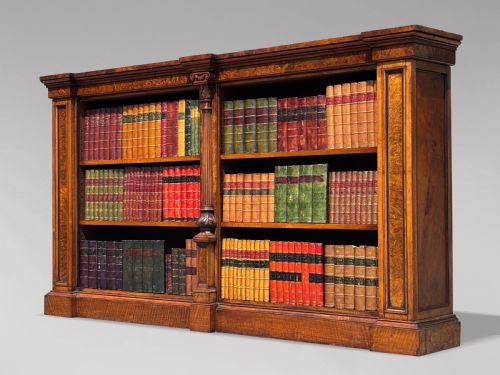
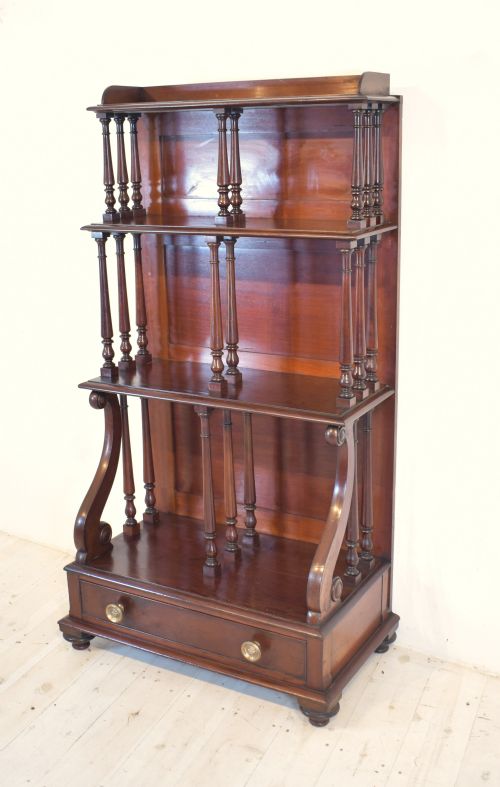
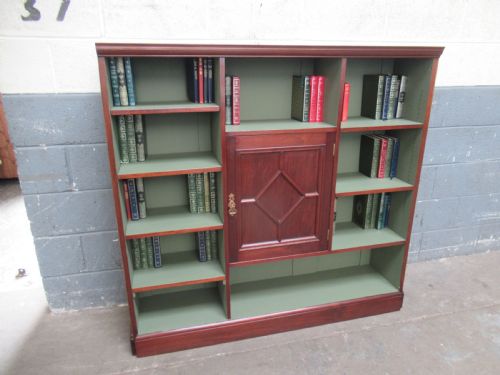
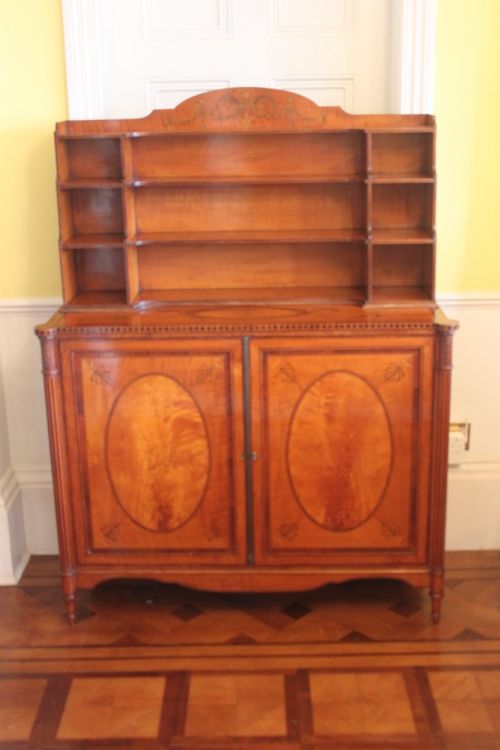
When you search for period display shelving, you encounter a diverse collection of architectural storage forms spanning Georgian, Regency, Victorian and later eras. These pieces range from compact hanging wall shelves and multitiered whatnots to substantial breakfront bookcases and side cabinets.
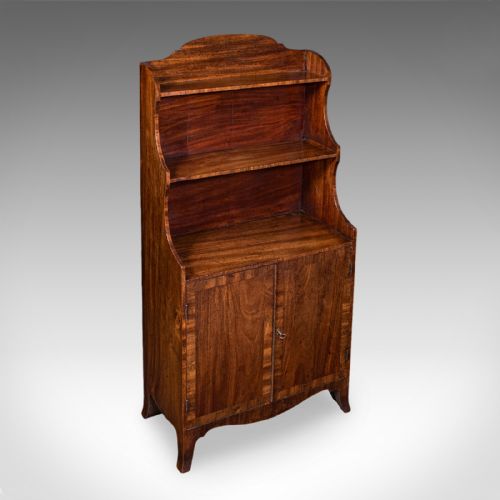
The selections you meet most frequently on this page stem from the Regency and Georgian periods, executed in rich hardwoods like mahogany and rosewood. Formats vary from open bookcases and etageres to specialised cabinets featuring glass or tiered levels suited for displaying treasured objects.
Origin points stretch from English workshops to French provincial makers and Meiji period Japanese studios, offering a wide geographical scope for interior placement. Each item serves the dual purpose of organising volumes and exhibiting decorative items within a room.
Materials and Construction
Cabinetmakers relied heavily on dense primary timbers such as mahogany, walnut and rosewood, frequently employing flame mahogany veneer for decorative surface impact. Brass details, glass panels and subtle satinwood inlay appear across various pieces to accentuate structural lines.
Construction techniques balanced load-bearing strength with visual lightness, visible in multitiered whatnots, waterfall bookcases and wall-mounted shelving units. Joinery traditions prioritized durability, allowing open bookcases and cabinets to support heavy volumes over generations of use.
Period Display Shelving Retail Price Guide 2026
Typical asking prices for period display shelving among the pieces listed under this phrase on Sellingantiques today, from the lower quarter to the upper quarter. They describe what is for sale here now, not the wider market.
Listings feature items spanning the Georgian, Regency, Victorian, and Edwardian periods, constructed in mahogany, rosewood, walnut, oak, and bamboo.
Factors of Quality
Quality reveals itself in the selection of timber figures, such as the richness of rosewood or the depth achieved in flame mahogany veneer. Superior examples display meticulous attention to proportion, particularly in unusual formats like compact etageres or breakfront bookcases.
The finesse of secondary elements, including brass mounts, fine inlay work and carved Japanese Meiji details, distinguishes exceptional pieces from standard utilitarian storage. Construction integrity and the preservation of original surfaces ultimately dictate the standing of any given item.
The Period Display Shelving Glossary
- Etagere
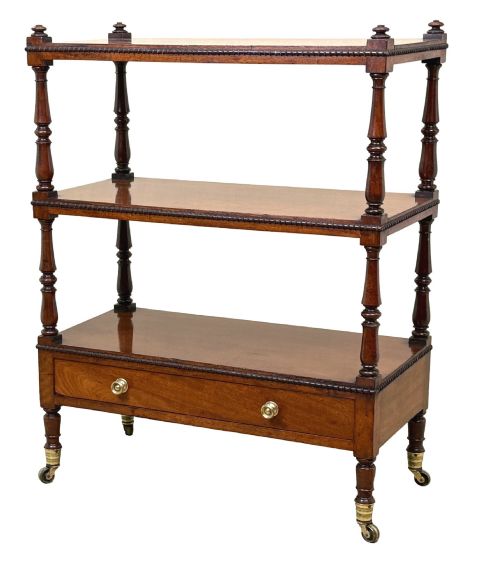
- A piece of furniture consisting of a set of open shelves for displaying small objects or ornaments. It often appears in multitiered formats from the Regency and Victorian eras.
- Breakfront
- A large cabinet or bookcase whose central section projects forward from the flanking sides. This architectural arrangement creates depth and visual interest in formal rooms.
- Waterfall bookcase
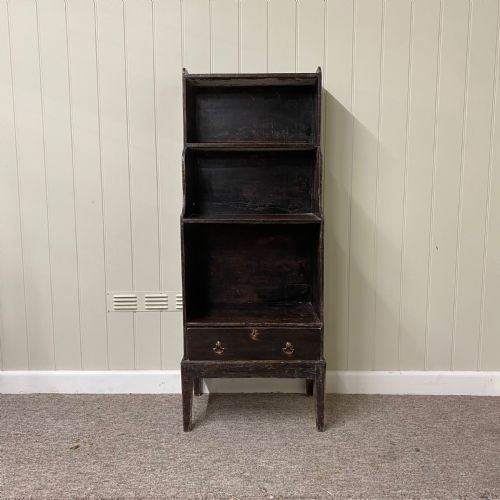
- A shelving unit featuring stepped shelves that recede from bottom to top, creating a profile resembling a cascading waterfall. This form gained favour for its lighter visual weight.
- Shodana
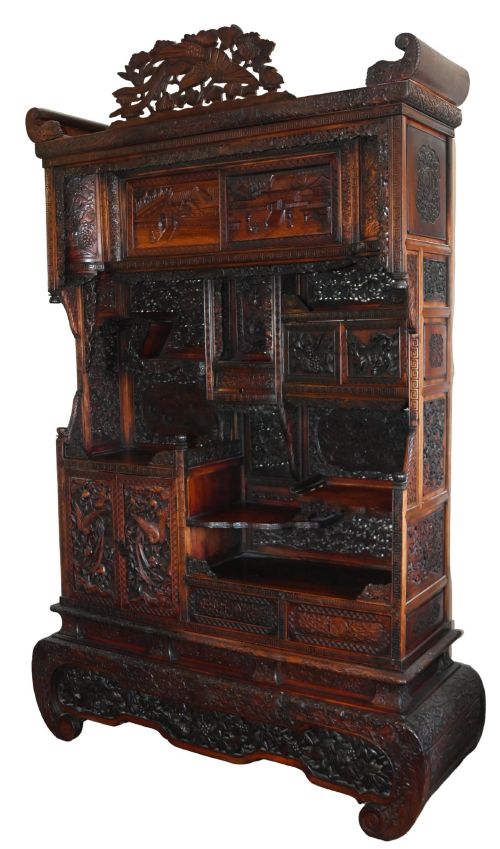
- A traditional Japanese display cabinet featuring asymmetrical shelving compartments, often associated with the Meiji period. These pieces highlight intricate carved woodwork and display capabilities.
Period Display Shelving: Frequently Asked Questions
What is the difference between an etagere and a whatnot?
An etagere and a whatnot both refer to open tiered shelving units designed for display, with terms often used interchangeably by makers across different periods.
In practice, whatnots frequently served practical storage roles in Georgian and Regency interiors, while etageres occasionally leaned toward lighter, decorative display formats.
Where should I place a hanging wall shelf?
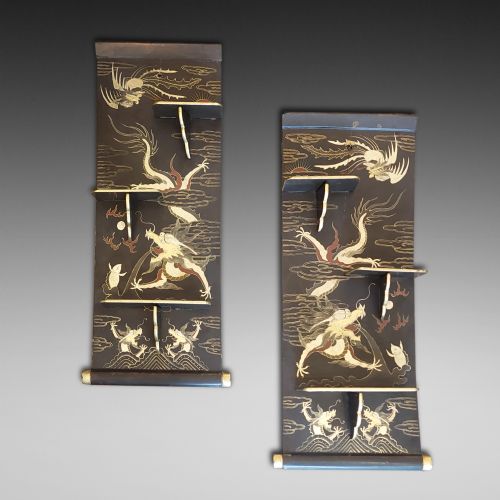
Hanging wall shelves suit spaces where floor area is limited, offering vertical storage for small books or decorative collections.
Secure mounting is essential given the weight of period hardwoods like mahogany and brass fittings.
How do I identify a Regency bookcase?
Regency bookcases typically feature classical restraint, clean architectural lines, and premium timbers such as rosewood or figured mahogany.
They often incorporate brass inlay, gallery rails, or breakfront proportions that reflect early nineteenth-century design tastes.
Can I use an open bookcase for heavy books?
Period open bookcases in hardwood construction were built to hold substantial volumes of books over centuries of use.
Checking the depth and shelf support ensures modern editions or heavy folios rest securely without sagging.