

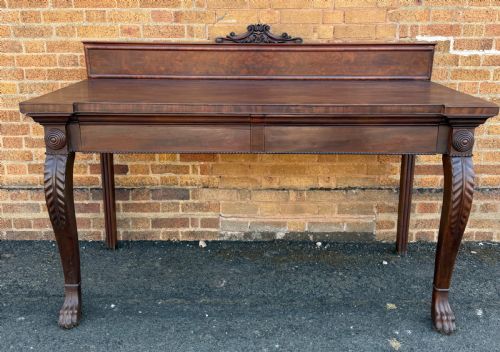
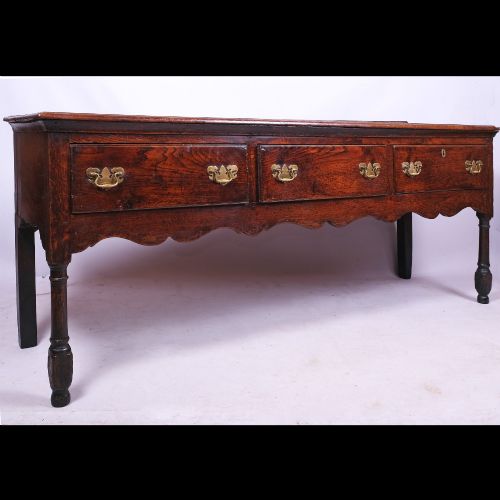
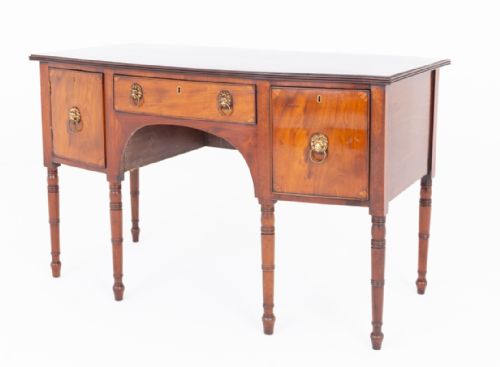
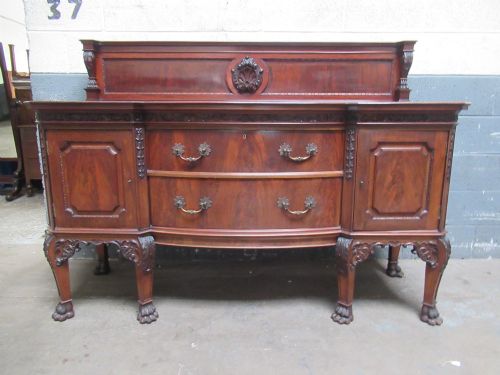


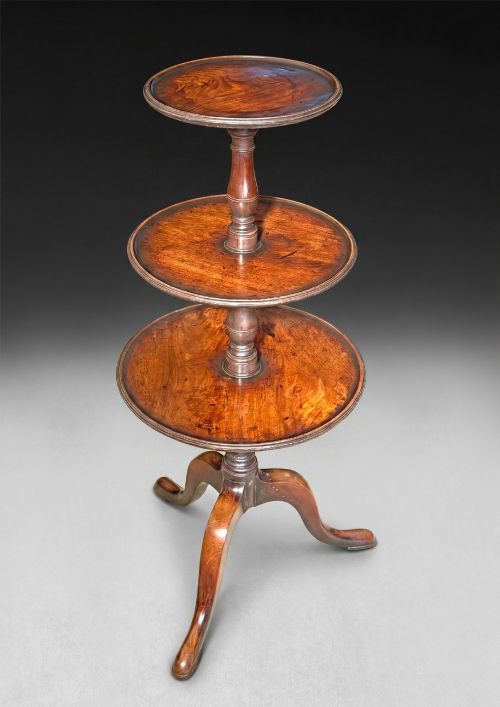

Period Dining Server
A period dining server grounds a room with timber weight and serves the dining table through Georgian and Regency shifts.
Period Dining Server
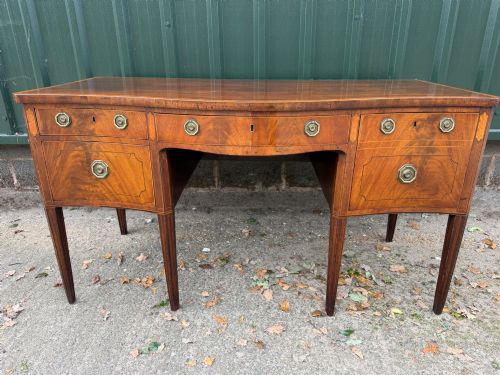
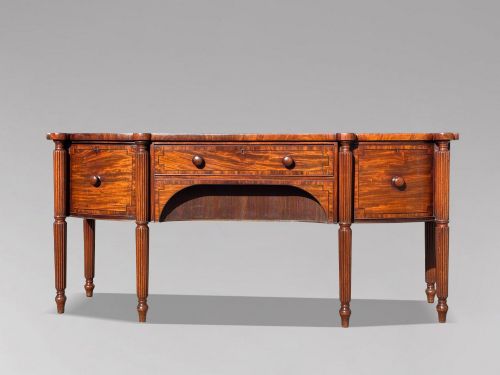
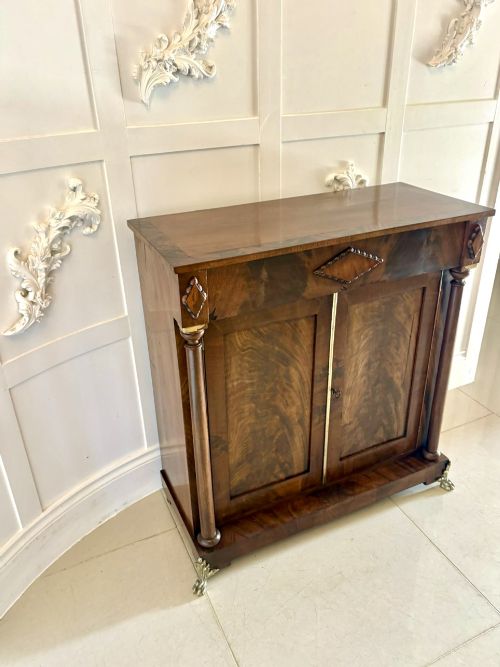
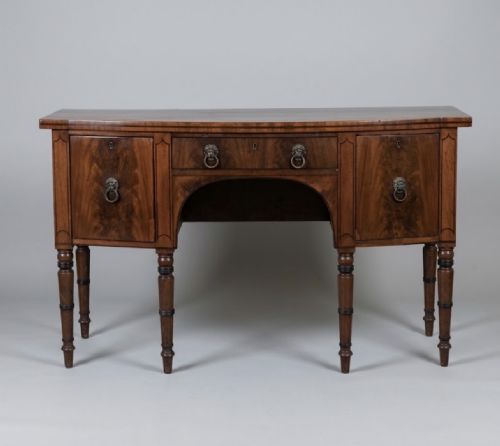
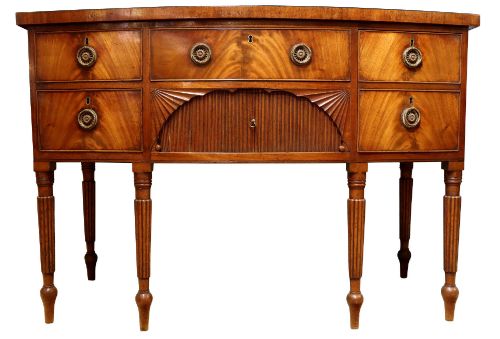
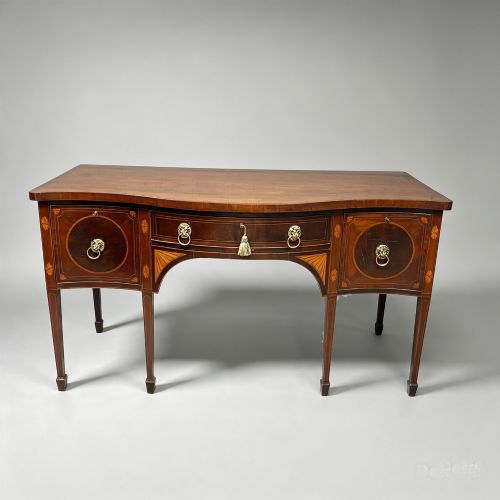
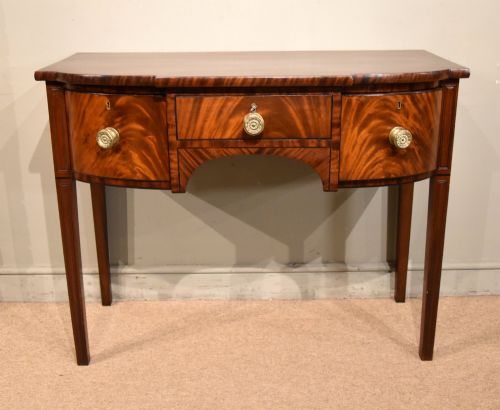
A period dining server encompasses sideboards, serving tables, pedestals, and chiffoniers built to hold silver, linen, and wine during formal meals. The examples found here span the eighteenth and nineteenth centuries, taking shape as bowfronts, serpentine fronts, and flat-fronted servers.
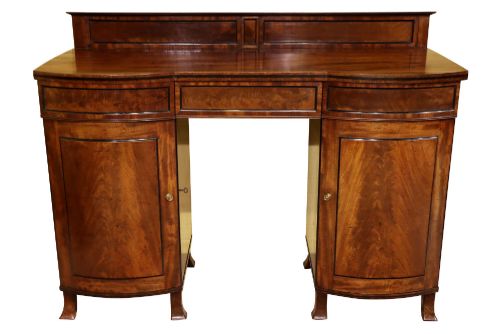
The Regency and George III periods dominate the selection, bringing architectural presence and formal proportions to the dining room. Cabinetmakers utilised mahogany as the primary timber, often framing the pieces with pedestals, cellarets, or tiered shelving like dumb waiters.
Earlier oak pieces such as dresser bases sit alongside refined Sheraton and Gillows designs, showing how dining furniture evolved from simple storage to dramatic focal points. Each form responds to the changing rituals of hosting and dining across the centuries.
Materials and construction
Makers constructed these servers primarily from solid mahogany and flame mahogany veneer, chosen for deep grain patterns and resilience. Cabinetmakers laid veneers over secondary woods to create striking drawer fronts and tabletops.
Inlay and stringing introduced contrasting colours using boxwood, satinwood, and ebony to outline drawers and borders. Brass fixtures, including handles, lion mask rings, and gallery rails, provided functional hardware that punctuated the dark timber.
Joinery relied on traditional dovetailed drawer construction and mortise-and-tenon framing to support heavy loads of serving silver and porcelain. Secondary woods like oak and pine appear inside carcases and drawer linings.
Period Dining Server Retail Price Guide 2026
Typical asking prices for period dining server among the pieces listed under this phrase on Sellingantiques today, from the lower quarter to the upper quarter. They describe what is for sale here now, not the wider market.
Listings feature mahogany, rosewood, oak, and satinwood across Georgian, Regency, and Edwardian periods.
Distinctions in craftsmanship
The standard of a server rests on the selection of the timber, particularly how book-matched flame mahogany veneer is arranged across wide drawer banks. Superior makers aligned grain patterns symmetrically to create visual depth across the front of the piece.
The refinement of carved details, stringing precision, and original brass hardware separate ordinary production from workshop pieces attributed to known makers. Secondary wood choices inside drawers and the tightness of dovetail joints reveal the hand of skilled joiners.
Gillows·Mack Williams and Gibton
The Period Dining Server Glossary
- Bowfront
- A curved front convex in shape, popular on late eighteenth-century sideboards to soften room angles. This contour allowed greater internal depth while projecting a graceful line.
- Pedestal sideboard
- A form comprising two separate pedestals flanking a central table or recessed board, often housing a cellaret. Such designs defined grand Regency dining rooms.
- Serpentine
- A front profile curving outward in the centre and inward toward the ends, requiring advanced cabinetmaking skill. This shape creates a rhythmic movement across the width of the server.
- Stringing
- Thin inlaid lines of contrasting wood used to edge drawer fronts and tabletops. It defines panels and highlights the geometric lines of the furniture.
- Cellaret
- A compartment within a pedestal or sideboard lined for holding wine bottles. These units kept bottles cool and secure during formal dining.
Period Dining Server: Frequently Asked Questions
How do I date a mahogany sideboard?
Dating relies on examining the timber, construction methods, and stylistic cues such as leg shape and inlay patterns. Pieces from the eighteenth century often feature straight tapered legs and subtle stringing, while Regency examples lean toward bolder pedestal forms and brass gallery rails.
Secondary woods inside drawers and the type of fixings also offer clues to the decade of manufacture.
Where were serving tables placed?
Serving tables and sideboards stood against dining room walls to hold dishes before service and clear space on the main dining table. Larger pedestal versions often flanked doorways or windows in grand townhouses and country estates.
They functioned as stationary depots for servants managing multi-course meals.
How do I care for antique mahogany?
Antique mahogany benefits from stable room temperatures away from direct sunlight and heat sources that dry out old timbers. Regular dusting with a dry, soft cloth preserves the wax finish and natural patina of the wood.
Harsh chemical polishes should be avoided in favour of traditional beeswax applied sparingly when the wood appears dry.