
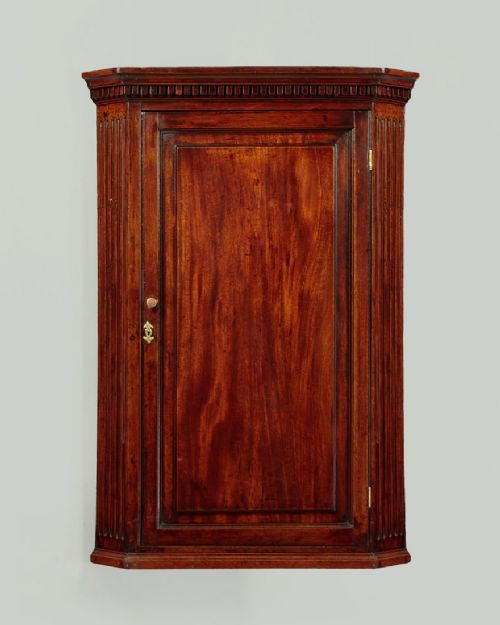
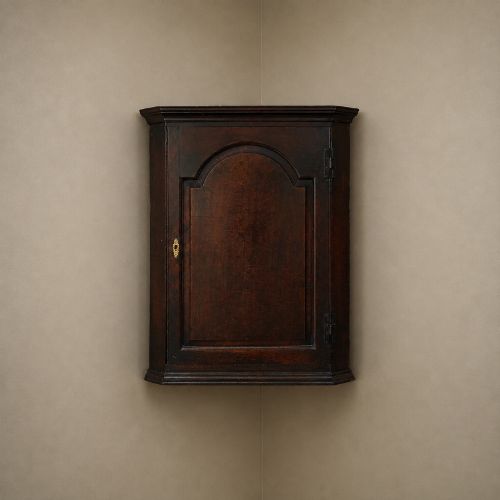
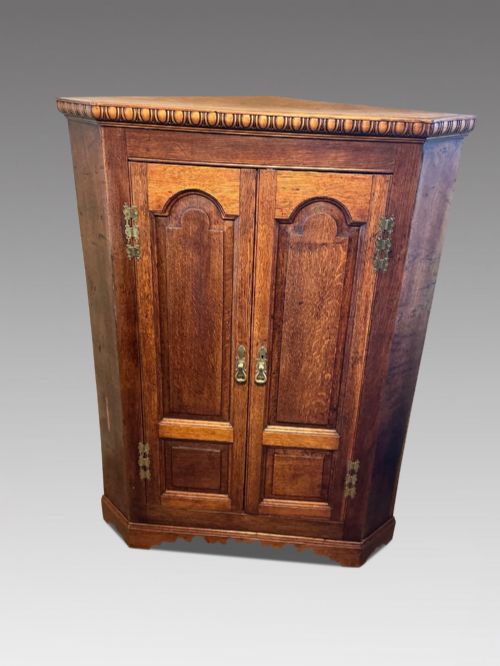


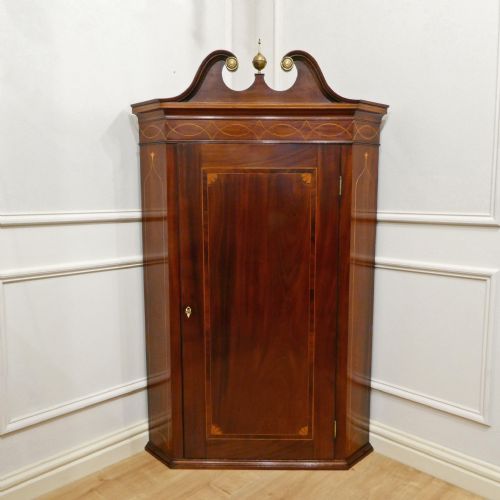
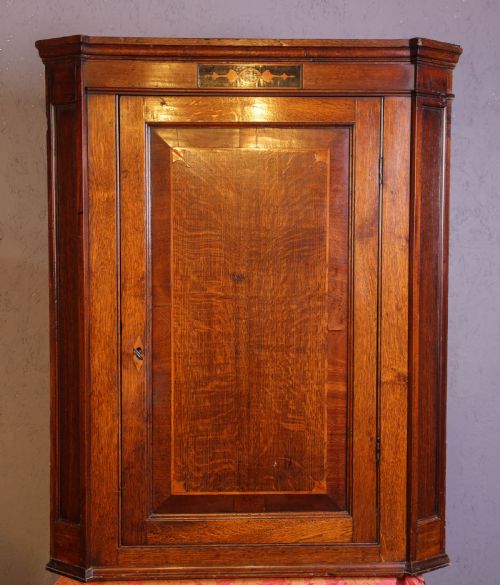


Period Corner Cabinet
A period corner cabinet turns awkward domestic angles into useful display space with timeless timber.
Period Corner Cabinet
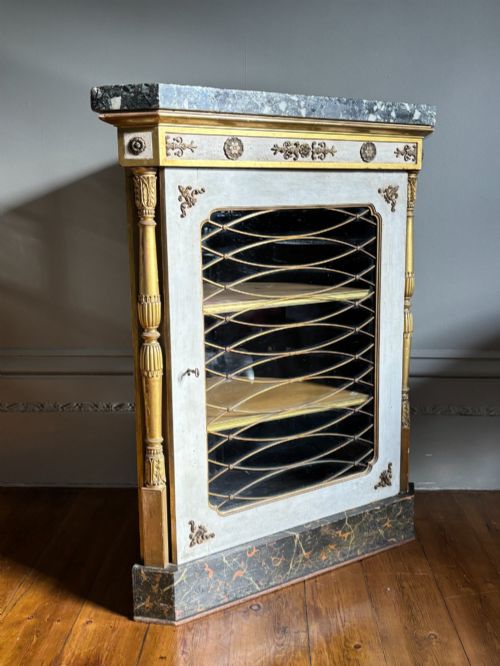
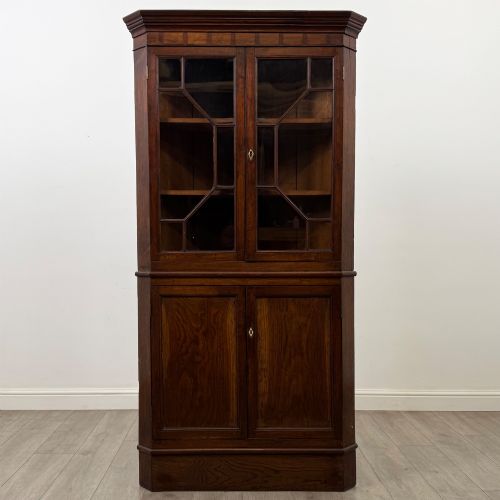
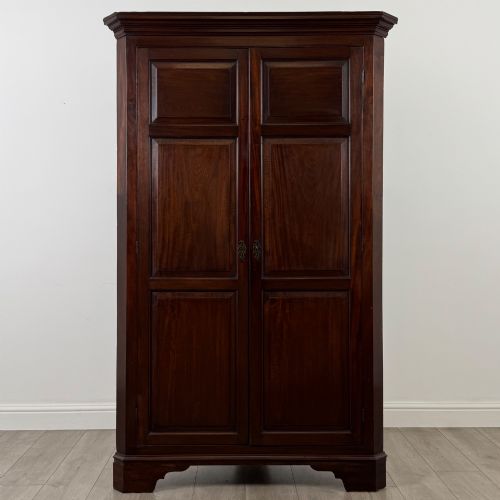
A period corner cabinet is designed specifically to fit into the juncture of two walls, making efficient use of overlooked room layouts. When searching for a period corner cabinet, buyers encounter diverse forms ranging from wall-hanging cupboards to substantial floor-standing pieces.
The selections span predominantly Georgian eras, featuring robust eighteenth-century constructions alongside nineteenth-century iterations. Oak and mahogany dominate the offerings, appearing in both standing formats and hanging variations with shaped panels or glazed doors.
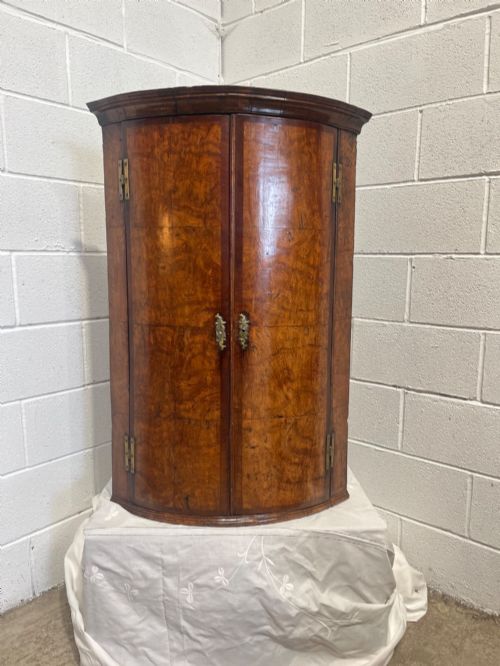
Many examples showcase regional English and Welsh workmanship in native oak, while others utilise imported mahogany with decorative satinwood inlay. Buyers frequently discover bow front designs and two-part cupboards that maximise internal storage capacity.
Materials and Construction
Cabinet makers utilised solid oak and rich mahogany for primary frames, employing sturdy dovetail joints and pegged construction methods. Timber selection dictated whether a piece suited a rustic country interior or a formal Georgian parlour.
Secondary detailing involved brass H-hinges, iron hardware, and delicate glass panes for glazed display doors. Sourcing also included burr oak and satinwood for specialised inlay work on finer Georgian and later revival items.
Listings feature oak and mahogany predominantly, alongside walnut, burr oak, and satinwood across Georgian and later periods.
Factors of Quality
Quality rests upon timber selection and the precision of the joinery rather than mere age alone. Superior pieces exhibit well-figured mahogany or tightly grained oak with harmonious proportions and intact original brassware.
The refinement of carved mouldings, the crispness of raised panels, and the integrity of internal shelving distinguish standard utility cupboards from finer cabinet work. Attention to secondary woods and backboards further indicates the original maker's standard.
The Period Corner Cabinet Glossary
- Bow front
- A convex curved cabinet front that projects outward from the corner. This curved profile requires skilled joinery to shape solid timber or veneers.
- Astragal glazed
- A glass door divided into smaller panes by narrow wooden glazing bars. These fine strips create a grid pattern typical of better display furniture.
- Hanging cupboard
- A wall-mounted storage unit designed to be secured directly to wall studs. These compact pieces save floor space in smaller rooms.
- Satinwood inlay
- Contrasting yellowish wood inserted into recessed channels of darker primary timber. This decorative technique creates geometric or floral borders.
Period Corner Cabinet: Frequently Asked Questions
How do I hang a heavy wall cupboard?
Wall-hanging corner cupboards require secure fixing into structural timber studs or solid masonry walls using appropriate brackets. Professional installation ensures the weight of the timber and its contents is safely supported.
Historic mounting points should be inspected before use, and modern internal battens are sometimes added discreetly for extra security.
Where should I place a corner cabinet?
These cabinets suit empty room intersections, dining room corners, or hallways where standard furniture leaves awkward gaps. Their angled footprint draws the eye into a previously neglected space.
Floor-standing versions anchor a room layout, while hanging variants work well above sideboards or tables.
Are these cupboards suitable for daily use?
Solid timber construction and sturdy shelving make period cupboards practical for storing tableware, glassware, or everyday household items. The deep interior angles accommodate bulky objects easily.
Maintaining stable indoor humidity protects the historic wood and prevents doors from sticking in their frames.
How do I distinguish oak from mahogany pieces?
Oak displays prominent grain patterns with visible medullary rays, often showing a warm brown tone suited to country interiors. Mahogany presents a smoother, reddish-brown grain structure associated with formal Georgian design.
Examining the weight, colour, and cellular structure of the timber clarifies the specific material used.