



Period Convex Mirror
A period convex mirror captures the entire room in a single curved glass disc, offering the dramatic focal point every grand interior demands.
Period Convex Mirror
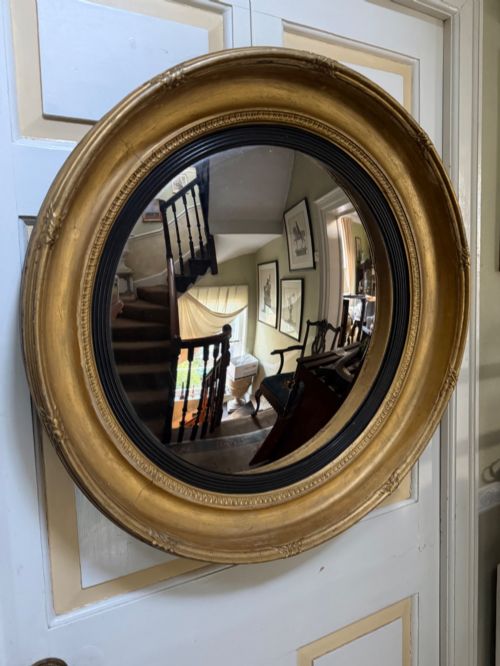
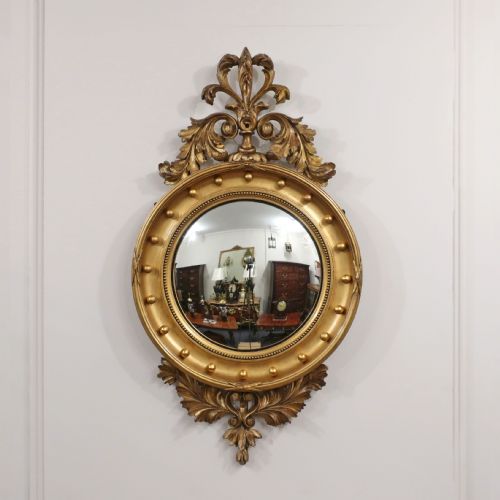
When you search for a period convex mirror, you encounter round wall-hanging glasses framed in carved wood and moulded ornament. These pieces date principally from the Regency era and the wider nineteenth century, bringing distinct historical presence to a wall.
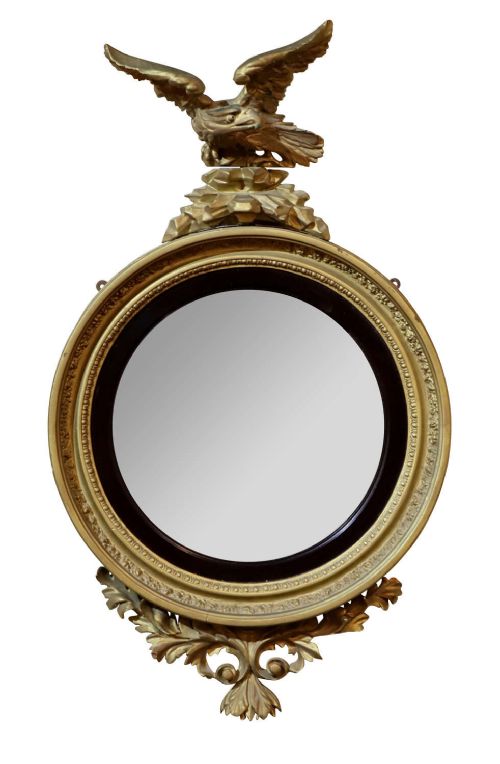
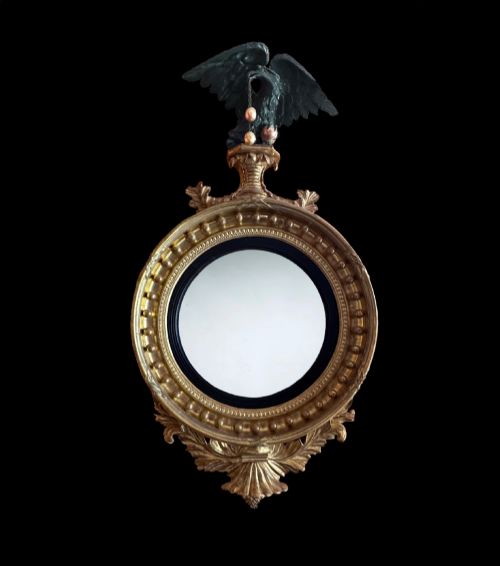
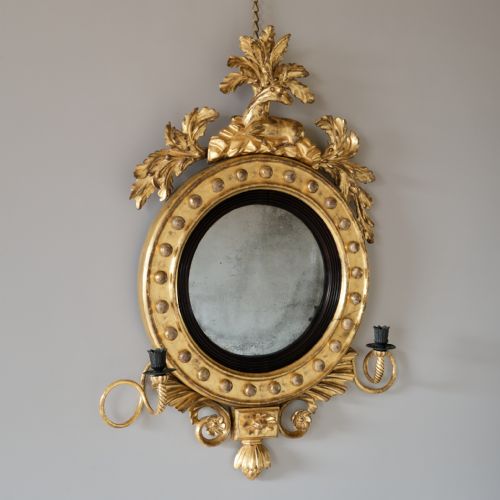
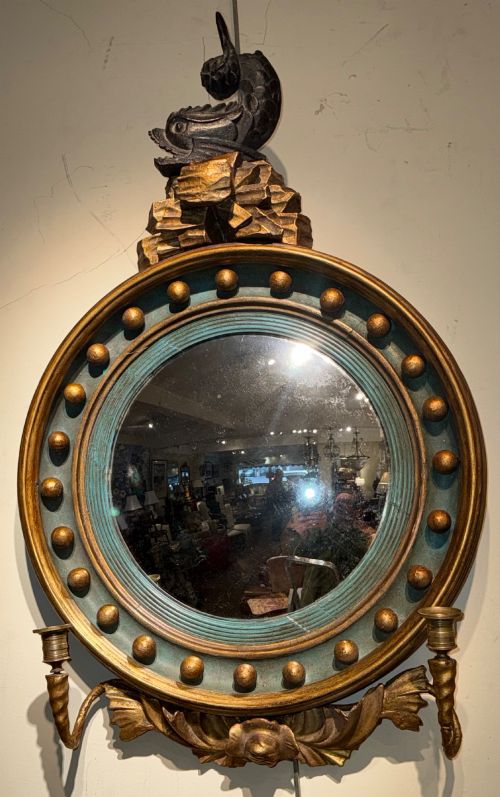
The version you are most likely to meet on this page is the circular giltwood wall mirror from the Regency period, often featuring carved detail such as an eagle surmount or candle sconces. These round frames command attention through their sheer optical sweep and bold moulding.
The evidence spans wall mirrors of varying diameters, from small domestic pieces to large statement plates reaching significant proportions. Styles align firmly with the Regency and Grand Regency periods, alongside instances of Grecian revival design.
How they were made
Makers constructed these frames primarily from giltwood and gesso over a timber base, applying layers of gold leaf to a prepared surface to achieve a brilliant metallic sheen. Ebonised wood and painted finishes also appear, providing contrast against the bright gilding.
The signature element is the curved mirror glass itself, often distortion-free at the centre but bending light sharply toward the edges. Frame construction frequently incorporates carved wooden embellishments, such as heraldic birds, reeded ebonised inner bezels, and brass candle arms on girandole versions.
Period Convex Mirror Retail Price Guide 2026
Typical asking prices for period convex mirror among the pieces listed under this phrase on Sellingantiques today, from the lower quarter to the upper quarter. They describe what is for sale here now, not the wider market.
Regency eagles glare downward with intense watchfulness, ensuring no household drama escapes the curved glass.
What varies in quality
The standard of carving sets the upper tier apart from simpler examples, visible in the sharpness of the eagle surmounts and the depth of the acanthus foliage. Crisp hand-chiselled detail on the frame indicates skilled workmanship.
The condition and clarity of the original mirror plate heavily influence the piece, alongside the preservation of the delicate gesso ground beneath the gold leaf. Uniformity in the gilded surface and the integrity of the structural joinery complete the distinction between ordinary and exceptional specimens.
The Period Convex Mirror Glossary
- Convex mirror
- A round wall glass with an outward-curving surface that reflects a wide, fish-eye perspective of the surrounding space. This optical design was popular in Regency interiors for monitoring a room.
- Giltwood
- Timber carved and coated with a thin layer of gold leaf over a prepared gesso ground. It provides a warm, reflective metallic finish that catches interior candlelight or daylight.
- Girandole
- A wall mirror featuring attached candle sconces or arms branching from the frame. The polished metal and glass surfaces multiply the flickering light of the candles.
- Ebonised wood
- Timber treated to imitate ebony, typically through dark staining or finishing. It frequently appears as a reeded inner moulding on Regency frames to contrast with the outer gilding.
- Gesso
- A plaster-like mixture applied to wood frames as a smooth base for gilding or paint. Its application allows artisans to mould crisp decorative reliefs.
Period Convex Mirror: Frequently Asked Questions
Where should I hang a convex mirror?
These mirrors suit focal points in reception rooms, hallways, or above mantelpieces where their wide-angle reflection can capture the entire space. Placing them opposite a window maximises the distribution of natural light.
Ensure the wall structure can support the weight of the timber frame, particularly on larger examples that require heavy-duty fixings.
How do I identify a Regency convex mirror?
Look for characteristic design elements such as circular giltwood frames, reeded ebonised sight edges, and classical motifs like eagle surmounts. The proportions and materials align with early nineteenth-century cabinet-making.
The presence of original mirror glass with natural foxing further points to period authenticity.
What is a girandole mirror?
A girandole is a wall mirror equipped with integrated candle arms or sconces branching from the sides of the frame. In historical interiors, these arms held wax candles to amplify illumination.
Today, they retain their decorative function as multifaceted light reflectors.