



Period Clothing Storage
Period clothing storage offers robust mahogany chests, cedar tansu cabinets, and oak cupboards that bring centuries of craftsmanship into modern homes.
Period Clothing Storage
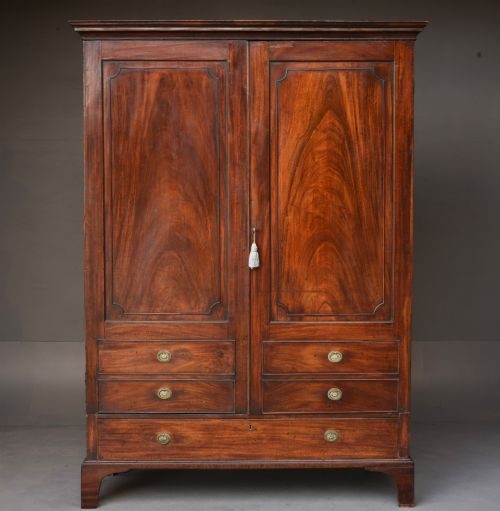
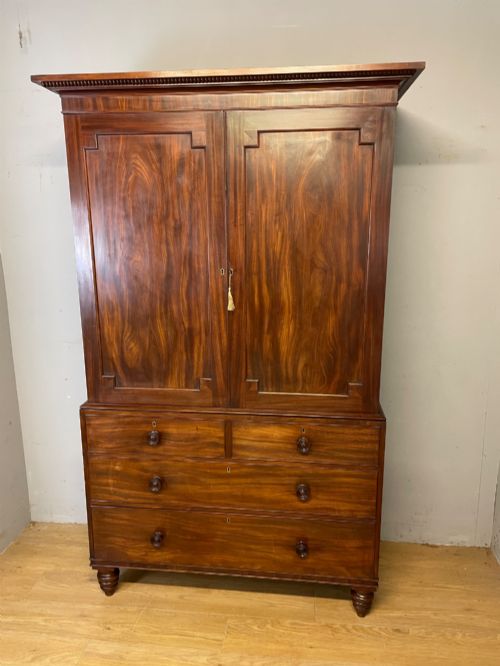
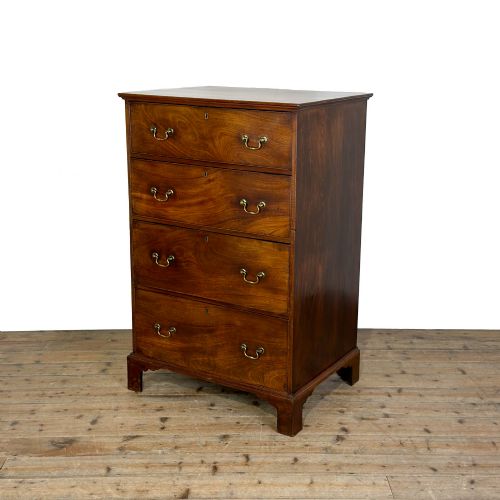
When you search for period clothing storage, you encounter substantial wooden cabinetry designed to hold garments across centuries of domestic life. These pieces range from compact chests of drawers to towering linen presses and multi-drawer tansu chests.
The versions most frequently met on this page belong to the Georgian and Regency eras in British furniture, alongside Japanese Meiji period and early twentieth-century cedar or zelkova tansu chests. British examples favour rich mahogany and sturdy oak, whilst Japanese pieces showcase cedar and iron hardware.
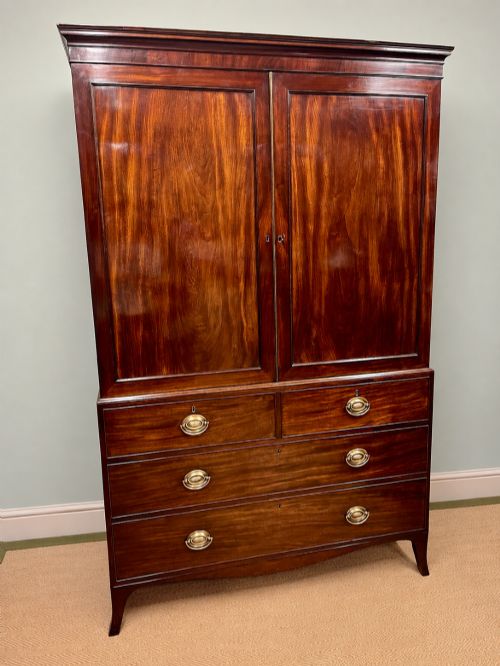
Forms vary from simple hanging wardrobes and storage cabinets to elaborate linen presses featuring upper cupboard doors above banks of drawers. Each type serves a distinct organisational function whilst displaying the characteristic proportions of its period.
Materials and construction
Cabinet makers utilised dense native and imported timbers, notably flame mahogany, solid oak, cedar, and pine, selecting each wood for its structural strength and grain pattern. Satinwood stringing and brass fittings frequently accent the primary timber surfaces.
Traditional joinery methods dictate the construction, visible in hand-cut dovetails on drawer boxes and pegged frame assemblies. Iron mounts and strap hinges reinforce Japanese tansu chests, whilst British presses employ panelled doors and moulded cornices.
Listings feature eighteenth and nineteenth-century British cabinetry alongside Japanese Meiji period tansu chests, constructed in mahogany, oak, cedar, and pine.
Judging quality and character
Quality separates pieces through the selection of timber figures, such as highly figured flame mahogany veneers or uniform cedar planks, and the crispness of carved details like swan-neck pediments. The integrity of the original hardware and the smoothness of drawer operation further distinguish superior examples.
Proportion and surface patination dictate visual success, with untouched waxed finishes and balanced architectural elements marking the distinction between standard utility items and exceptional cabinetwork.
The Period Clothing Storage Glossary
- Linen press
- A large storage cabinet comprising upper cupboard doors for shelving and a base section fitted with drawers. Originally designed to store household linen flat.
- Tansu
- A traditional Japanese mobile storage chest constructed from woods such as cedar and zelkova, fitted with elaborate iron lock plates and handles.
- Flame mahogany
- A veneer cut from the fork of a mahogany tree that produces a distinctive flickering flame-like grain pattern. Cabinet makers used this to create decorative drawer fronts.
- Livery cupboard
- An early freestanding oak cupboard used for storing food, clothing, or household provisions in country houses. They feature ventilated door panels for air circulation.
- Swan-neck pediment
- A broken arch pediment popular on eighteenth-century case furniture that curves outward and upward like the neck of a swan. It often terminates in a carved floral patera or scroll.
Period Clothing Storage: Frequently Asked Questions
What is a linen press?
A linen press is a tall case furniture piece featuring upper doors enclosing sliding trays or shelves, paired with a chest of drawers below. They were built to store household linens and folded garments before fitted wardrobes became standard.
Today, the upper interior can often be adapted for hanging clothes whilst retaining the traditional exterior appearance of Georgian or Regency cabinetry.
How do I identify a Georgian chest of drawers?
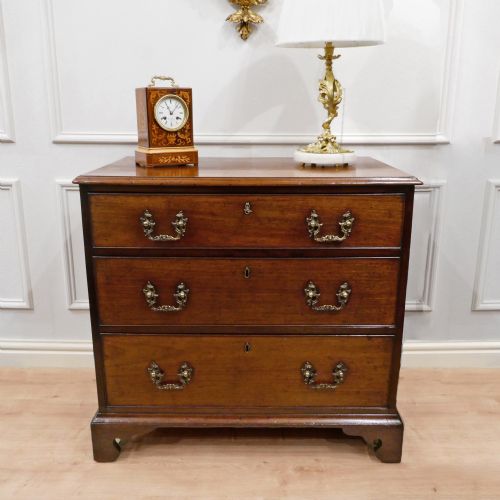
Georgian chests of drawers typically display solid mahogany or oak construction with hand-dovetailed drawer boxes and bracket feet or plinth bases. They date from the eighteenth or early nineteenth century and possess understated proportions.
Finer versions incorporate decorative elements such as satinwood crossbanding, brass swan-neck handles, and moulded top edges.
Where were tansu chests made?
Tansu chests originated in Japan during the Edo and Meiji periods as portable storage units for merchants and households. They utilise woods like cedar and zelkova.
These pieces feature heavy forged iron hardware, including corner brackets and drop handles, which protected the wood during transport.
How do I clean period wooden furniture?
Clean period wooden surfaces using a soft, dry cloth to remove dust without disturbing the historic wax or polish. Avoid commercial sprays containing silicone.
Feed the timber periodically with traditional beeswax to maintain the moisture and depth of the grain.
Can I use these cabinets for modern clothes?
These storage pieces adapt well to modern wardrobes, offering deep drawers for folded items and spacious cupboards for hanging garments. Cedar tansu chests naturally deter insects, protecting woollens.
Measure the internal depth of older wardrobes before purchase, as historical coat hangers sometimes require angled placement.