

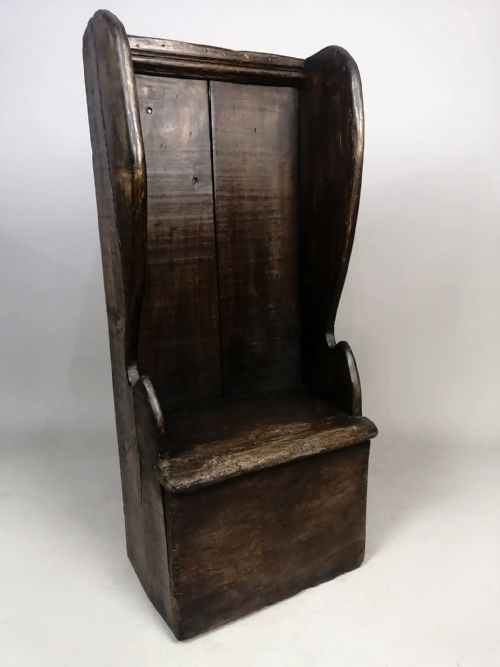


Period Childs Armchair
A period childs armchair brings centuries of cabinetmaking skill into miniature form, offering both historical charm and genuine seating.
Period Childs Armchair
The materials and styles span multiple centuries, showing the evolution of domestic life from the seventeenth century through the Victorian era and into the twentieth century. Common survivals include high chairs on stands, rush seated ladderbacks, and vernacular fruitwood lambing chairs built to withstand daily use.
Materials and construction methods
Timbers like oak, mahogany, walnut, ash, elm, and fruitwood form the primary structure of these small armchairs, chosen for their durability and grain. Cabinetmakers employed traditional joinery techniques such as mortise and tenon framing, turning, and carving to ensure structural stability.
Seating surfaces utilise solid wood, rush, fabric, or leather depending on the period and the maker's workshop tradition. Brass fittings occasionally appear on specific pieces, while ebonised finishes highlight nineteenth-century aesthetic preferences.
Listings feature oak, mahogany, walnut, fruitwood, ash, and elm across centuries ranging from the 17th century to the 1930s.
Factors determining quality
The distinction between ordinary and exceptional examples rests upon the fidelity of the proportions and the retention of original surfaces. Master craftsmen applied the same decorative carving and turning standards to children's seating as they did to full-scale furniture.
Proportion and structural integrity separate workshop-made pieces from later adaptations or altered examples. Retaining original timber patination and authentic rush or wood seats elevates the stature of any piece within a collection.
The Period Childs Armchair Glossary
- Wainscot chair
- A heavy wooden armchair constructed primarily from oak with panelled backs, popular in the seventeenth century. These sturdy seats represent some of the earliest surviving examples of domestic children's furniture.
- Lambing chair
- An enclosed vernacular armchair featuring wings and a solid low seat designed to protect against drafts. Fruitwood versions are particularly prized for their rustic country construction.
- Ladderback
- A chair back featuring horizontal slats between the upright posts, often paired with rush seating. This traditional form appears frequently in country vernacular and twentieth-century interpretations.
- High chair on stand
- A raised chair mounted upon a fixed wooden frame to elevate the child to table height. These specialised forms date from the seventeenth and eighteenth centuries.
- Vernacular
- Furniture made by local craftsmen following regional traditions rather than formal London pattern books. These pieces reflect practical utility and local timber availability.
Period Childs Armchair: Frequently Asked Questions
What periods do these armchairs cover?
The available selection spans from the seventeenth century through the Victorian era, Regency period, and early twentieth century. Each era brings distinct woods and construction methods characteristic of its time.
Buyers find everything from seventeenth-century joined oak wainscot chairs to nineteenth-century rocking chairs and twentieth-century interpretations.
How were high chairs used?
High chairs served to seat young children safely at the family dining table during meals. Many early examples feature integrated stands or footrests for stability.
Surviving high chairs demonstrate how families adapted standard domestic furniture scales for infant care over the centuries.
Can I use an antique childs armchair daily?
Many sturdy oak and mahogany examples remain structurally sound enough for careful everyday seating or decorative display. Assessing the joints and timber condition helps determine practical use.
Collectors often place these miniature chairs in living spaces or nurseries to highlight historic craftsmanship.
How do I identify a Regency period chair?
Regency pieces typically utilise mahogany and reflect classical revival influences popular in the early nineteenth century. Clean lines and refined turning distinguish them from earlier vernacular styles.
Comparing the wood type and structural form against documented examples helps confirm the period.