



Period Canterbury
A period canterbury is a low, multi-tiered stand designed to hold sheets of music or periodicals close at hand.
Period Canterbury
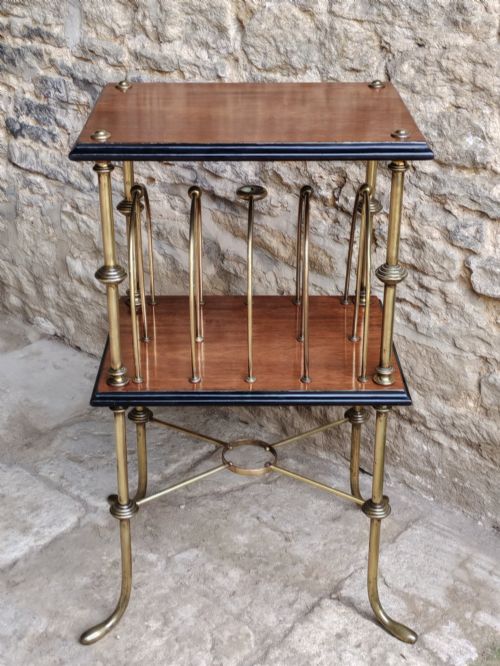
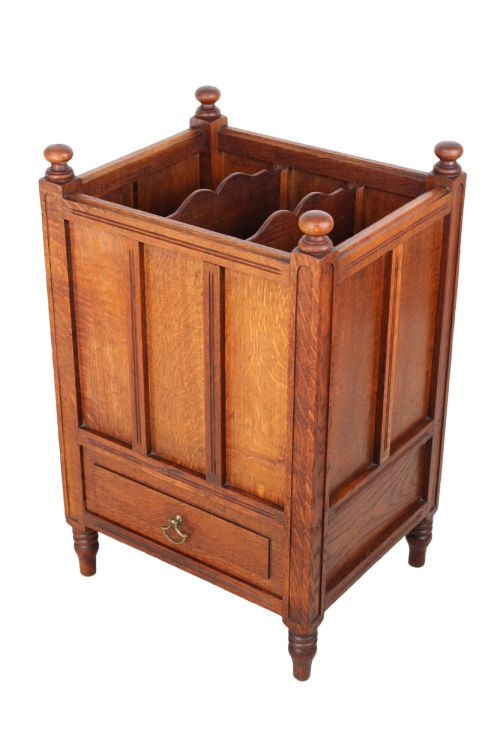
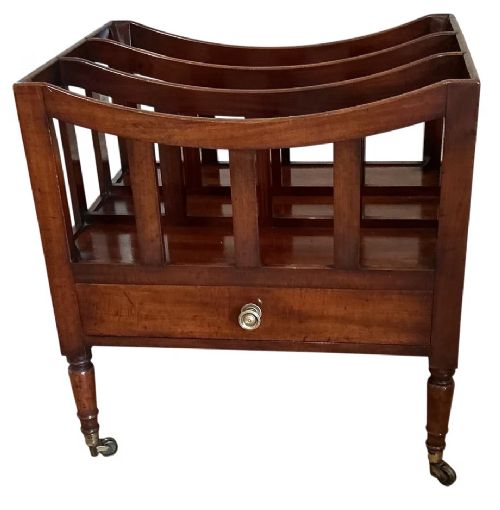
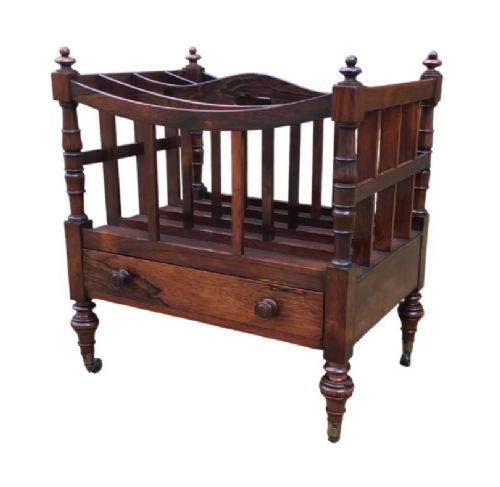
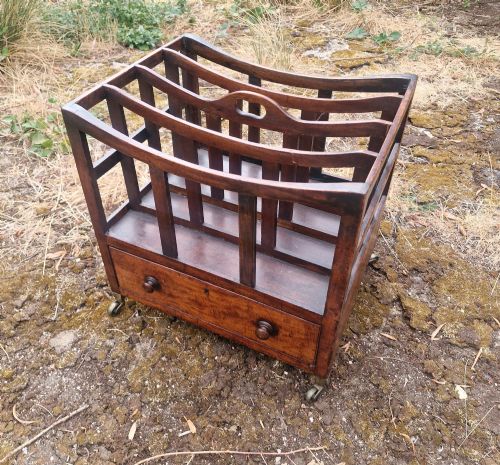
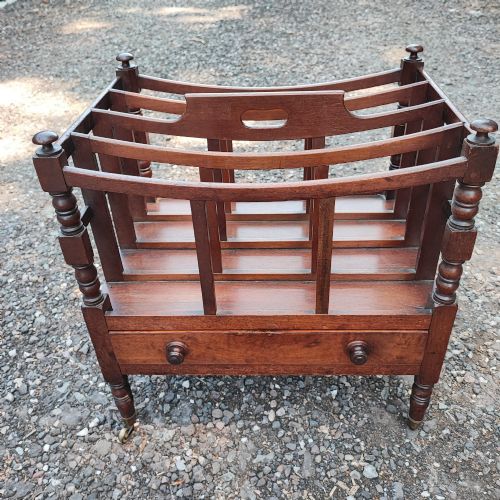
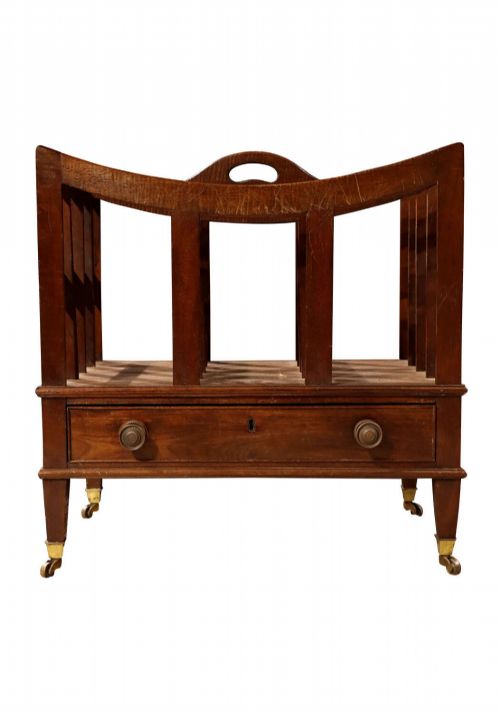
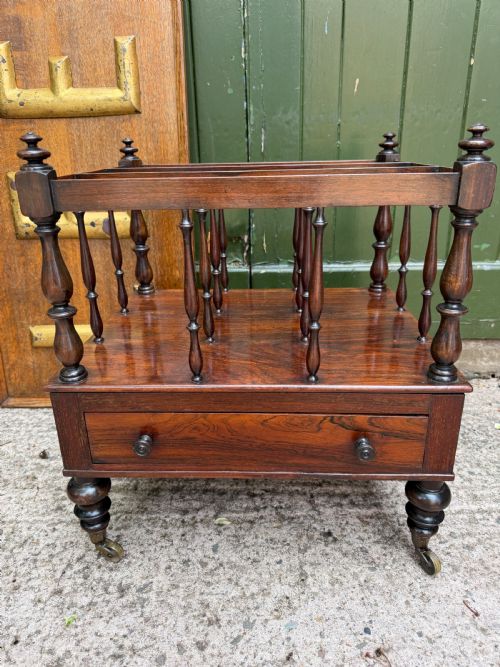
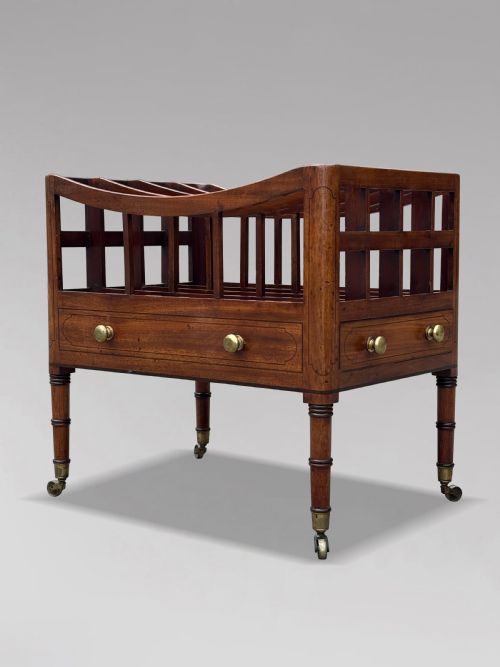
A period canterbury serves as a compartmentalised rack for holding books, sheet music and newspapers, typically fitted with upright divisions and a low drawer below. These pieces appear across several eras, with Regency examples in rosewood or mahogany forming a large portion of the selection on this page.
Makers designed these items for the sitting room or music parlour, combining open wooden partitions with castors for easy movement across the floor. Alongside standard freestanding racks, buyers encounter hybrid forms such as magazine tables, occasional pieces, and combined whatnots and etageres.
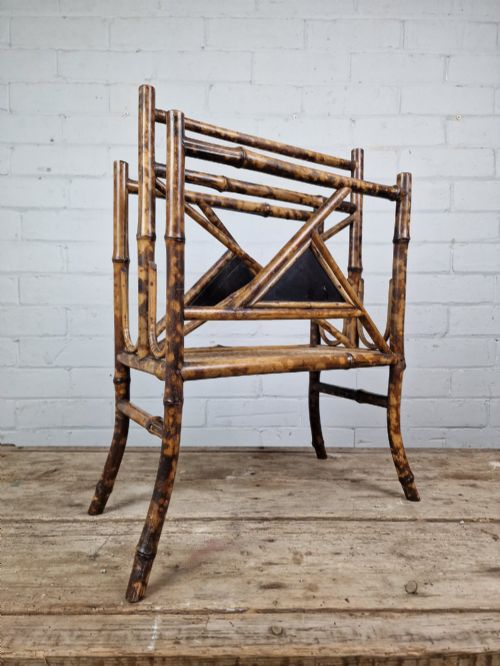
The materials span from rich timbers like burr walnut and mahogany to lighter options including bamboo and lacquer, reflecting changes in taste from the eighteenth century through the Edwardian period. Simple oak versions and elaborate rosewood pieces with carved details illustrate the varied domestic roles these stands fulfilled.
How they were made
Cabinetmakers constructed these stands using dense hardwoods such as mahogany and rosewood, often selecting figured veneers for top surfaces and drawer fronts. Sections of oak served for internal framing and drawer linings, while bamboo provided a lighter structural alternative during the nineteenth century.
Makers incorporated brass details including castors, hinges, and carrying handles, allowing the stands to be repositioned easily. Joinery techniques varied from precise dovetailing on drawers to pegged or dowelled joints securing the vertical partition slats.
Period Canterbury Retail Price Guide 2026
Typical asking prices for period canterbury among the pieces listed under this phrase on Sellingantiques today, from the lower quarter to the upper quarter. They describe what is for sale here now, not the wider market.
Some nineteenth-century makers fitted these music stands with tiny brass castors so players could wheel their scores across the carpet in a hurry.
What varies in quality
The choice of timber underpins the distinction between standard pieces and high-end examples, with finely figured rosewood and burr walnut indicating superior workshop output. Grain matching across panels and crispness in carved details elevate certain stands above plain production models.
Proportion and scale dictate the visual balance of the piece, where compact dimensions and refined turning on upright supports show greater design ambition. Original brass castors and intact internal dividers preserve the integrity of the object more effectively than later replacements.
Gillows
The Period Canterbury Glossary
- Boat shaped
- A curved or concave outline resembling a small vessel, often seen on the top rails or compartment dividers of Regency examples.
- Etagere
- A set of open shelves for displaying small objects, sometimes combined with the lower compartments of a canterbury.
- Whatnot
- A multi-tiered freestanding shelving unit used for storage or display, frequently paired with a rack base in this category.
- George III
- The stylistic period spanning the late eighteenth century, characterised by classical proportions and fine mahogany craftsmanship.
- Regency
- The design era of the early nineteenth century favouring classical revival motifs, rosewood veneers, and brass inlay.
Period Canterbury: Frequently Asked Questions
What is a period canterbury used for?
These pieces functioned historically as dedicated stands for organising sheet music, books, and unbound periodicals within the parlour or drawing room.
Today, owners utilise the vertical compartments in much the same way, holding contemporary magazines, journals, or vinyl records near seating areas.
How do I date a mahogany canterbury?
Dating relies on observing structural characteristics, timber choices, and stylistic markers such as turned legs or brass inlay work.
Late eighteenth-century George III models display restrained classical lines, whereas Regency and William IV iterations often utilise heavier rosewood and bolder carved motifs.
Can I use an antique canterbury as a side table?
Many examples feature flat upper tiers or tabletop surfaces originally intended for holding lamps, small decorative objects, or drinks.
Their low height makes them suitable for placing beside a sofa or armchair, provided the surface finish is protected from moisture.
Why do some canterburys have drawers?
The inclusion of a small drawer at the base provided secure storage for smaller items like tuning forks, sheet music manuscripts, or reading accessories.
Cabinetmakers integrated these drawers beneath the vertical slats to maximise the utility of the compact footprint.