


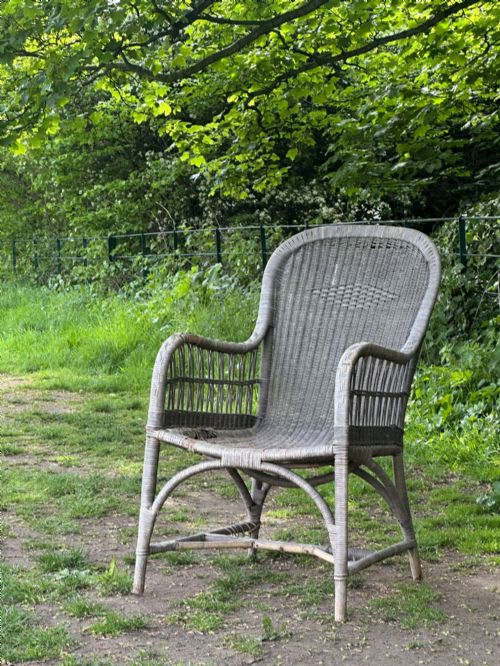
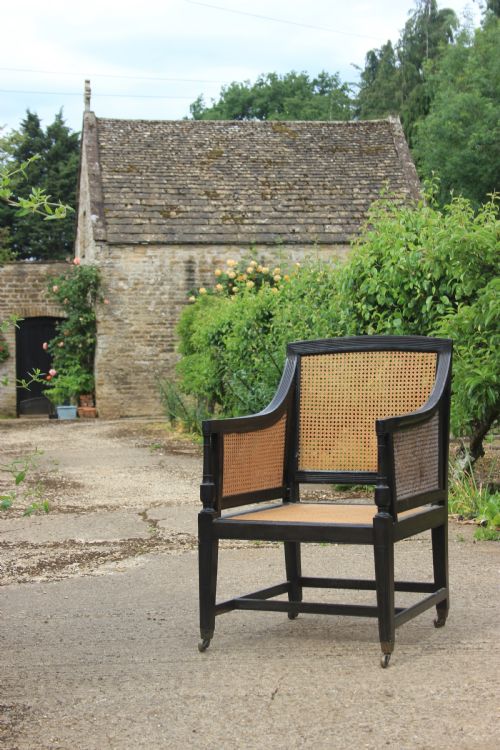

Period Cane Chairs
Period cane chairs bring tactile warmth and lightness to a room, offering centuries of seating design crafted from resilient natural materials.
Period Cane Chairs
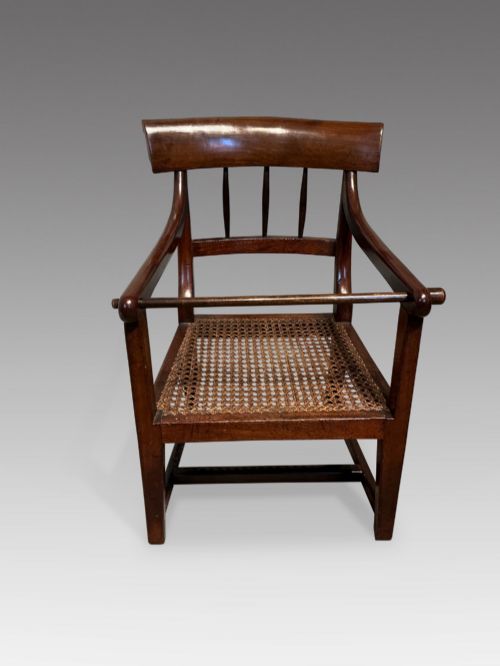
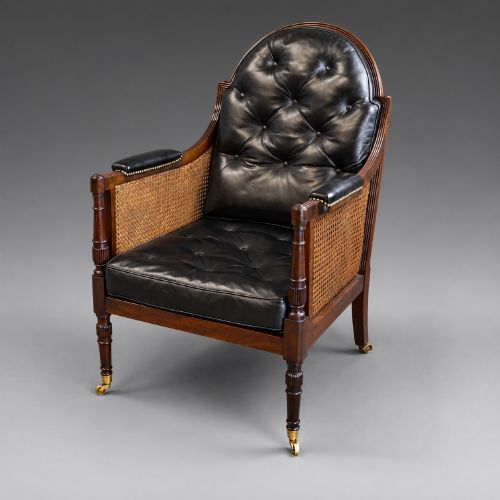
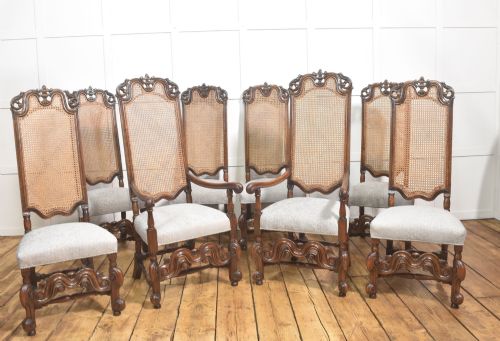
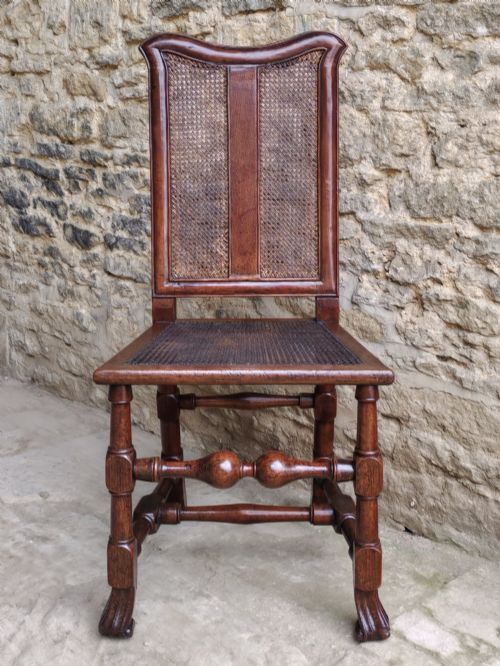
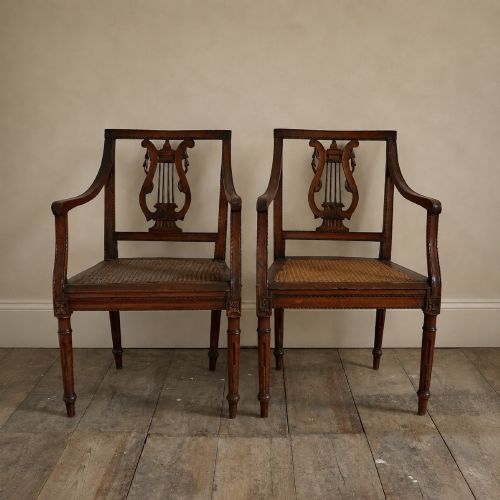
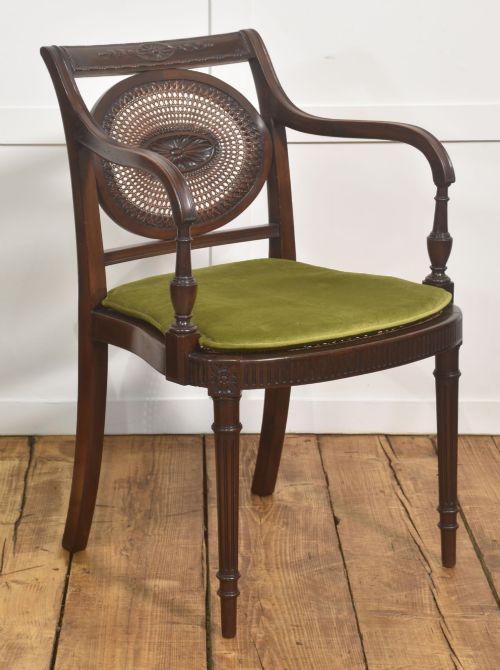
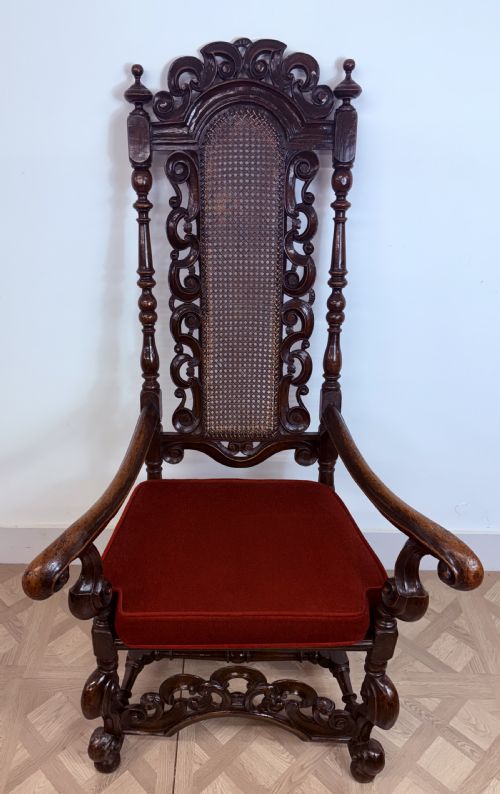
Period cane chairs encompass seating from the seventeenth century through to the early twentieth century, spanning robust Carolean designs, elegant Regency forms, and later revival styles. You will encounter dining chairs, side chairs, and substantial library armchairs or bergères featuring woven seating surfaces.
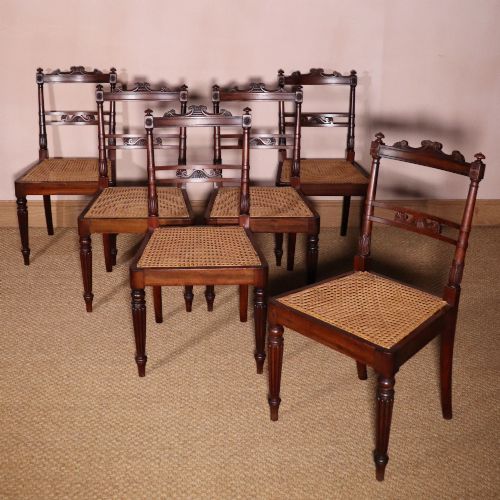
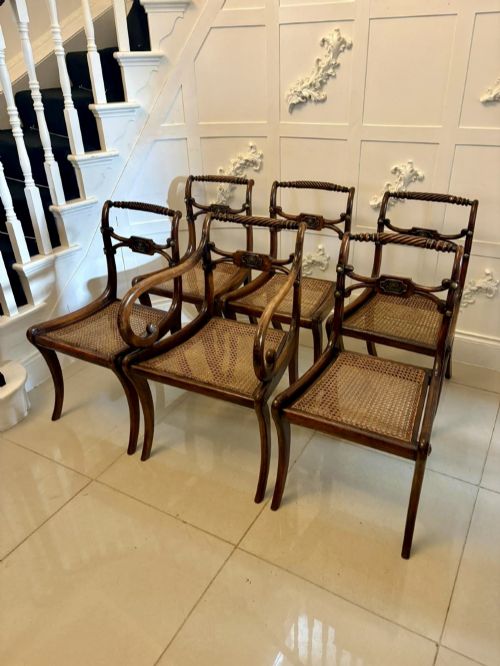
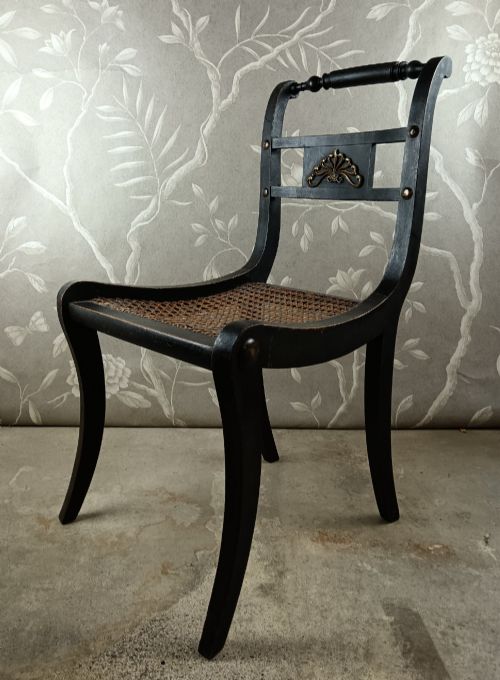
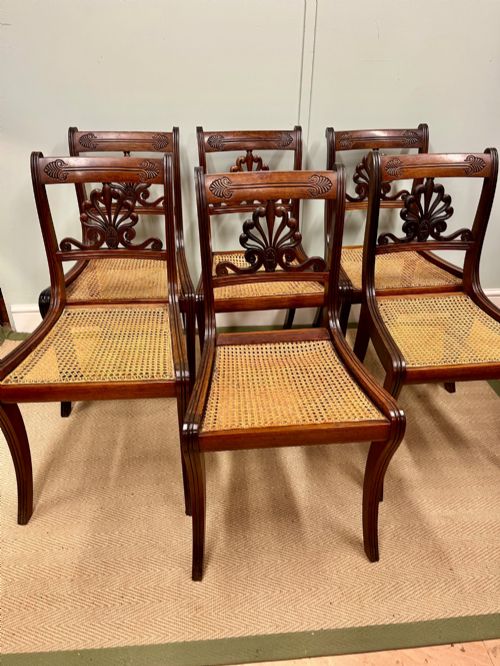
The Regency period heavily populates this selection, offering mahogany, ebonised wood, and simulated rosewood frames alongside specific seating configurations like sets of dining chairs and pairs of library armchairs. Earlier seventeenth and eighteenth-century walnut and oak examples appear less frequently, anchoring the deeper historical range.
Specialist forms such as children's chairs, high chairs, and high-back dining sets also emerge among the listings. These varied formats provide options ranging from single accent pieces to matched dining suites.
How they were made
Frames rely on hardwoods like mahogany, walnut, oak, and beech, frequently shaped through turning, carving, or steam-bending. Ebonised finishes, japanning, and painted surfaces introduce alternative visual textures to the bare timber.
Cane work involves weaving split rattan strands through drilled holes in the wooden seat frame to create a breathable, resilient mesh. Additional decorative elements include brass mounts, leather accents, and carved rope twist details.
Period Cane Chairs Retail Price Guide 2026
Typical asking prices for period cane chairs among the pieces listed under this phrase on Sellingantiques today, from the lower quarter to the upper quarter. They describe what is for sale here now, not the wider market.
What varies in quality
The sophistication of the timber framing and the precision of the joinery set the baseline for each piece, distinguishing utilitarian seating from high-status library armchairs. Generous proportions and well-drawn proportions indicate superior design ambition.
The integrity and tightness of the handwoven cane work dictate longevity and aesthetic success. Original painted finishes or retained ebonisation preserve the historical authenticity prized by collectors.
Dryad of Leicester·Gillows
The Period Cane Chairs Glossary
- Bergere
- An enclosed upholstered armchair featuring cane sides and back panels, popular during the Regency period. This form prioritised comfort and generous proportions for library use.
- Carolean
- A seventeenth-century stylistic period spanning the reign of Charles II, characterised by rich carving and high backs. Pieces from this era often utilise walnut or oak.
- Ebonised
- Wood treated with a dark finish to imitate expensive ebony. This technique gained particular favour during the Regency era for sharp contrast.
- Japanning
- A European imitation of East Asian lacquerwork applied to furniture frames. It creates a glossy, decorated surface seen on pieces around the turn of the eighteenth century.
- Sabre leg
- A concave, outwardly curving furniture leg resembling a cavalry sword. This feature appears frequently on Regency dining and side chairs.
Period Cane Chairs: Frequently Asked Questions
What is a period cane chair?
A period cane chair is a wooden seat featuring a woven cane panel, typically found in historical forms ranging from the seventeenth-century Carolean era to the Regency period.
These pieces combine carved timber frames with flexible, breathable seating surfaces designed for both formal dining and library use.
How do I date an old cane chair?
Dating relies on examining the timber species, frame silhouette, turning techniques, and the weave pattern of the cane itself. Seventeenth-century examples often feature high walnut backs, whilst Regency versions showcase sabre legs and mahogany.
Comparing structural joinery and decorative details against documented revival styles helps confirm whether a piece is seventeenth-century or a later nineteenth-century interpretation.
Were cane chairs used for dining?
Yes, many period cane chairs were produced as sets specifically for dining rooms, alongside matching carvers and elbow chairs. The lightweight woven seats offered practical comfort for long meals.
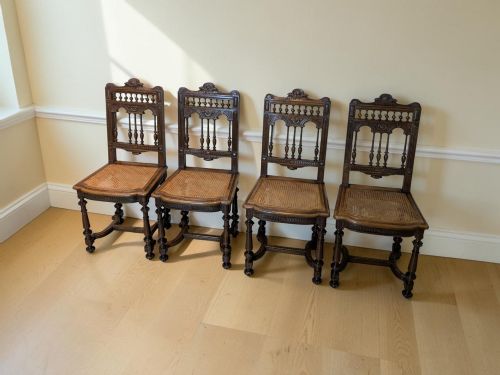
Sets ranging from four to eight chairs appear frequently, particularly from the Regency and early twentieth-century periods.
How do I care for antique cane?
Antique cane requires consistent humidity to prevent the rattan fibres from becoming brittle and snapping. Light dusting and occasional damp wiping maintain the flexibility of the natural material.
Avoiding direct heat sources and heavy concentrated weight protects the tension of the historic weave.