



Pencil and Watercolour Sketch
A pencil and watercolour sketch brings the immediacy of an artist's hand into a room, capturing light and line before the paint goes down.
Pencil and Watercolour Sketch
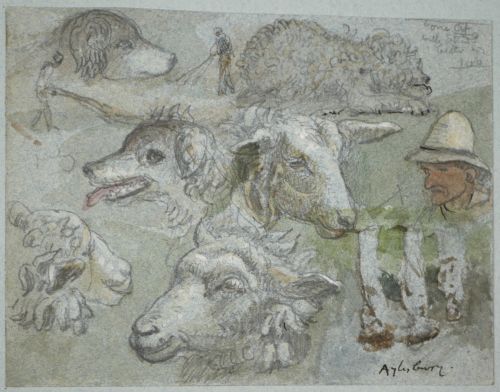
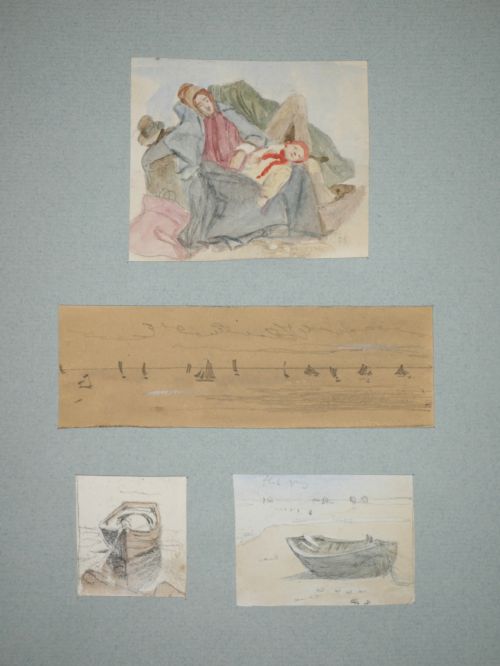
A pencil and watercolour sketch combines graphite lines with washes of pigment on paper, capturing both precise detail and fluid atmosphere. These works appear across several periods, from Regency and Victorian examples up to mid-20th-century British fine art.
The subjects span architectural townscapes, marine views, and detailed portraiture of ladies and gentlemen. Works on paper range from rapid observational drawings to finished compositions framed behind glass.
Buyers encounter framed artworks bearing the signatures of named artists alongside anonymous studies from the nineteenth and twentieth centuries. The format suits domestic display, offering intimate glimpses into historical scenes and coastal landscapes.
Materials and technique
Artists begin with graphite pencil or ink to establish proportion and perspective on paper. Washes of watercolour are then applied over the drawing, sometimes supplemented with gouache to build opacity in highlights.
Completed sheets are mounted and housed within wood or gilt wood frames under glass to protect the paper from moisture and light damage. The framing often reflects the period of the artwork, ranging from simple moulded timber to ornate gilded surrounds.
Pencil and Watercolour Sketch Retail Price Guide 2026
Typical asking prices for pencil and watercolour sketch among the pieces listed under this phrase on Sellingantiques today, from the lower quarter to the upper quarter. They describe what is for sale here now, not the wider market.
Several artists recorded the bustle of British bridges and coastal railways long before the morning commute became automated.
Judging quality
Quality rests upon the confidence of the draughtsmanship and the economy of the watercolour washes. A strong piece demonstrates clarity in the underlying pencil structure and precise control over the fluid medium.
The distinction between a casual study and a finished work lies in the observation of light and proportion. Superior examples retain vibrancy in the pigments and sharpness in the graphite lines without excessive fading.
James Smetham·Raoul Millais·Charles Prosper Sainton·Dame Laura Knight·Leo Klin·Sir William Charles Ross
The Pencil and Watercolour Sketch Glossary
- Gouache
- An opaque water-based paint that provides solid highlights over a pencil and watercolour sketch. It contains a white pigment binder that gives it a matte, heavy finish.
- Wash
- A thin, translucent layer of diluted watercolour spread evenly across the paper. Artists use washes to establish background tones and atmospheric depth.
- Draughtsmanship
- The skill of representing form and contour through line and shading. It forms the essential foundation beneath the watercolour application.
- Works on paper
- A collective category covering drawings, sketches, and watercolours executed on paper supports. These pieces require protection behind glass to prevent environmental degradation.
Pencil and Watercolour Sketch: Frequently Asked Questions
How should I hang a watercolour sketch?
Keep these works away from direct sunlight to prevent the pigments and paper from fading over time. UV-filtering glass provides an extra layer of defence for sensitive watercolours.
Ensure the room maintains a stable humidity level. Damp environments encourage foxing spots on older paper.
Are these works always signed?
Many historical sketches remain unsigned because artists created them as preliminary studies or personal records. Attribution often relies on period style, subject matter, and provenance.
Signed pieces frequently bear the artist's monogram or full signature within the lower margin of the composition.
What is the difference between a sketch and a painting?
A sketch prioritises line and rapid notation, often leaving visible pencil marks beneath transparent watercolour washes. It records an immediate impression of a subject.
A finished painting conceals the underlying construction beneath dense layers of pigment. The focus shifts from observation to fully realised colour and texture.
How do I date a nineteenth-century drawing?
Examine the watermark in the paper stock and the style of the script used for any titling or signatures. Costume and architectural details in the subject matter also offer reliable chronological clues.
Original framing, where present, can corroborate the era in which the work was mounted.