


Pencil and Watercolour Drawing
A pencil and watercolour drawing brings immediate atmosphere to a room, combining the precision of graphite with the fluid warmth of pigment on paper.
Pencil and Watercolour Drawing
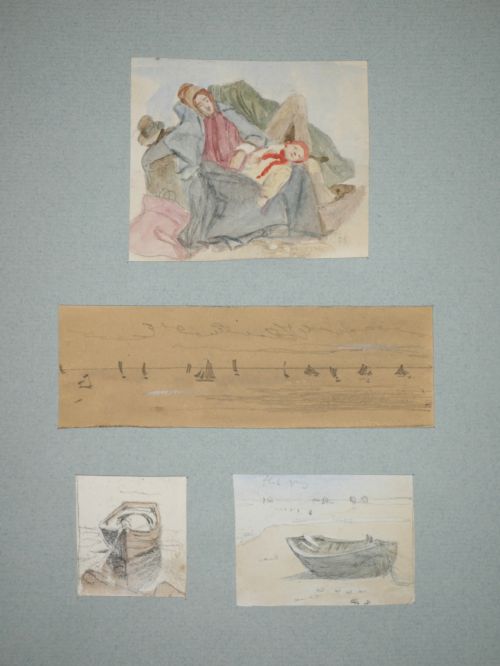
When you search for a pencil and watercolour drawing, you are looking at works on paper that span the nineteenth and twentieth centuries, including portraits, townscapes, landscapes, and maritime sketches.
The pieces you meet most often on this page range from Regency and Victorian examples to mid-twentieth-century British fine art and naive works.
These framed artworks appear in various forms, from single portraits and topographical scenes to pairs and sets of multiple sheets.
What varies in quality
Quality rests upon the sureness of the draughtsmanship beneath the paint and the artist's control over tone and wash.
The immediacy of the initial pencil work and the preservation of the paper determine the distinction between ordinary illustrative records and accomplished works on paper.
Current listings span periods from the Regency era through to the 1950s, utilising paper, watercolour, pencil, graphite, and gilt wood.
James Smetham·J W Hogley·Raoul Millais·Robert Richard Scanlan·Fred Lawson·Charles Prosper Sainton·Irene Lagut·Dame Laura Knight·Leo Klin·Sir William Charles Ross
The Pencil and Watercolour Drawing Glossary
- Watercolour
- A paint consisting of a pigment suspended in a water-soluble vehicle. It is applied in translucent washes to create luminosity on paper.
- Gouache
- An opaque water-based paint often used alongside watercolour to add highlights and solid areas of colour. It contains a white pigment like chalk added to the mixture.
- Wash
- A thin, fluid layer of watercolour spread evenly across the paper to create background tones or atmospheric effects. It requires a steady hand to avoid streaks.
- Regency
- An architectural and artistic period dating from the early nineteenth century. Works from this era often display neoclassical elegance and fine linear control.
Pencil and Watercolour Drawing: Frequently Asked Questions
How should I frame a watercolour?
Protect the paper behind glass with acid-free mount board to keep the surface clear of direct contact with the glazing.
Keep these works away from direct sunlight to prevent the pigments and washes from fading over time.
Are these works signed?
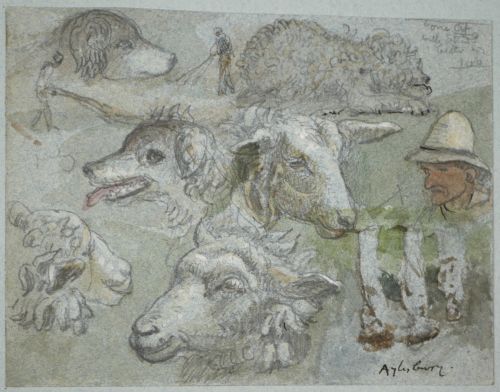
Many examples on this page carry signatures or inscriptions left by the artist, while others remain attributed through stylistic evidence and historical records.
Signatures typically appear in pencil or ink within the lower corners of the composition.
What subjects are most common?
Portraits of sitters form a significant portion of the selection, alongside architectural townscapes, landscapes, and marine scenes.
Figures, animals, and continental buildings also appear frequently across the nineteenth and twentieth-century pieces.
How do I date a drawing?
Dating relies on the costume of sitters, the architectural style of buildings in townscapes, and any visible artist signatures or dated inscriptions.
Paper stock and framing methods also offer clues to whether a piece originates from the Regency, Victorian, or mid-twentieth-century eras.