





Pediment Writing Cabinet
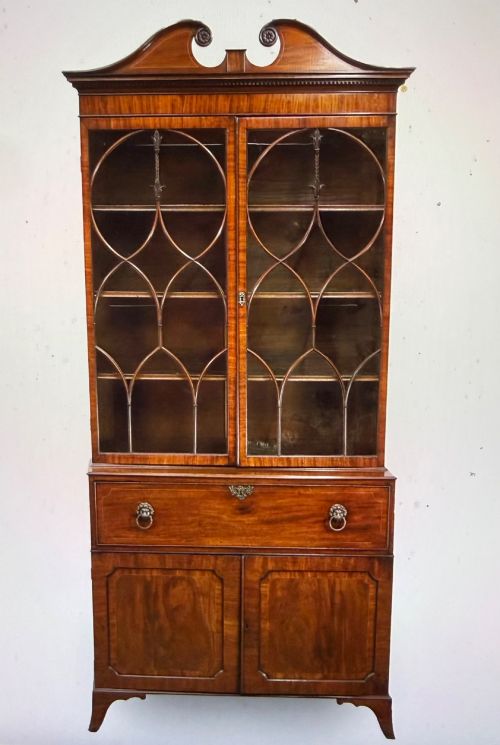
A pediment writing cabinet combines a shelved bookcase top with a fitted writing desk below, topped by a formal architectural crown.
Pediment Writing Cabinet
A pediment writing cabinet serves as a dual-purpose piece of furniture, providing enclosed shelving above a fall-front desk or secretaire drawer. When you search for a pediment writing cabinet, you encounter tall upright forms designed to organise papers and display volumes in one unified structure.
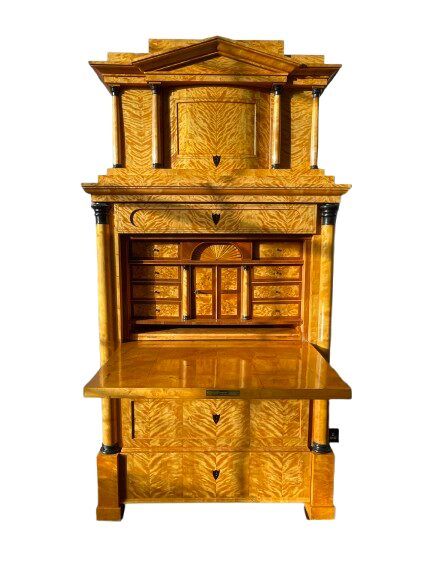
The pieces appearing here span the eighteenth and nineteenth centuries, with Georgian and Regency examples forming the core of the selection alongside Biedermeier and Victorian interpretations. Mahogany remains the predominant timber, accompanied by walnut, rosewood, and occasional satinwood or birch veneer.
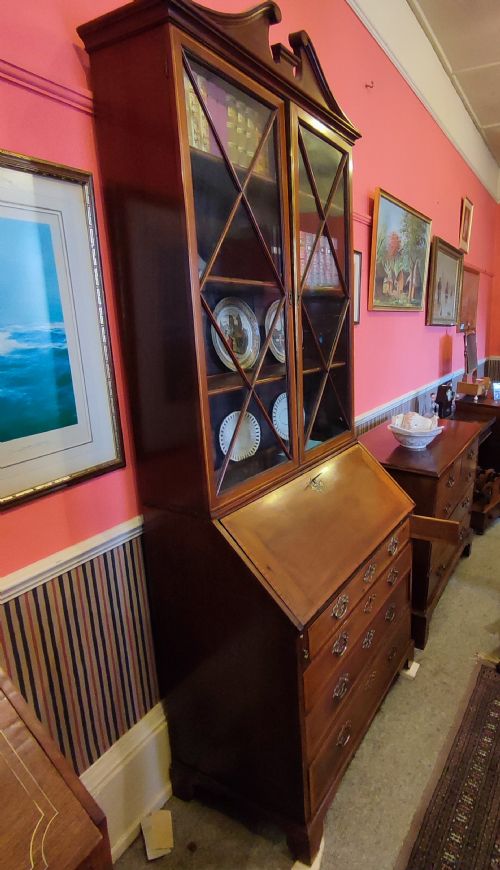
Bureau bookcases and secretaire bookcases dominate the available forms, ranging from modest fall-front desks to large architectural cases with mirrored panels or swan-neck pediments. Maker-attributed pieces and revival styles from later decades also populate the selection.
How they were made
Cabinet makers constructed these large carcasses primarily from solid mahogany and walnut, applying carefully selected veneers like satinwood, harewood, and birch across the drawer fronts and fall-front panels. Secondary timbers such as oak provided structural stability to internal drawers and backboards.
The upper display sections relied on glass panes set within timber framing, whilst the writing compartments featured intricate pigeonholes, small drawers, and secret compartments concealed behind sliding panels. Brass hardware, including drop handles, escutcheons, and hinges, secured the doors and drawers.
Pediment Writing Cabinet Retail Price Guide 2026
Typical asking prices for pediment writing cabinet among the pieces listed under this phrase on Sellingantiques today, from the lower quarter to the upper quarter. They describe what is for sale here now, not the wider market.
Listings feature eighteenth-century pieces alongside nineteenth-century Biedermeier and Victorian interpretations, constructed in mahogany, walnut, rosewood, and oak.
What varies in quality
The refinement of the architectural pediment and the choice of timber figure set the baseline for quality, with book-matched veneers and dense mahogany timbers indicating superior work. The handling of internal secret compartments and the dovetailing of small desk drawers reveal the maker's hand.
Proportions dictate overall presence, where well-balanced cornice heights and harmonious panel widths separate standard production from exceptional cabinet work. Original brassware and untouched secondary woods further distinguish pieces that retain their integrity from those heavily restored.
Edwards and Roberts·GILES GRENDY
The Pediment Writing Cabinet Glossary
- Pediment
- The triangular or curved architectural crown surmounting the top of the bookcase. It draws inspiration from classical building facades.
- Secretaire
- A desk disguised as a drawer or cabinet, featuring a drop-down front that reveals a fitted interior of pigeonholes and small drawers. This form allows the piece to function as a writing desk whilst maintaining the appearance of a chest or bookcase.
- Fall-front
- A writing surface hinged at the bottom edge that drops down into a horizontal position for writing. It conceals the internal stationery compartments when closed upright.
- Biedermeier
- A Central European style from the nineteenth century focusing on utilitarian comfort and clean lines. It utilises domestic timbers with minimal ornamentation.
- Swan-neck pediment
- An architectural top featuring opposing curved scrolls ending in rosettes, often framing a central plinth or finial. This stylistic flourish characterises many Georgian bookcases.
Pediment Writing Cabinet: Frequently Asked Questions
How do I use a secretaire drawer?
The front pulls forward and hinges down to create a flat writing surface, supported by internal brass arms or sliding brackets. This action exposes the fitted interior without requiring the entire cabinet front to open.
Once finished, the writing flap lifts back into the vertical position and locks securely, concealing papers and inkwells behind the closed exterior.
Where were these cabinets placed in a Georgian home?
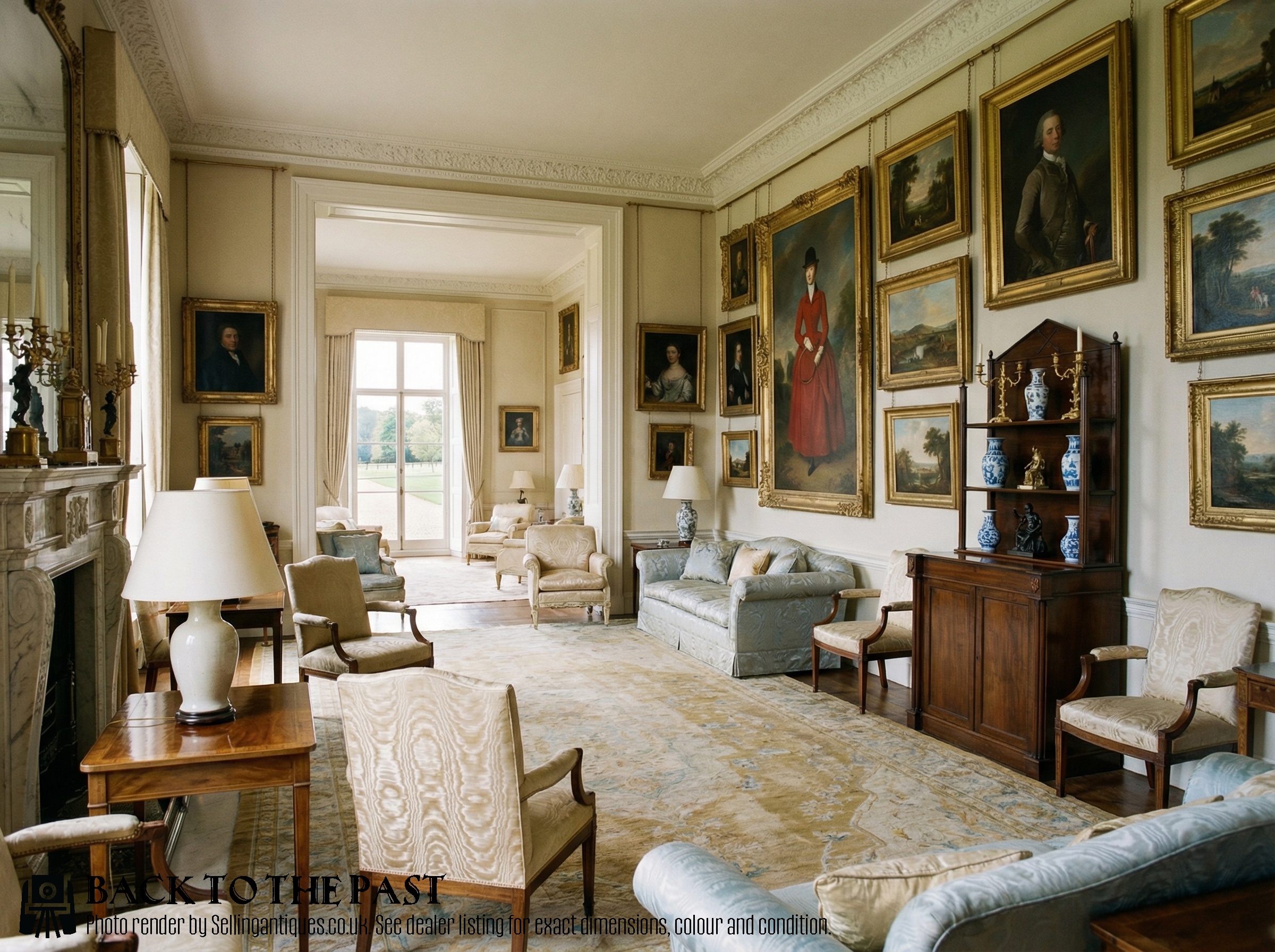
These large pieces stood in principal reception rooms, libraries, or private studies where gentlemen and ladies managed correspondence and stored bound volumes. Their imposing height and architectural pediments required substantial wall space and high ceilings.
They served both as functional workspaces and as display furniture to demonstrate the owner's learning and social standing to visitors.
How do I care for mahogany and walnut surfaces?
Maintain the timber by dusting regularly with a soft, dry cloth and applying natural beeswax polish sparingly to nourish the grain. Avoid placing the cabinet near direct heat sources or strong sunlight to prevent timber warping and veneer cracking.
Check internal drawer runners and brass hardware periodically to ensure smooth operation without forcing sticky joints.