
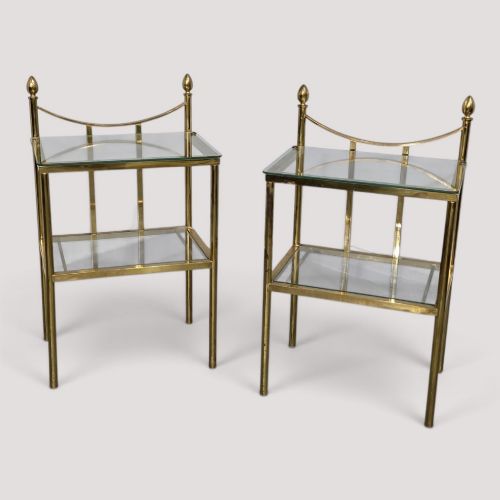
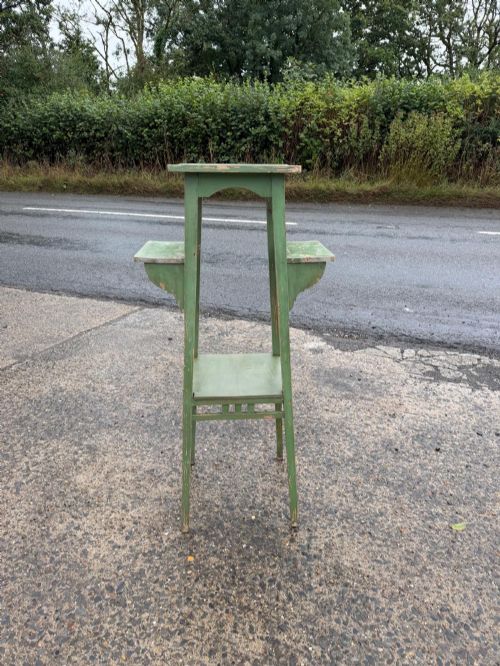
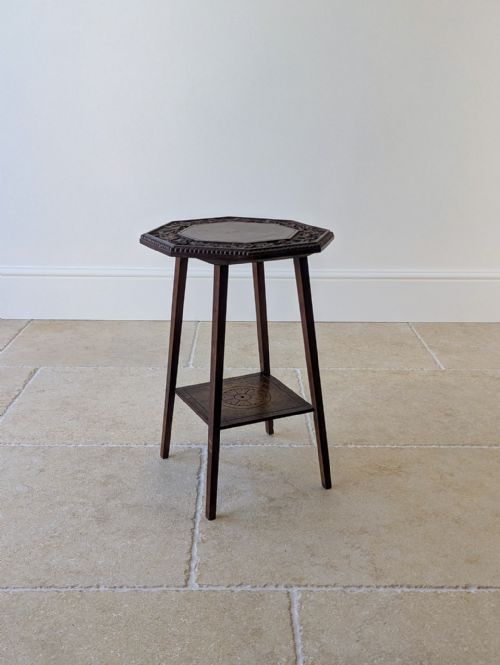
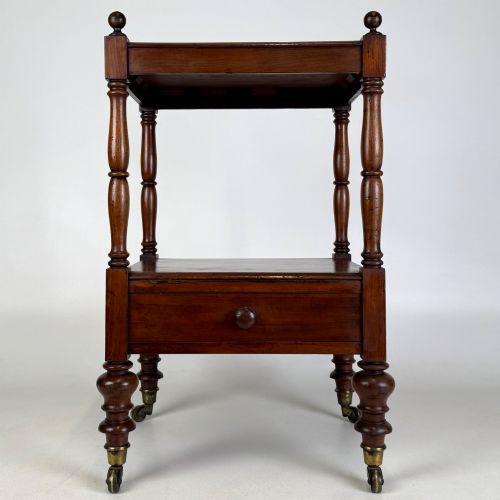
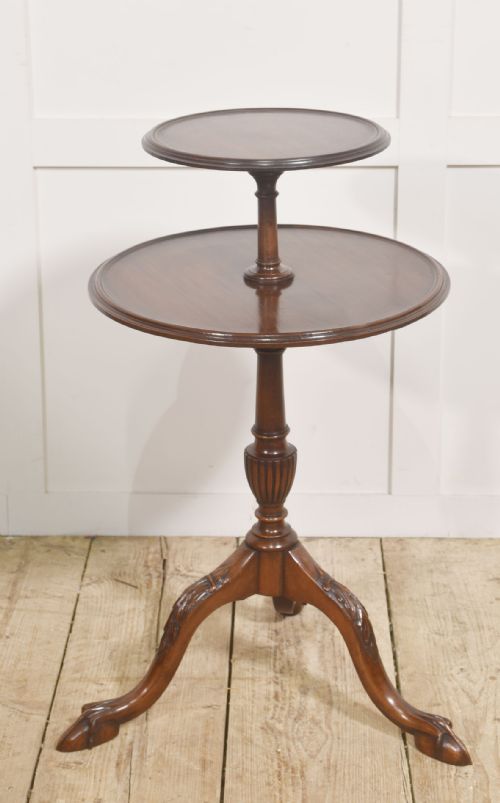


Pedestal Tiered Table
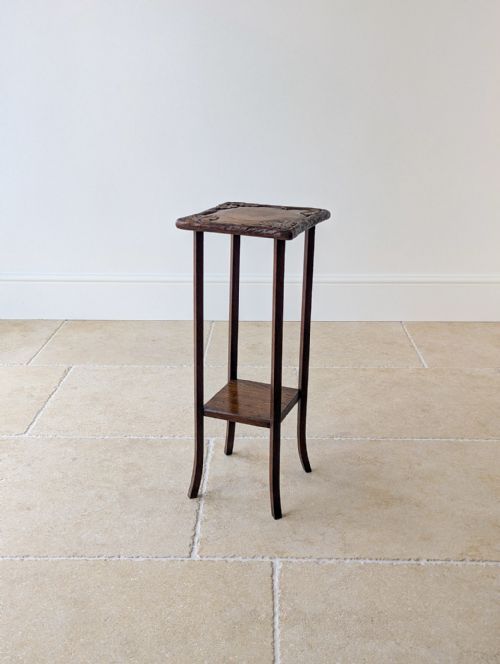
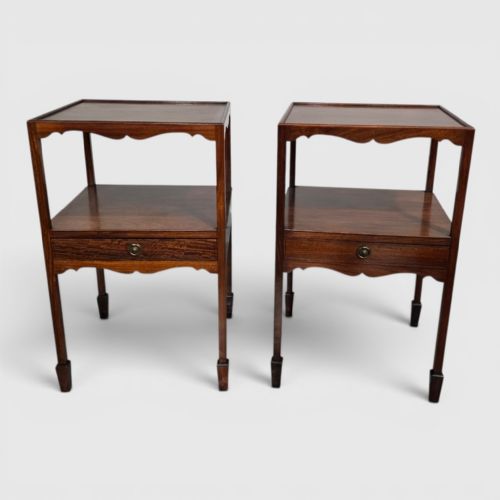
These pedestal tiered table examples bring multi-level display surfaces and compact footprints to rooms that need structured vertical emphasis.
Pedestal Tiered Table
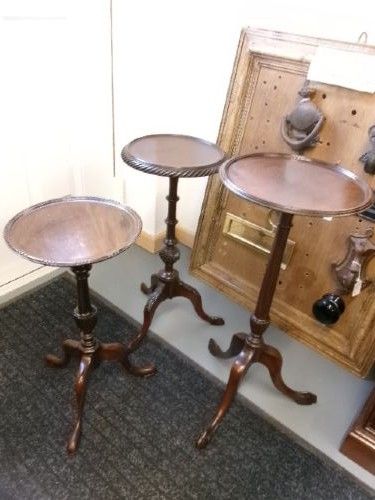
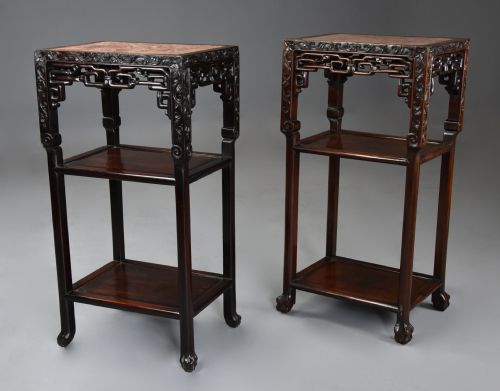
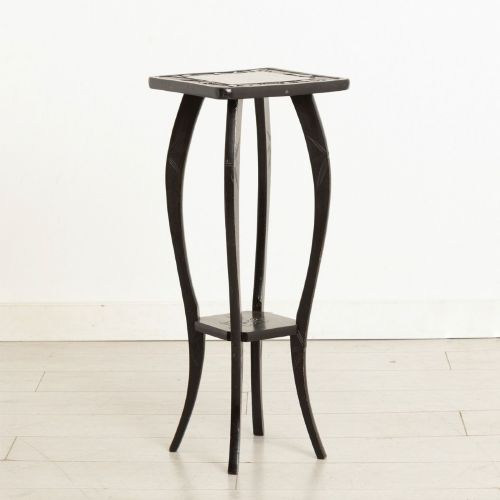
When you search for a pedestal tiered table, you look for multi-decked surfaces raised on central columns, spanning forms from plant stands and lamp tables to dumb waiters and occasional pieces. The selection ranges from Victorian and Edwardian examples to earlier Regency and Georgian styles, alongside imported hardwood and marble-topped variants.
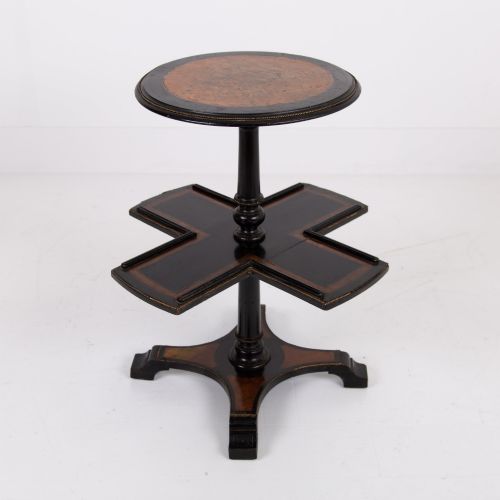
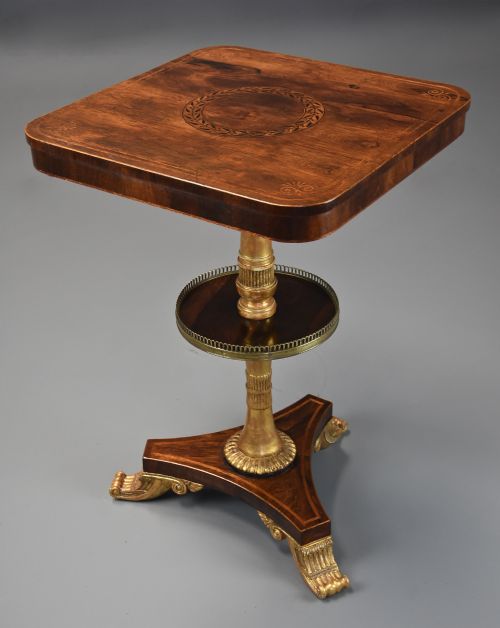
You meet various configurations on this page, including two-tier and three-tier tripod designs, revolving bookcases, and tall pot stands. Mahogany, walnut, and oak dominate the English domestic material palette, accompanied by exotic hardwoods and brass mounts.
Many pieces serve specific domestic roles, such as bedside lamp placement or holding porcelain and botanical displays. The tiered format maximises usable surface area while maintaining a minimal floor footprint.
Materials and Construction
Cabinet makers utilised dense timber stocks like mahogany, walnut, rosewood, and burr walnut, often selecting figured veneers for top surfaces. Turned central pedestals support the tiers, terminating in tripod legs or weighted plinth bases for stability.
Secondary materials introduce contrasting textures, incorporating inset marble slabs, brass galleries, glass panels, and canework details. Joinery relies on traditional turned assemblies and fitted collars to secure multiple decks along the central shaft.
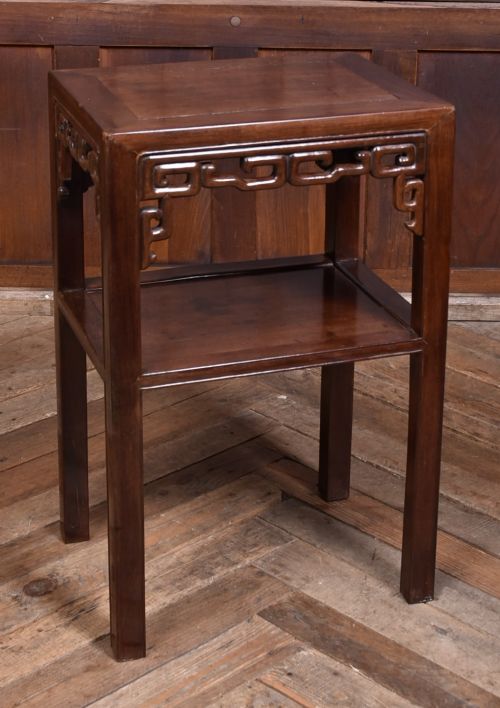
Current listings demonstrate a broad geographic spread, uniting English mahogany and oak tables with French Empire designs, Italian pieces, and Chinese hardwood pot stands.
Assessing Quality
Quality rests upon the selection of timber grain, the crispness of hand-carved details, and the proportional balance between the central shaft and the projecting tiers. Superior pieces display seamless veneer matching, tight joinery at the column collars, and substantial brass or timber mounts that remain rigid under weight.
Lesser items reveal heavier secondary woods, simpler turned components with superficial surface decoration, or slight wobbles at the tier junctions. The distinction lies in whether the structure was built to bear weight securely or assembled purely for decorative display.
Liberty of London·George Bullock
The Pedestal Tiered Table Glossary
- Dumb waiter
- A tiered serving table featuring multiple rotating or fixed circular decks supported on a central pillar. These pieces originated for dining room service before migrating to general parlour use.
- Plant stand
- A tall, slender pedestal piece designed to elevate botanical specimens or urns. They frequently feature marble inserts to resist water damage from pots.
- Tripod base
- A three-legged support structure radiating from a central column. This configuration prevents rocking on uneven historical flooring.
- Burr walnut
- Timber harvested from walnut tree growths, producing swirling, highly decorative grain patterns. Cabinet makers prized it for focal table tops.
- Inlay
- The technique of embedding contrasting woods, brass, or shell into the primary surface. It creates geometric or floral borders along table edges.
Pedestal Tiered Table: Frequently Asked Questions
What rooms suit a tiered table?
These compact pieces fit comfortably beside seating in reception rooms, corners of libraries, or hallways. Their vertical tiered design provides functional surface space without crowding small areas.
They also serve effectively as bedside lamp tables or plant stands in larger bedrooms and sunrooms.
How do I clean marble tops?
Wipe marble surfaces with a soft, damp cloth using mild, neutral soap when necessary. Avoid acidic cleaners, vinegar, or harsh abrasives that etch the polished stone.
Dry the surface thoroughly after cleaning to maintain the original lustre.
Can these tables hold heavy lamps?
Sturdier hardwood and mahogany examples easily support standard table lamps and decorative objects. The stability depends largely on the weight distribution across the lower tiers and the firmness of the central pedestal.
Ensure heavy items centre over the column rather than resting on the extreme outer edges of upper tiers.
How do I distinguish Edwardian pieces?
Edwardian examples often feature lighter satinwood or mahogany inlays, simpler geometric lines, and a brighter finish compared to darker Victorian pieces. They frequently adopt revived Sheraton or Arts and Crafts sensibilities.
Construction methods also show machine-assisted precision alongside traditional hand joinery.