



Pedestal Style Sideboard
When you search for a pedestal style sideboard, you are looking at substantial dining room furniture built to anchor a formal interior.
Pedestal Style Sideboard
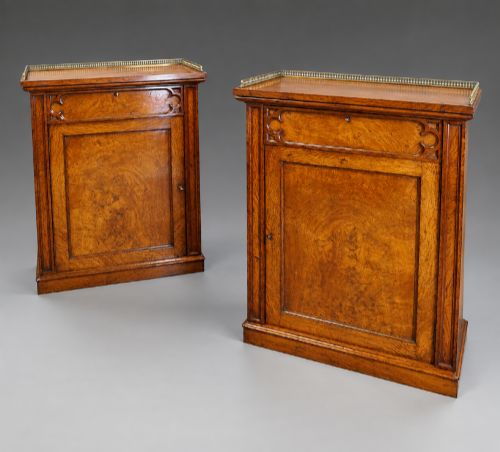
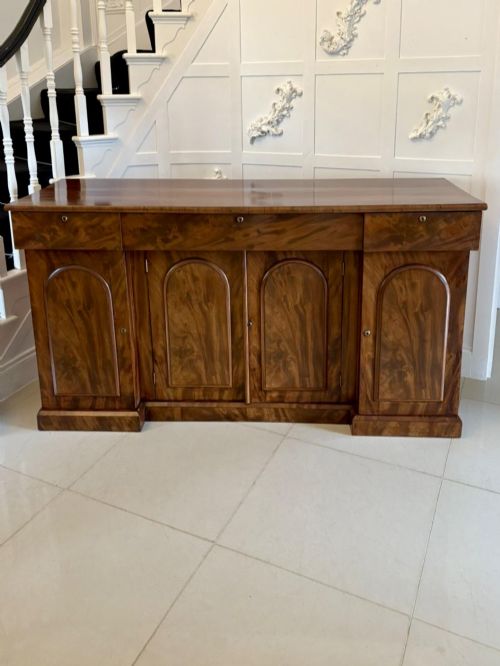
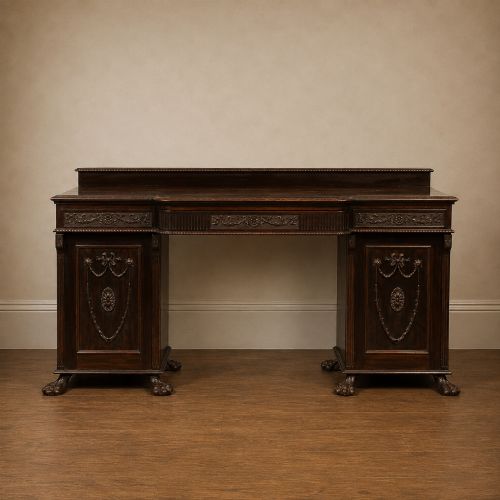
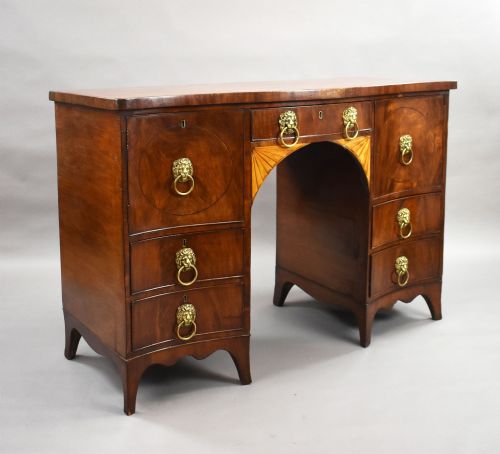
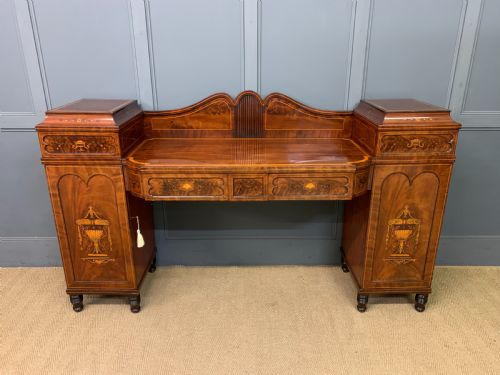
A pedestal style sideboard typically comprises a central serving surface flanked by distinct pedestals or end cabinets. When you examine the pieces gathered here, the majority date from the nineteenth century, including Georgian, Victorian, William IV, and Edwardian interpretations.
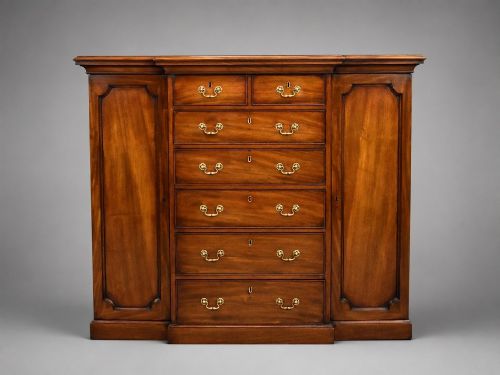
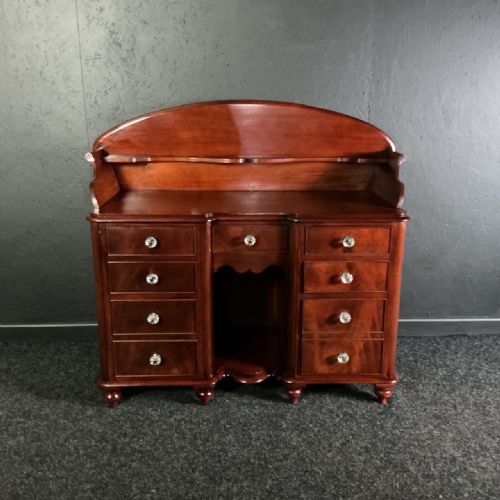
The layout encompasses breakfront forms, serving tables, and twin pedestal cabinets joined to a central table. Alongside traditional dining room sideboards, related side cabinets and washstands appear in the inventory, reflecting the broad range of side furniture produced in mahogany and walnut.
Materials and Construction
Makers relied heavily on solid mahogany and flame mahogany veneer, frequently accented with satinwood inlay, boxwood stringing, and brass hardware. Heavier pieces employ oak for structural framing, while later twentieth-century examples utilise burr walnut veneers over secondary timbers.
Joinery methods combine traditional framing with applied decorative elements such as carved paw feet and brass mounts. Surface finishing relies on hand-polished French polish to highlight the natural grain patterns of the primary hardwoods.
Materials recur across decades, pairing mahogany and walnut with brass hardware, glass, and delicate boxwood stringing.
Evaluating the Pieces
Quality rests in the selection of timbers and the crispness of the cabinetwork. Pieces featuring matched flame mahogany veneers or fine satinwood inlay stand apart from plain utility versions.
Proportion and execution define the hierarchy. Better examples display balanced breakfront lines, finely carved details such as paw feet or brass galleries, and intact original hardware.
Epstein·Étienne Kohlmann·S. Jamar·Goodall of Manchester·James Mein of Kelso·Holland and Sons·Maple of London
The Pedestal Style Sideboard Glossary
- Pedestal sideboard
- A dining room cabinet featuring distinct end pedestals flanking a central table or board. This layout provides both display space and concealed storage.
- Breakfront
- A cabinet front where the central section projects forward from the flanking pedestals or wings. This arrangement creates depth and visual interest in large dining rooms.
- Flame mahogany
- A decorative wood veneer cut from the fork of the mahogany tree to produce a flickering, flame-like grain pattern. It was favoured for high-status cabinet doors and drawer fronts.
- Satinwood
- A pale, hard timber used primarily for contrasting stringing and inlay work on dark mahogany furniture. It creates sharp geometric borders on drawer fronts and tabletops.
- Stringing
- Thin inlaid lines of contrasting wood used to outline panels and drawers on formal furniture. This technique defines the edges of cabinet doors and tabletops.
Pedestal Style Sideboard: Frequently Asked Questions
Where did a pedestal style sideboard stand?
These large pieces stood against the dining room wall to hold silver, linen, and serving dishes during formal meals.
They served as both a practical workspace for hosting and a display surface for decorative urns and cutlery boxes.
How do I spot a Georgian piece?
Georgian and George III examples display restrained classical proportions, often with subtle satinwood inlay and fine mahogany grain.
They pre-date the heavier, more robust carvings found on later Victorian and William IV iterations.
How do I care for mahogany veneer?
Keep mahogany furniture away from direct sunlight and strong heat sources to prevent the veneers from drying and lifting.
Regular dusting with a dry cloth and occasional application of appropriate wax will maintain the finish.