

Pedestal Office Furniture
These pedestal office furniture pieces combine substantial workspace with enclosed drawer pedestals, offering a commanding presence for any study.
Pedestal Office Furniture
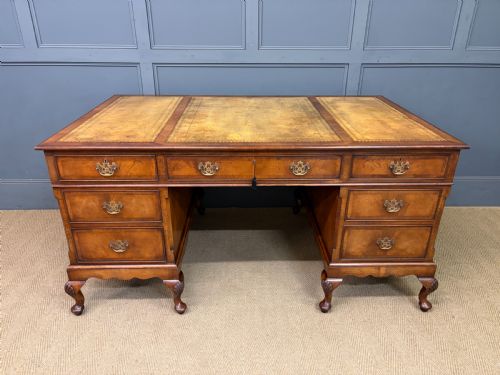
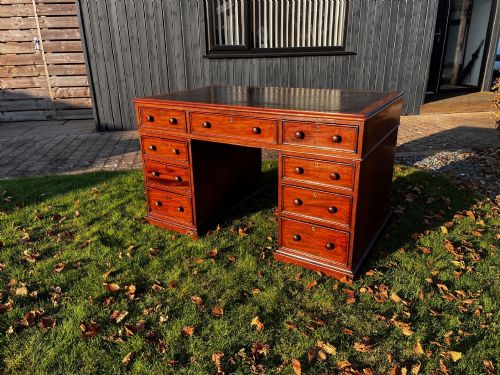
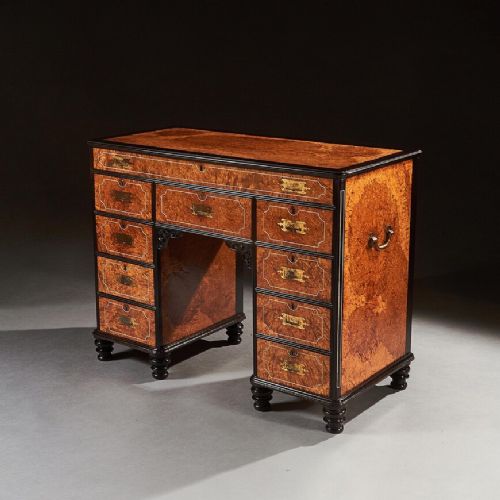
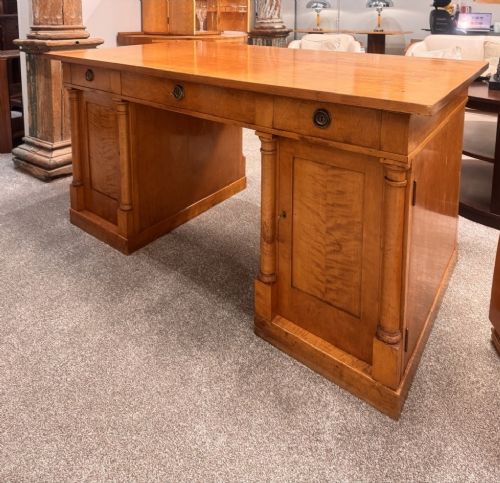
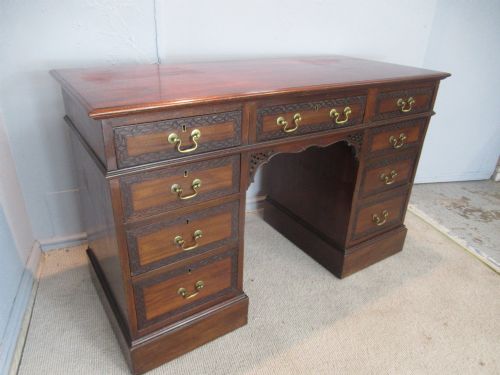
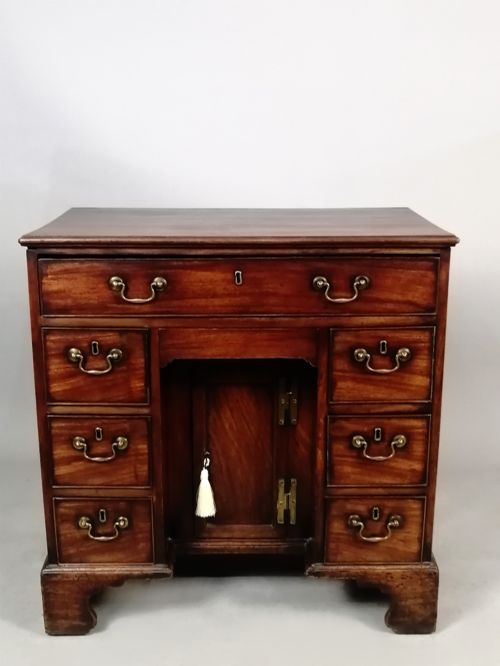
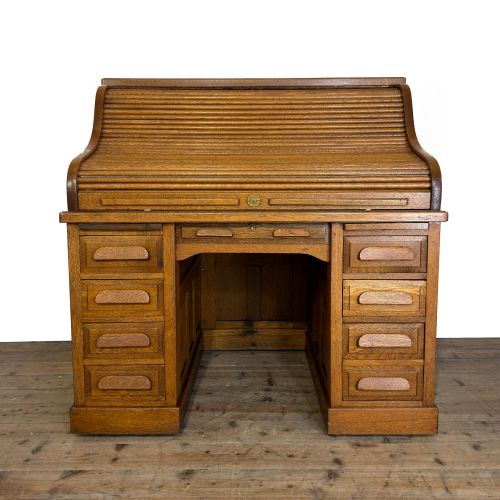
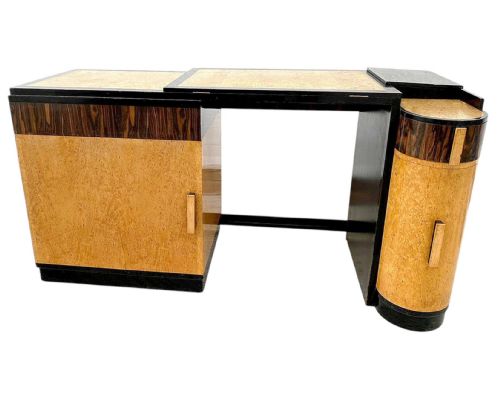
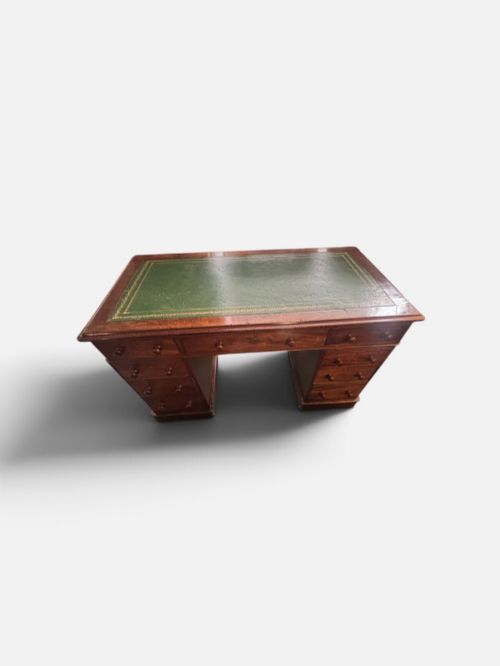
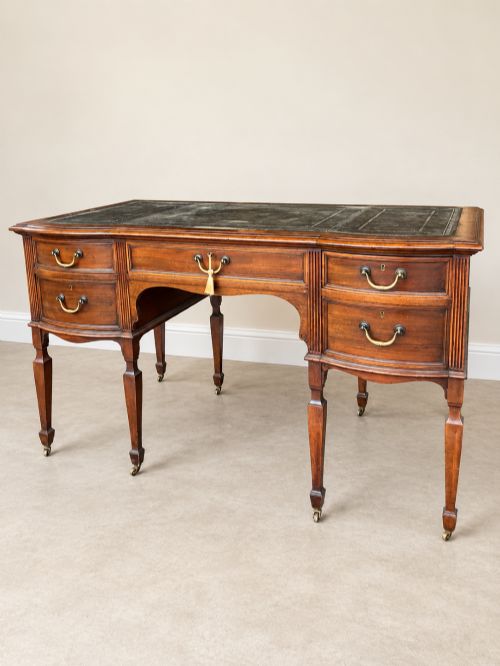
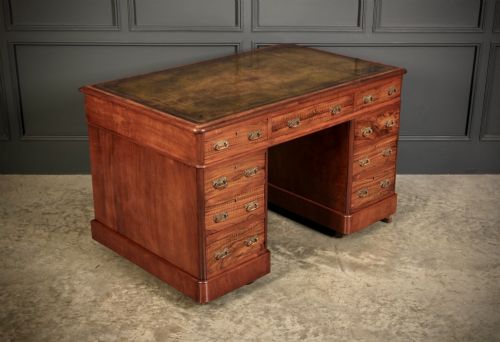
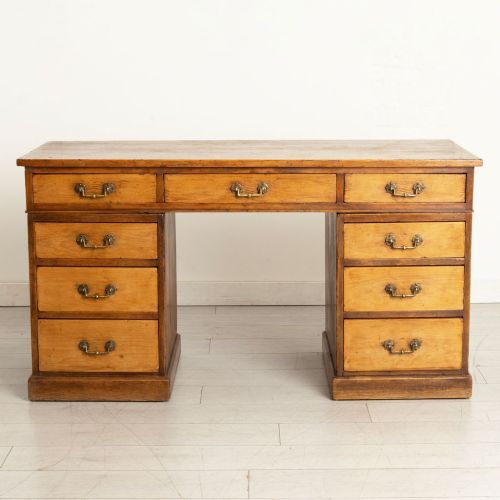
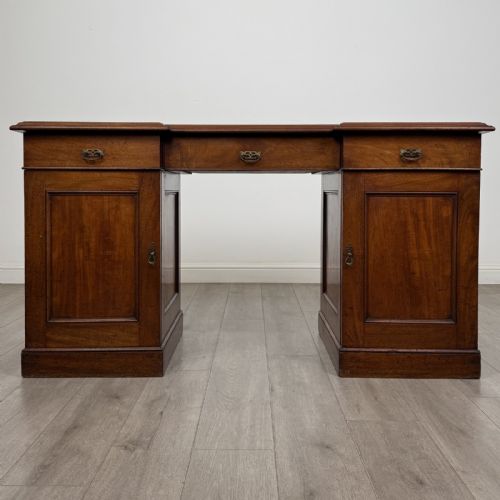
Pedestal office furniture centres on twin or single pedestal desks, kneehole desks, and partners desks that organise workspace above banks of drawers. You will frequently meet 19th Century and Victorian mahogany examples alongside Edwardian and Art Deco walnut interpretations.
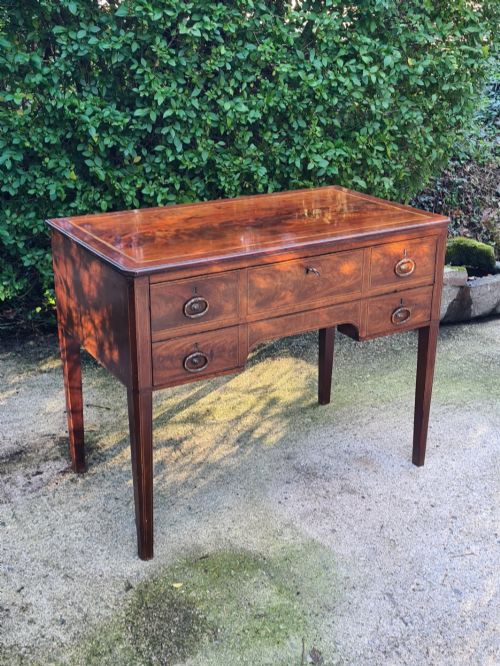
The form spans compact kneehole desks and large free-standing tables designed to sit centrally in a room rather than against a wall. Makers also produced filing cabinets and office sets to create unified working environments.
How they were made
Cabinet makers constructed carcass frames in solid timbers such as mahogany, oak, and pine, applying burr walnut, satin birch, or birdseye maple veneers to primary display surfaces. Brass hardware, including handles and locks, added functional detail to the drawer arrangements.
Writing surfaces incorporated inset panels of leather, often tooled with gilt borders, providing a durable writing medium atop the wooden structure. Construction methods relied on traditional joinery techniques to house multiple drawers securely within the twin pedestals.
Pedestal Office Furniture Retail Price Guide 2026
Typical asking prices for pedestal office furniture among the pieces listed under this phrase on Sellingantiques today, from the lower quarter to the upper quarter. They describe what is for sale here now, not the wider market.
What varies in quality
The distinction between standard and superior pieces rests on the choice of timber figures, such as matched burr walnut veneers, and the crispness of carved pillars or mouldings. Finer workshops employed secondary timbers thoughtfully and executed drawer linings with meticulous precision.
Proportion and scale dictate the tier of a piece, with smaller, well-balanced kneehole desks and substantial free-standing partners desks representing more demanding design commissions than standard utility desks.
Trollope and Sons·Charles Andrea Nosotti·Maple and Co·Whytock and Reid of Edinburgh·Mercier Freres
The Pedestal Office Furniture Glossary
- Partners desk
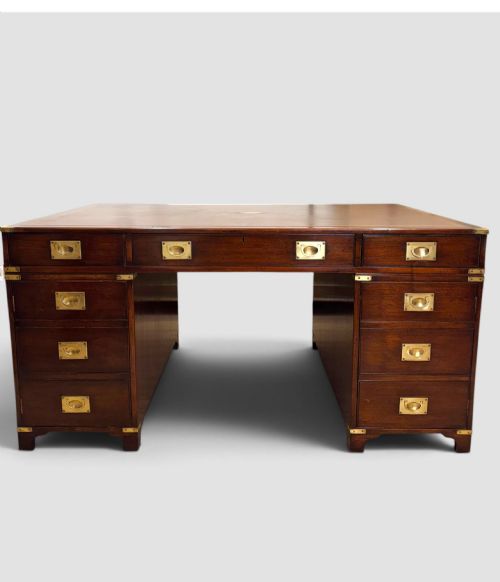
- A large pedestal desk designed with drawers and cupboards on both long sides so two people can work opposite each other. These pieces often date from the Georgian and Victorian periods.
- Kneehole desk
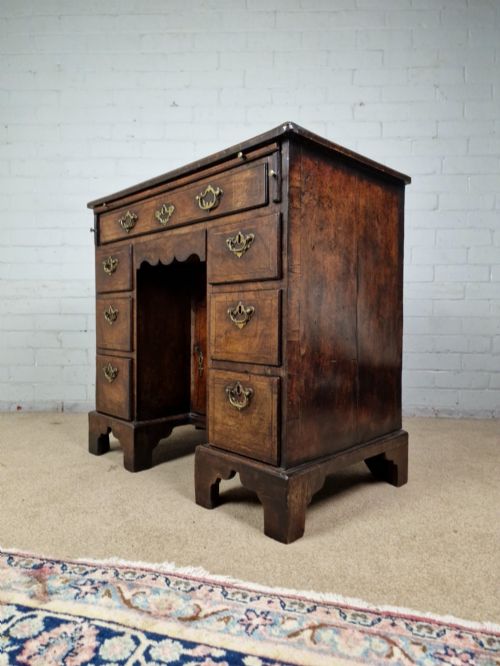
- A compact pedestal desk featuring a central recessed space for the legs with a single drawer above, flanked by two narrow banks of drawers. They frequently appear in walnut from the 18th Century onwards.
- Pedestal
- A structural support column or column of drawers placed beneath the work surface. Twin pedestal desks utilise two such columns to hold the main desk top.
- Burr walnut
- Timber taken from the warted excrescence of a walnut tree, yielding intricate, swirling grain patterns. Cabinet makers utilised these veneers on high-status Victorian and Art Deco surfaces.
- Campaign table
- Portable furniture constructed for military officers in the field, often featuring brass corners and inset handles. Late 19th Century Anglo-Indian examples demonstrate this robust construction.
Pedestal Office Furniture: Frequently Asked Questions
What is a partners desk?
A partners desk is a large double-sided pedestal desk built with matching drawers and cupboards on both long faces. This configuration allowed two individuals to sit opposite each other and work simultaneously.
Such pieces typically demand larger rooms because they are finished on all sides to stand freely in the centre of a space rather than against a wall.
How do I distinguish a kneehole desk?
A kneehole desk is characterised by a central recess for the user's legs, flanked by two narrow stacks of drawers resting on the floor. They offer a more compact footprint than standard twin pedestal desks.
These smaller desks often feature fine walnut veneers and date from the Georgian period through to the Edwardian era.
What woods were used for these desks?
Primary woods include mahogany, oak, walnut, pine, and exotic veneers like birdseye maple and satin birch. Cabinet makers selected dense timbers to ensure the structural integrity of the pedestals and heavy desk tops.
Secondary timbers such as pine or oak were commonly utilised for internal drawer linings and hidden framework components.
Are these desks suitable for modern computers?
Many pedestal desks provide ample surface area and generous drawer space to accommodate modern writing equipment and technology. Their sturdy construction handles daily use effectively.
Free-standing partners desks and larger Victorian examples offer substantial room, while compact Edwardian models suit smaller studies or bedrooms.