

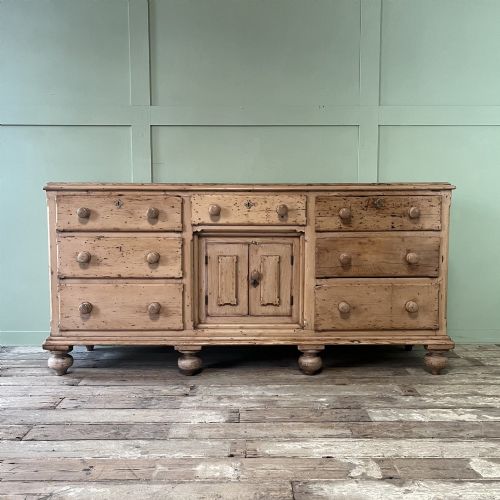


Pedestal Base Credenza
These pedestal base credenza pieces are substantial sideboards and storage units built to anchor a formal dining room with presence.
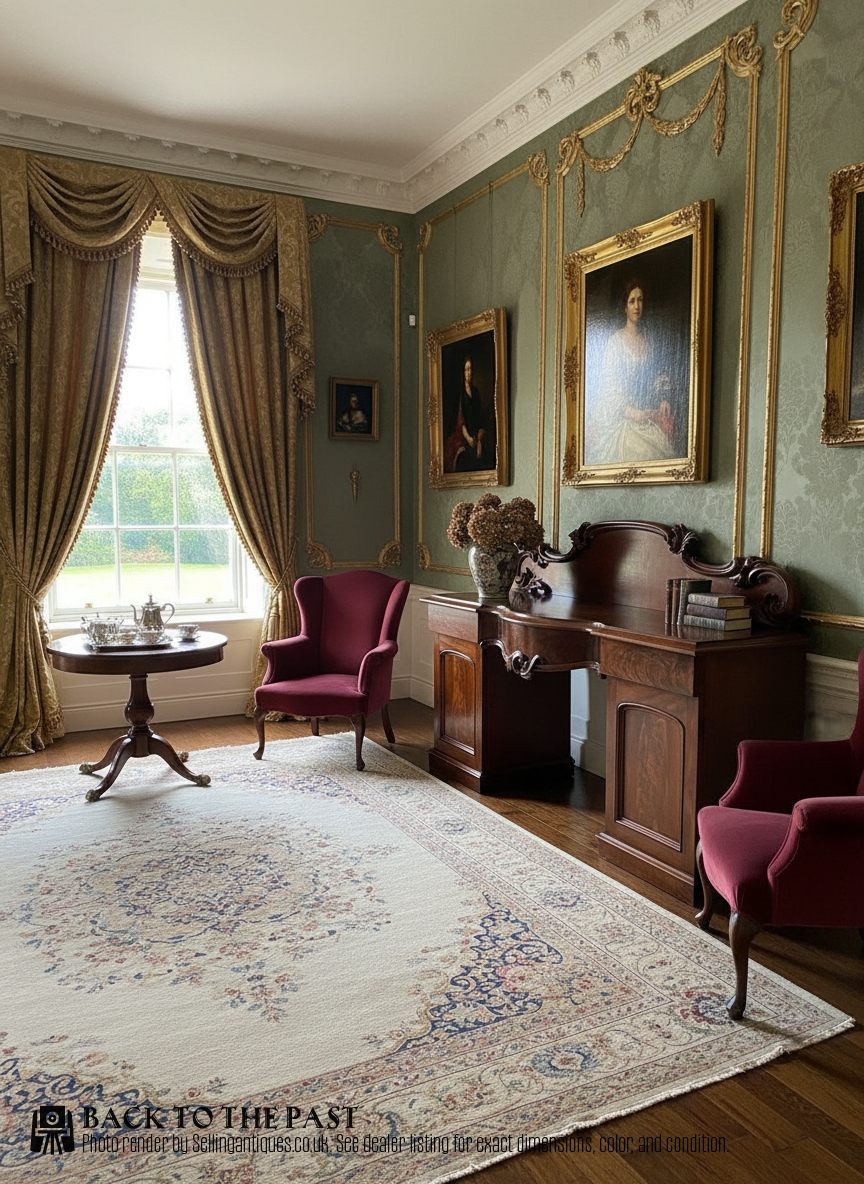
Pedestal Base Credenza
When you search for a pedestal base credenza, you are looking at substantial storage furniture designed primarily for the dining room. These pieces provide heavy-duty utility with deep cupboards flanking a central section, often standing on distinct pedestals or plinth feet.
The versions you meet most frequently on this page belong to the Victorian and Edwardian periods. They appear in forms ranging from traditional mahogany three-door sideboards to carved oak pedestal formats and bleached oak alternatives.
Makers shaped these items during the nineteenth century to serve both display and storage functions. They survive today as practical heavy furniture that anchors a large room.
How they were made
Cabinet makers utilised dense timbers like mahogany and oak as the foundational structure for these pieces. Flame mahogany veneer often faces the primary surfaces, providing deep figuring across the large doors and drawer fronts.
Workshops applied decorative techniques including carving, geometric moulding, and inlaid details to enrich the timber surfaces. Brass fittings secure the doors and drawers while glass occasionally appears in associated mirror backs or upper display sections.
Pedestal Base Credenza Retail Price Guide 2026
Typical asking prices for pedestal base credenza among the pieces listed under this phrase on Sellingantiques today, from the lower quarter to the upper quarter. They describe what is for sale here now, not the wider market.
Materials recorded across the inventory include solid mahogany, oak, flame mahogany veneer, bleached oak, and glass.
What varies in quality
The choice of timber and veneer grading sets the best examples apart from standard production. Rich flame mahogany veneer matched symmetrically across panels demands greater skill than plain stock timber.
Execution of carved detail and structural joinery dictates the longevity and visual weight of the piece. Crisp, deep carving on oak pedestals indicates a higher workshop standard than shallow, mechanical shaping.
The Pedestal Base Credenza Glossary
- Pedestal base
- A heavy supporting structure at each end of a sideboard cabinet. It elevates the main storage compartments off the floor.
- Flame mahogany veneer
- A thin slice of mahogany timber cut to reveal a distinctive flame-like grain pattern. Craftsmen apply it to prominent surfaces for visual depth.
- Breakfront
- A cabinet design where the central section projects forward from the flanking cupboards. This creates architectural depth across the front elevation.
- Chiffonier
- A compact sideboard or low cupboard often fitted with shelves or a mirror back. It serves a similar function to larger dining room sideboards.
Pedestal Base Credenza: Frequently Asked Questions
What is a pedestal base credenza?
It is a heavy dining room storage unit featuring cupboards built over distinct pedestals or bases. These pieces provide expansive surface space and deep internal capacity.
They emerged strongly during the nineteenth century as formal entertaining grew in scale. Today they function as commanding storage credenzas in large living spaces or dining rooms.
How do I style a pedestal base credenza?
Allow the heavy timber presence to anchor the room by keeping surrounding walls and decor relatively uncluttered. Large mirrors or artwork complement the substantial scale of these cabinets.
Utilise the wide top surface for lamps, serving pieces, or display objects. The enclosed cupboards below hide tableware and dining linens effectively.
What woods were used?
Mahogany and oak form the primary structural materials for these nineteenth-century items. Workshops frequently applied flame mahogany veneer to create striking grain patterns on doors and drawers.
Bleached oak and painted wood alternatives also appear, representing different regional tastes and later period preferences. Brass hardware completes the primary material palette.
How do I date a pedestal base credenza?
Examine the timber selection, secondary woods inside drawers, and decorative motifs such as geometric oak carving or Edwardian inlay. Victorian examples often display heavier proportions and rich mahogany surfaces.
Construction methods within the drawers and backboards offer further clues to the manufacturing decade. Comparing the overall silhouette to documented nineteenth-century forms confirms the period.