


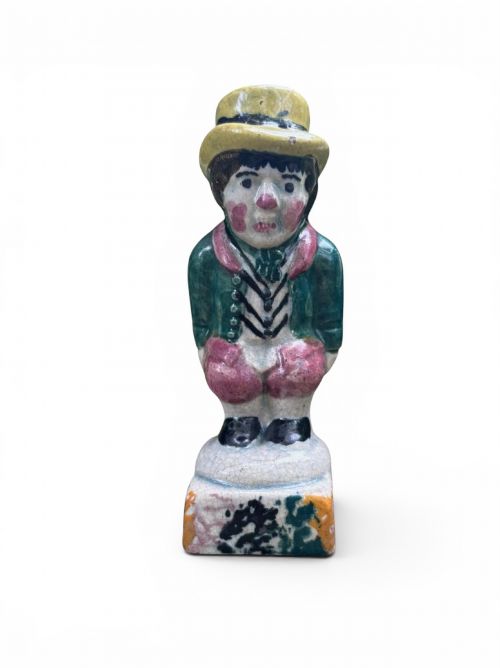


Pearlware Ceramic Figurines
These pearlware ceramic figurines are expressive earthenware pieces carrying bright enamel pigments under a characteristic blue-tinted glaze.
Pearlware Ceramic Figurines
Pearlware ceramic figurines encompass earthenware figures, spill vases, pepper pots, and creamers produced primarily across the nineteenth century, including the Georgian and Regency eras. Buyers searching for pearlware ceramic figurines encounter expressive sculptural groups, domestic animals, and narrative subjects rooted in English folk art tradition.
The pieces appearing on this page span several decades of British pottery production, featuring notable subjects like the Tithe Pig group, biblical scenes, and stylized animals. Many examples connect directly to known workshops such as Walton, Lakin and Poole, or the Enoch Wood factory.
Materials and manufacture
Potters built these figures using earthenware clay bodies before applying the defining pearlware glaze, which contains a small amount of cobalt to create a subtle bluish pooling in the recesses. Artisans then painted details by hand utilising enamel pigments directly over or under the glaze.
Makers shaped the forms through press moulding or slip casting, depending on the complexity of the subject, whether a hollow spill vase or a solid figure group. Firing took place in traditional kilns, fixing the ceramic body and vitrifying the surface coatings.
Pearlware Ceramic Figurines Retail Price Guide 2026
Typical asking prices for pearlware ceramic figurines among the pieces listed under this phrase on Sellingantiques today, from the lower quarter to the upper quarter. They describe what is for sale here now, not the wider market.
A pottery cow creamer lets you pour milk straight from the beast's mouth onto your afternoon tea.
Judging quality and character
The sophistication of the model dictates desirability, with paired figures and complex pastoral groups standing apart from simpler utilitarian forms like pepper pots or basic creamers. Provenance or distinct factory attributions also elevate certain models within the wider span of production.
Walton·Lakin and Poole·Enoch Wood factory
The Pearlware Ceramic Figurines Glossary
- Pearlware
- A refined earthenware developed to imitate Chinese porcelain by adding cobalt to the lead glaze, resulting in a characteristic bluish tint.
- Enamel
- Vitreous pigments applied over or under the glaze to provide bright surface colour on pottery figures.
- Spill vase
- A hollow cylindrical holder designed to contain wooden spills used for lighting candles or fires.
- Cow creamer
- A hollow vessel shaped as a cow, filled through a hole on the back and poured from the mouth.
Pearlware Ceramic Figurines: Frequently Asked Questions
What are pearlware ceramic figurines?
They are early British earthenware figures decorated with hand-painted enamels over a pale, blue-tinted glaze. Potters modelled them into animals, literary characters, and pastoral scenes.
Production flourished during the Georgian and Regency periods, largely centered around Staffordshire potteries. They served as decorative mantle ornaments and functional items like spill vases.
How do I spot a Walton figure?
Walton pieces often feature a distinctive leafy bocage background framing the main subject. Look for a small square scroll mark impressed underneath the base.
These figures typically display robust modelling and careful enamel work depicting sheep, domestic animals, or pastoral groups.
How were cow creamers used?
Cow creamers served as functional tableware items on Georgian and Regency tables for dispensing milk or cream. Users filled the hollow body through an aperture on the top and poured the contents from the animal's mouth.
Many examples feature decorative floral patterns or naturalistic markings painted in enamel over the pearlware glaze.
Where were these figures made?
The majority of these pieces originated in the Staffordshire pottery district of England, though regional works operated elsewhere. Factories and independent potters utilised local clays to shape these decorative objects.
Market towns and regional hubs sometimes produced distinctive local variations, such as Welsh pottery items.
What is a spill vase?
A spill vase combines a decorative figural group with an open cylindrical socket designed to hold wooden splints. Households used these tapers to transfer flames from the hearth to candles or lamps.
Potters integrated the tube naturally into the background of pastoral or animal subjects.