
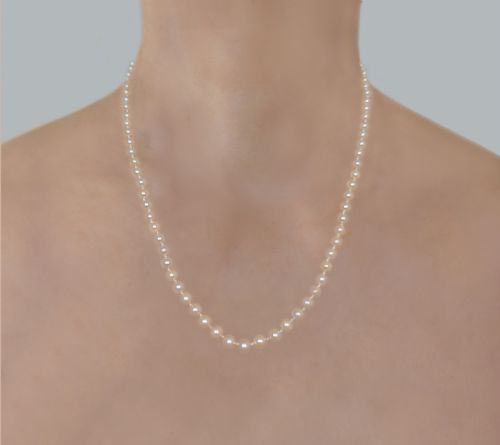


Pearl Bead Necklace
A pearl bead necklace brings a lustrous elegance to the neckline, combining classic materials with enduring design.
Pearl Bead Necklace
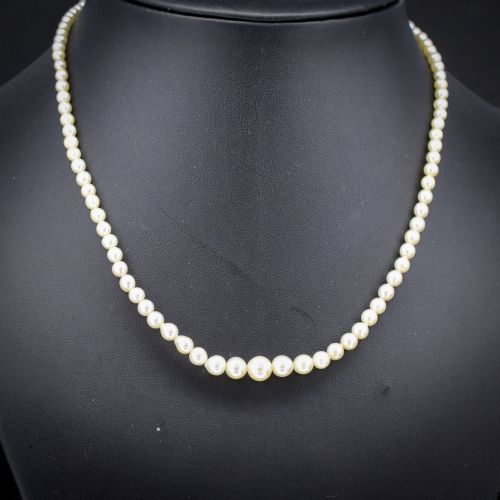
A pearl bead necklace spans centuries of design, appearing across Georgian, Victorian, and mid-century periods. These pieces combine organic lustre with precious metals, offering versatile styling for both traditional and modern wardrobes.
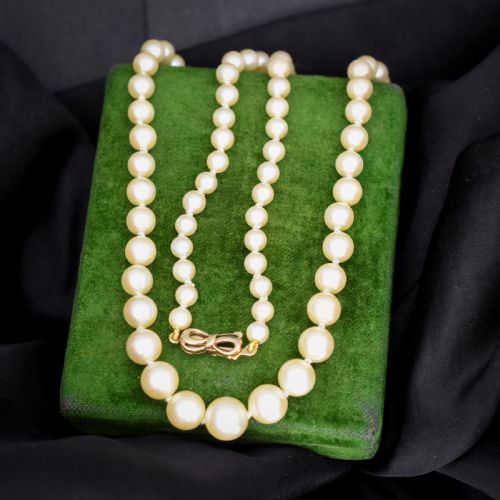
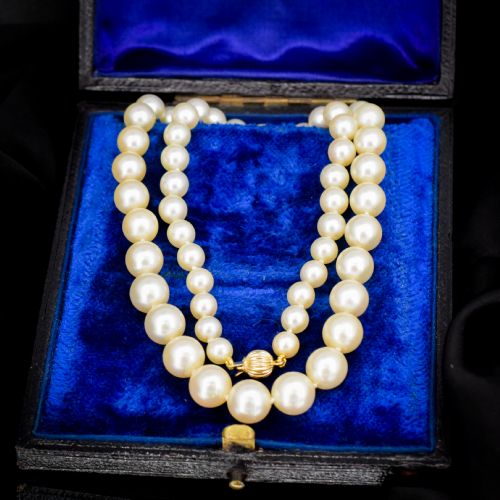
Buyers on this page most frequently encounter graduated pearl strands, often secured with gold or diamond clasps. Examples range from simple seed pearl arrangements to complex combinations featuring coral, turquoise, and precious gemstones.
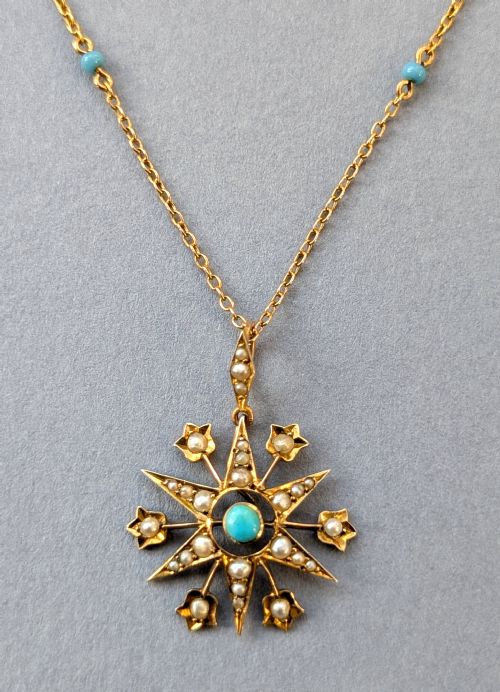
The assortment includes distinct focal elements, such as crosses, pendants, and star motifs attached to delicate chains. Each piece demonstrates the enduring appeal of pearl bead necklaces across different decades of craftsmanship.
Materials and construction
Construction relies heavily on traditional stringing techniques, pairing natural, cultured, or seed pearls with durable threads. Metal components utilise 9ct gold, 14ct gold, 18ct white gold, platinum, and silver for clasps and decorative settings.
Many designs incorporate contrasting materials such as coral, turquoise, amethyst, rose quartz, and diamonds. Clasps often serve a dual purpose as decorative centerpieces, featuring intricate metalwork and gemstone accents.
One cheerful antique piece even pairs pearls with a tiny paste-set swallow bird.
Factors of distinction
Quality differentiates through the uniformity, lustre, and grading of the pearls themselves. Graduated strands require careful sorting for consistent size progression and matching surface sheen.
The complexity and material of the clasp elevate a piece, moving from simple barrel closures to intricate gold or platinum mountings set with diamonds and sapphires. Secure stringing and the condition of supplementary gemstones further define superior examples.
The Pearl Bead Necklace Glossary
- Graduated
- Pearls arranged in a sequence from largest at the centre to smallest near the clasp. This traditional layout requires careful sorting of the beads for symmetry.
- Seed Pearl
- Very small, naturally occurring pearls often used in intricate Victorian and Georgian cluster designs. They create delicate, textured patterns across pendants and clasps.
- Cultured Pearl
- Pearls formed with human intervention where an irritant is placed inside the mollusc to start the nacre secretion. These form the basis of many mid-century strands.
- Clasp
- The fastening mechanism at the back of the necklace, which in finer pieces becomes an ornate feature set with gold, diamonds, or coloured gemstones.
Pearl Bead Necklace: Frequently Asked Questions
How do I care for a pearl necklace?
Pearls are organic gems that require gentle handling, protection from harsh chemicals, and storage away from harder jewellery.
Regular cleaning with a soft, damp cloth preserves their natural lustre and prevents surface damage.
What is the difference between seed and cultured pearls?
Seed pearls are exceptionally small pearls historically used in delicate, clustered antique jewellery.
Cultured pearls are grown using modern techniques, resulting in larger, more uniform beads commonly found in mid-century strands.
How can I tell the period of a necklace?
Dating relies on clasp styles, metal purity marks, and the overall mounting techniques used in the piece.
Georgian and Victorian items often feature closed-back settings and seed pearls, while mid-century designs favour clean cultured strands with secure gold barrel or gemstone clasps.
Are these necklaces typically restrung?
Older silk threads weaken over time, meaning many vintage and antique strands undergo professional restringing to ensure durability.
Checking the condition of the thread between each bead helps guarantee the safety of the necklace during wear.