
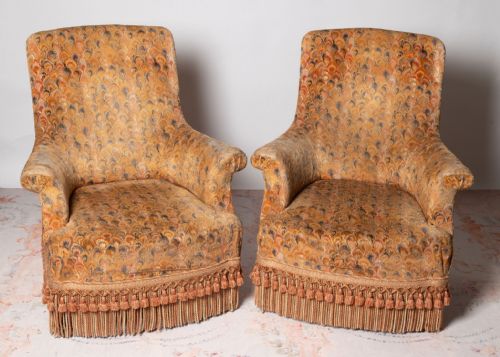


Patterned Upholstery Chairs
Patterned upholstery chairs bring pattern and comfortable seating into a room, spanning from Georgian frames to Art Deco armchairs.
Patterned Upholstery Chairs
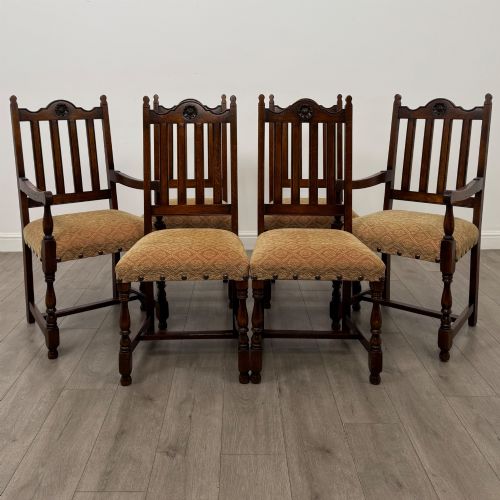
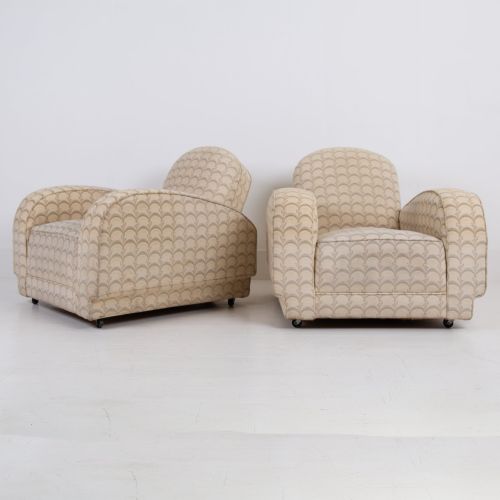
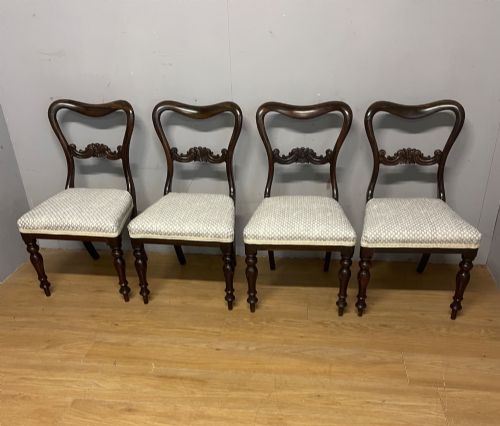
When you search for patterned upholstery chairs, you encounter seating constructed across multiple centuries, including Georgian, Victorian, Edwardian, and 1930s examples. The selection ranges from dining chairs and side chairs to armchairs, bedroom chairs, and sofas.
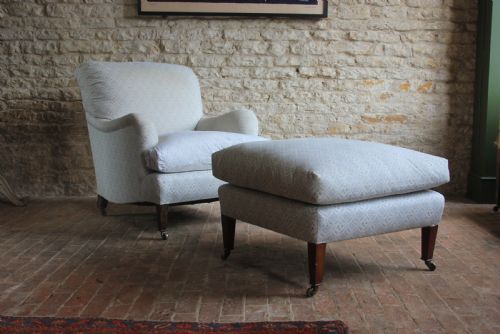
You are most likely to meet Victorian and 19th-century armchairs alongside Edwardian and Art Deco seating. Many of these pieces feature newly applied fabric, velvet, ticking, or geometric textiles.
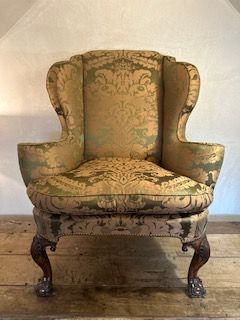
The forms encompass wing armchairs, library chairs, club armchairs, and matching sets of dining chairs. Some items originate from specific makers, while others display regional styles such as Continental or Gothic.
Materials and Construction
Frames are built from hardwoods such as mahogany, walnut, oak, rosewood, elm, birch, and giltwood, paired with structural brass and metal elements. Wood carvers shaped the structural supports, often incorporating turned front legs with castors.
Upholstery relies on diverse textiles, ranging from specialised furnishing fabrics and velvet to ticking and Kilim. Makers secured these coverings over padded interiors designed for supportive seating.
Materials employed across the frames include mahogany, walnut, oak, rosewood, elm, birch, brass, and giltwood.
Assessing Quality
Quality rests in the execution of the wooden frame, from hand-carved 18th-century details to bentwood shaping. Finer frames demonstrate robust joinery and balanced proportions across armchairs and dining sets.
The standard of the upholstery work and the choice of textile also separate examples. Original makers known for superior comfort, such as specific London upholstery firms, elevate the standing of a piece.
Howard and Sons·Heals·William Morris
The Patterned Upholstery Chairs Glossary
- Wingback armchair
- An armchair featuring protective side panels attached to the back, designed to shield the sitter from drafts. These chairs often stand on cabriole or turned legs.
- Gainsborough chair
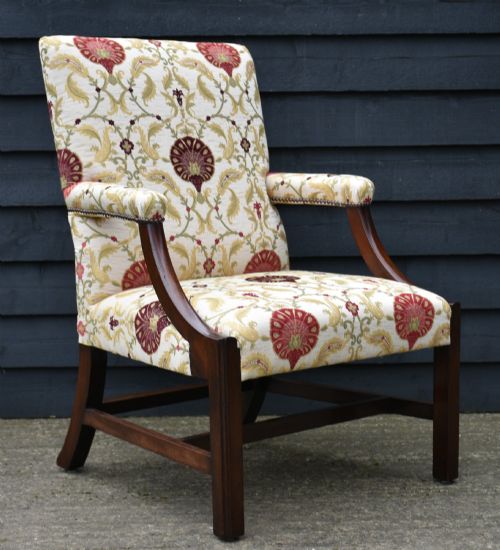
- A type of wide, upholstered armchair with an open-framed arm design, originating in the mid-18th century. They are typically made from mahogany and upholstered in fine fabric.
- Club armchair
- A deep, heavily upholstered comfortable chair designed for relaxation. These often feature low backs and generous cushioning.
- Bentwood
- Wood that has been heated and bent into curved shapes for furniture frames. This technique defines certain Art Deco seating designs.
- Ticking
- A tightly woven, durable cotton or linen fabric traditionally used to cover mattress and cushion fillings. It frequently appears as a simpler upholstery choice on period armchairs.
Patterned Upholstery Chairs: Frequently Asked Questions
How do I identify a Victorian armchair?
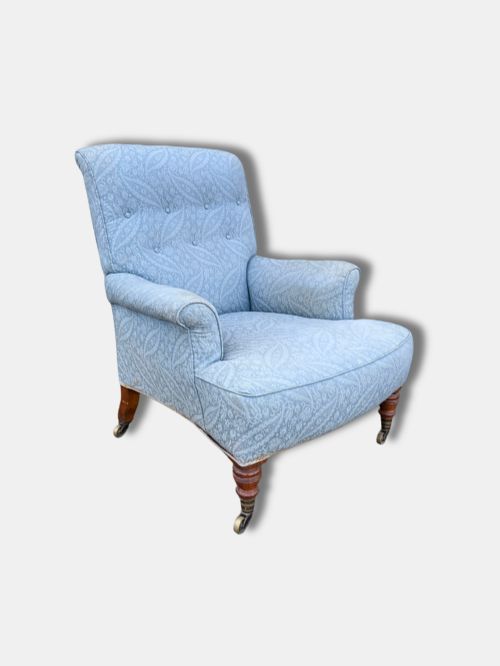
Victorian armchairs often display button backs, turned wooden front legs fitted with castors, and heavy upholstery. They span from mid-19th-century boudoir pieces to large club chairs.
Examining the frame timber, such as rosewood or walnut, alongside the turning style helps pinpoint the era.
What defines an Art Deco chair?
Art Deco chairs from the 1930s utilise streamlined shapes, geometric forms, and materials like elm, birch, or bentwood. They reflect a departure from ornate Victorian revival styles.
Their frames prioritize modern, clean lines paired with matching patterned upholstery.
Are these chairs newly upholstered?
Many listings state that the pieces feature new upholstery, velvet, geometric fabric, or traditional ticking. This preserves antique frames while offering fresh textile finishes.
Some retain older or original coverings, such as historic Kilim textiles.
How do dining chairs compare to armchairs here?
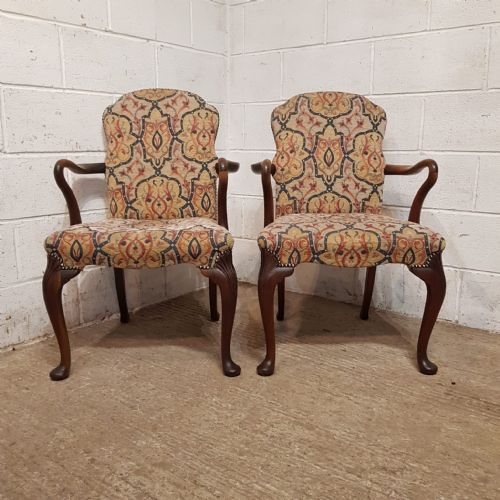
Dining chairs appear in sets of four or six, constructed from woods like oak or rosewood for communal seating. Armchairs and sofas are built for individual lounging.
Both categories share the defining characteristic of patterned textile upholstery.