
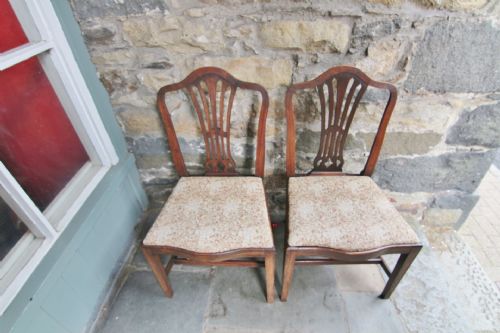


Patterned Upholstered Dining Chairs
Patterned upholstered dining chairs bring rich textiles and solid timber together, offering functional seating that anchors a traditional dining room.
Patterned Upholstered Dining Chairs
Patterned upholstered dining chairs combine sturdy wooden frames with decorative fabric surfaces designed for everyday dining use.
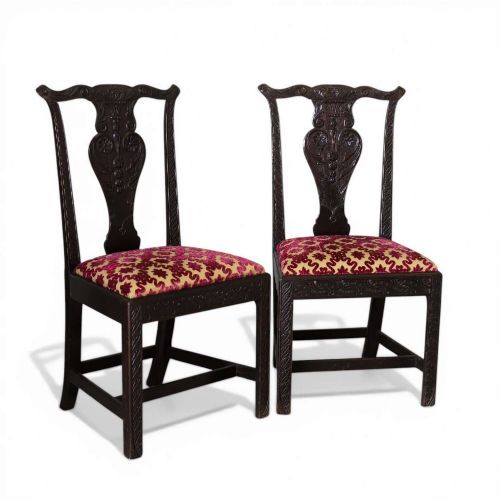
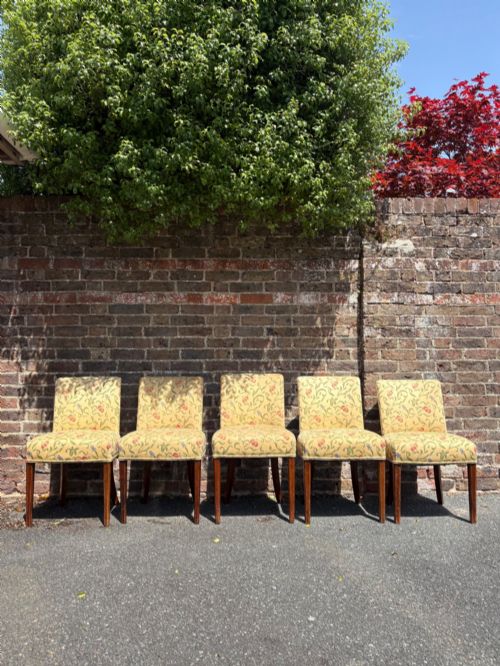
You will most frequently encounter Victorian and Edwardian examples featuring mahogany, walnut, or oak frames paired with floral or patterned textiles.
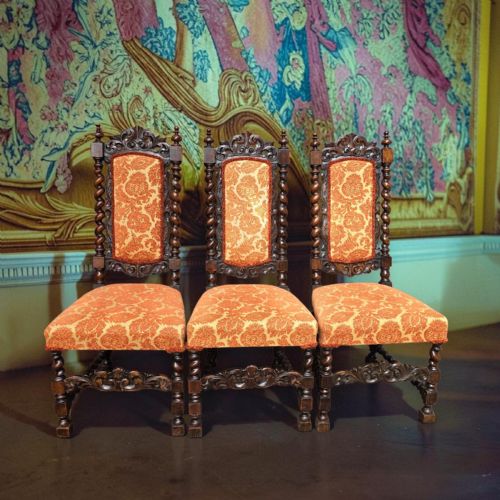
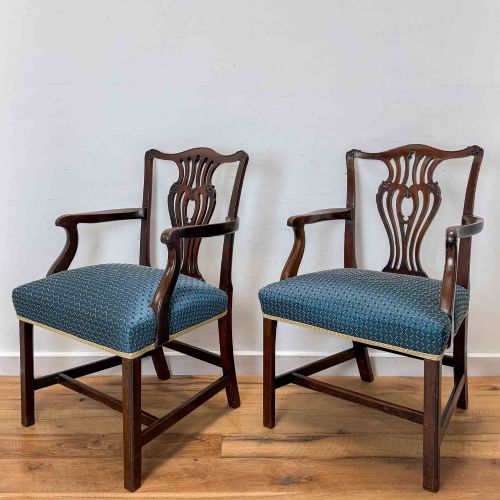
The selection spans formal Georgian-style mahogany designs and robust nineteenth-century balloon back or barley twist variations.
Materials and construction methods
Frames rely on dense hardwoods such as mahogany, walnut, oak, and rosewood, often shaped through traditional carving and joinery techniques.
Upholstery incorporates durable textiles, silk, and velvet, sometimes secured with brass detailing or subtle inlay work on the timber.
The listings feature timbers spanning mahogany, oak, walnut, and rosewood alongside velvet, silk, and Zoffany fabrics.
Assessing build and material quality
The standard of timber carving and the weight of the underlying mahogany or walnut frame set the better examples apart from simpler pieces.
The choice of covering fabric, whether period velvet or contemporary designer textile, dictates the tactile and visual finish of the seat.
Howard & Co, London·Charles Bevan·Waring
The Patterned Upholstered Dining Chairs Glossary
- Balloon back
- A rounded, hollowed-out chair back shaped like a balloon, popular during the Victorian era. This curved profile provides ergonomic support for the spine.
- Barley twist
- A turning technique resembling a twisted rope, carved into wooden chair legs or supports. It adds decorative texture to nineteenth-century furniture.
- Gothic Revival
- An architectural and decorative style drawing on medieval forms, featuring pointed arches and heavy timber. Chairs from this movement often display austere, imposing proportions.
- Inlay
- A method of embedding contrasting pieces of wood or metal into the primary timber surface. This decorative technique creates geometric or floral patterns.
- Side chair
- A light chair without arms, traditionally positioned around the sides of a dining table. These pieces prioritize a compact footprint over lounge comfort.
Patterned Upholstered Dining Chairs: Frequently Asked Questions
How do I clean patterned upholstered dining chairs?
Maintenance depends entirely on whether the textile is historic velvet, silk, or a modern replacement fabric.
Surface dust should be removed gently with a soft brush, avoiding harsh chemical cleaners that might damage the timber or textile.
Are these chairs suitable for daily dining use?
Most nineteenth-century and Edwardian dining chairs were built from solid hardwoods like mahogany and oak to withstand regular sitting.
Checking the stability of the wooden joints ensures the frame remains secure during everyday meals.
Can I mix different styles of dining chairs?
Pairing side chairs and armchairs within similar timber tones creates a collected, layered look around a dining table.
Matching wood types like walnut or mahogany helps unify disparate seating styles.
How do I distinguish Victorian from Edwardian chairs?
Victorian frames generally feature darker timbers, heavier carvings, and distinct shapes like balloon backs or barley twists.
Edwardian pieces often display lighter mahogany or walnut, delicate inlay work, and simpler profiles.