



Patterned Tub Chair
A patterned tub chair brings curved lines and textile colour to a room, offering deep, enveloping seating from the Victorian, Edwardian, and Art Deco eras.
Patterned Tub Chair
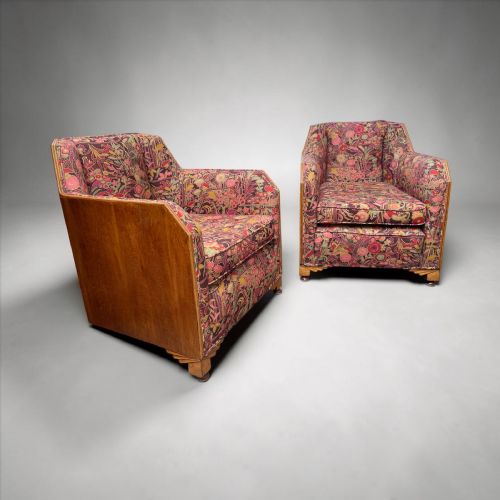
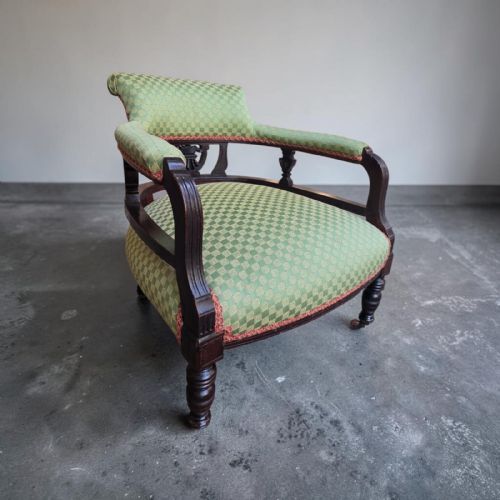
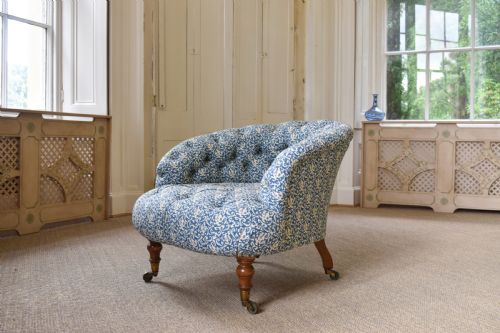
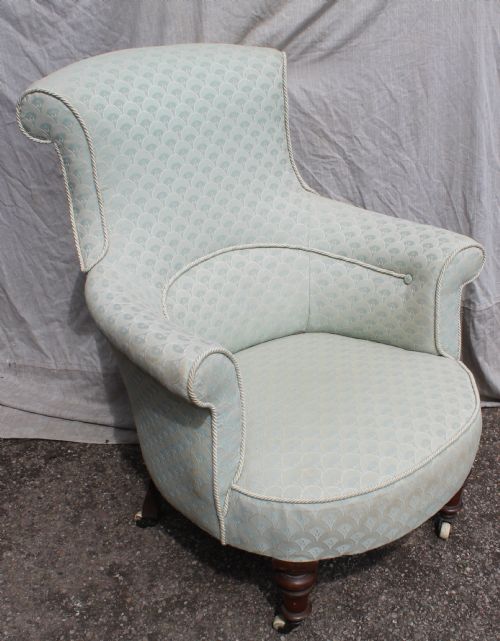
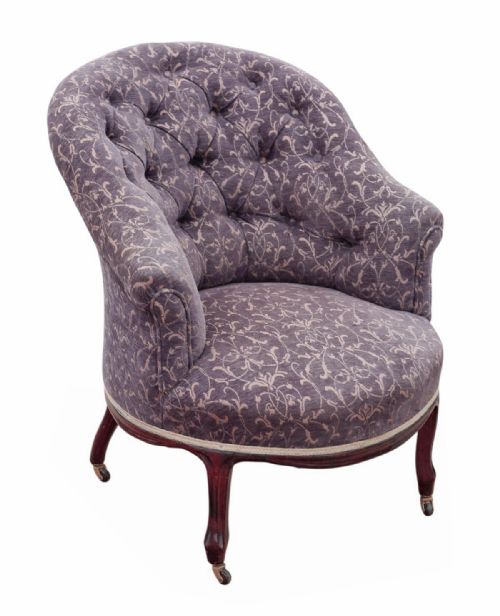
A patterned tub chair is an upholstered armchair characterised by its curved, enclosed back that wraps around the sitter in a continuous line. When you search for this phrase, you encounter low-slung seating designed for parlours, bedrooms, and drawing rooms across the nineteenth and early twentieth centuries.
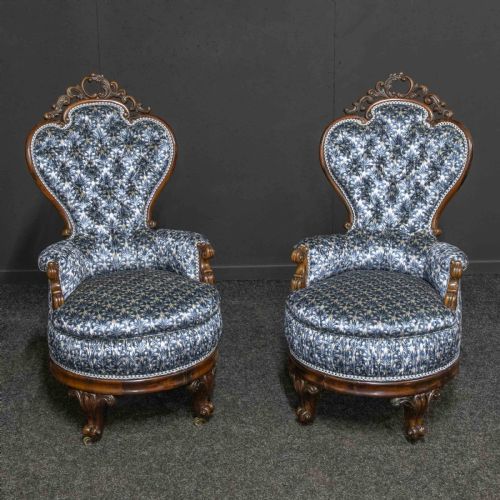
The versions most commonly met on this page date from the Victorian period through to the nineteen-thirties. They appear singly, in pairs, or as part of larger parlour suites alongside matching settees.
Makers and designers of these seats often utilised distinctive frames, ranging from ebonised and gilt timber to inlaid mahogany and wicker rattan. The upholstery varies from vintage French cotton and velvet to patterned fabric finishes.
How they were made
Makers built the structural frames of these chairs from solid timbers such as mahogany and rosewood, ensuring the curved tub shape maintained its integrity under daily use. Cabinet makers shaped the wood to form the characteristic low back and arms.
Upholstery involved stuffing textile coverings over internal padding, often featuring button-backed detailing that required skilled hand-sewing. Supporting elements included brass and ceramic castors fitted to the legs for ease of movement across carpets.
Some chairs roll on tiny ceramic castors originally designed to save Victorian carpets from heavy furniture dents.
What varies in quality
Quality in a patterned tub chair rests upon the carpentry of the concealed frame and the precision of the joinery shaping the curved back. Superior examples display tight, hand-tied spring systems and carefully matched upholstery textiles.
The refinement of secondary materials, such as finely turned wooden legs, ebonised finishes, and intact ceramic castors, distinguishes finer parlour seating from utilitarian production.
Howard & Sons·Dryad & Co
The Patterned Tub Chair Glossary
- Tub chair
- An armchair featuring a low, curved back that continues uninterrupted into the arms, forming a deep, enclosed seat. This form became popular during the nineteenth century for domestic sitting rooms.
- Button-back
- An upholstery technique where buttons are pulled deep into the padding in a grid pattern to secure the filling and create a tufted texture. This method adds firmness and distinctive visual depth to the backrest.
- Parlour suite
- A matching set of seating furniture, typically comprising a settee and multiple armchairs designed in a uniform style for a formal reception room. These suites coordinate timber frames and textile upholstery across every piece.
- Castor
- A small wheel mounted in a swivel housing attached to the bottom of chair legs to allow smooth rolling across floors. Many period examples utilise brass fittings paired with ceramic wheels.
Patterned Tub Chair: Frequently Asked Questions
What is a tub chair?
A tub chair is an upholstered armchair with a rounded, curved back that wraps around the sitter to form integrated armrests. The enclosed shape resembles the side of a wooden tub.
These seats appeared in various domestic spaces from the Victorian era onward, offering a compact yet enveloping form of parlour seating.
How do I date a tub chair?
Dating relies on examining the framing timbers, upholstery techniques, and stylistic markers present in the design. Victorian examples often feature button-backed upholstery and mahogany frames, while Edwardian pieces frequently showcase inlaid woodwork.
Later pieces from the nineteen-thirties adopt simpler Art Deco silhouettes and distinct textile patterns reflecting twentieth-century tastes.
Where were tub chairs used?
These chairs served primarily in domestic reception rooms, withdrawing rooms, and master bedrooms as comfortable fireside or reading seats. Their enclosed proportions made them suitable for sitting close to a hearth.
Larger matching sets also furnished formal parlours alongside settees for entertaining guests.
Are these chairs comfortable?
The curved, padded back and deep seat construction provide a supportive and enclosed sit designed for relaxation. Upholstered padding lines the interior of the curved frame.
Their ergonomics reflect nineteenth and early twentieth-century standards for domestic lounging.