


Patterned Seat Elbow Chair
A patterned seat elbow chair offers solid timber construction paired with upholstered or woven seating.
Patterned Seat Elbow Chair
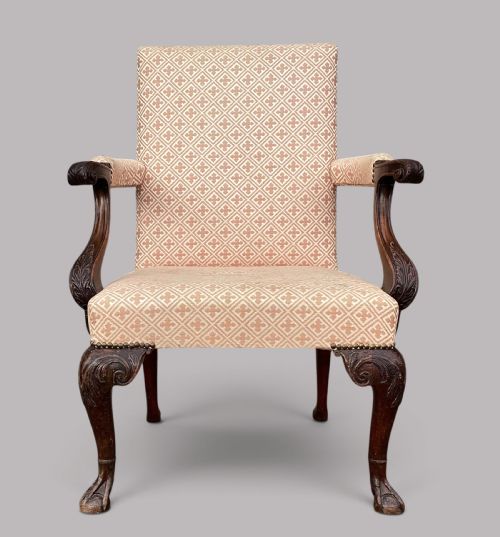
When you search for a patterned seat elbow chair, you encounter wooden armchairs spanning the eighteenth century, nineteenth century, and Edwardian periods, alongside later twentieth-century examples. These pieces typically manifest as open armchairs, corner chairs, and accent chairs built from mahogany, elm, walnut, satinwood, and dark oak.
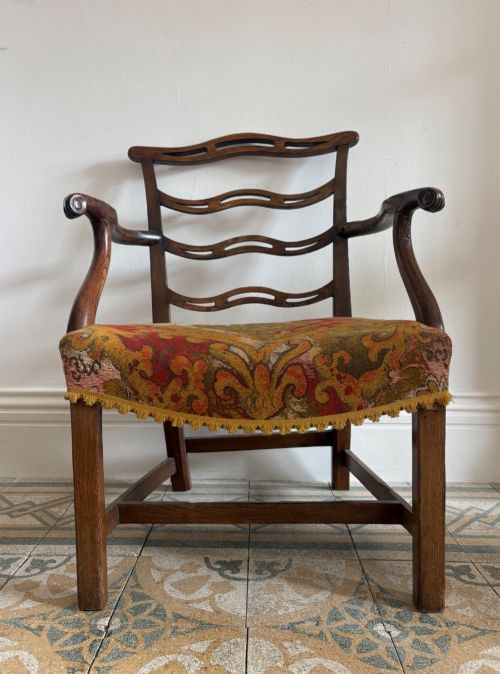
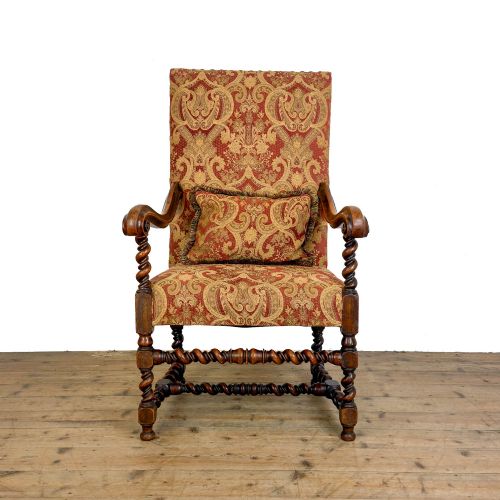
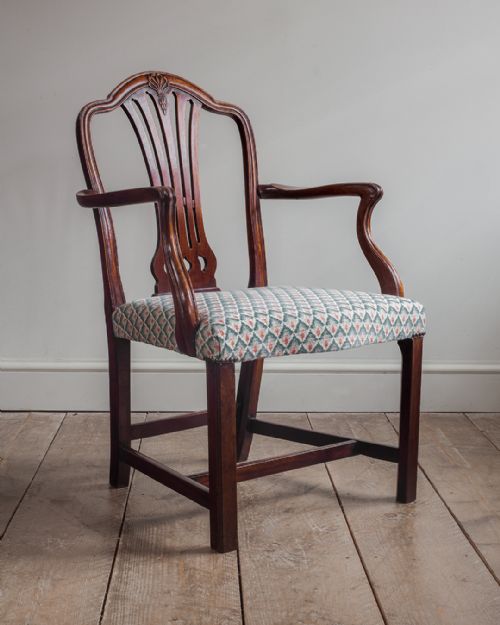
You are most likely to meet Georgian mahogany armchairs, country elm ladderback chairs, and nineteenth-century designs finished with patterned fabric or tapestry seats. Styles range across Georgian, Hepplewhite, Biedermeier, Arts and Crafts, and Carolean Revival influences, showing varied regional and continental workshops.
How they were made
Cabinetmakers and joiners constructed these frames using solid hardwoods like mahogany, walnut, and elm, shaping open arms and backs through traditional joinery and carving techniques. Timber selection dictated the structural integrity of each elbow chair, whether built in refined metropolitan workshops or simpler country idioms.
Seats incorporated woven rush or textiles including tapestry fabric, secured directly to the wooden frames to provide functional support. Continental pieces utilised satinwood veneers and distinct regional tastes, while Arts and Crafts examples emphasised simpler structural forms.
Elm ladderbacks remind us that country makers valued a sturdy sit above all else.
What varies in quality
The distinction between ordinary and superior pieces rests on the choice of timber and the precision of the joinery and carved ornamentation. Refined eighteenth-century mahogany examples display crisp carving and balanced proportions, whereas country pieces rely on robust vernacular framing in elm or oak.
Upholstery and seating materials also dictate character, with fine tapestry or patterned fabric elevating the visual weight of the chair compared to standard woven rush. The fidelity to period styles, from Hepplewhite elegance to Biedermeier restraint, marks the ambition of the original maker.
The Patterned Seat Elbow Chair Glossary
- Elbow chair
- An armchair featuring wooden supports for the arms, often positioned beside a desk or around a dining table. These pieces provide additional structural framing compared to standard side chairs.
- Mahogany
- A dense, dark hardwood prized by cabinetmakers for its stability and rich grain. It dominates formal eighteenth- and nineteenth-century seating.
- Tapestry fabric
- A thick, woven textile featuring pictorial or geometric patterns used traditionally for upholstery. This material adds colour and texture to the seat base.
- Ladderback
- A chair back constructed with horizontal slats resembling the rungs of a ladder. This form appears frequently in country vernacular seating.
- Corner chair
- An armchair designed with a diagonal orientation to fit into room corners. The curved back rail is supported by three or four corner posts.
Patterned Seat Elbow Chair: Frequently Asked Questions
What is an elbow chair?
An elbow chair is an armchair equipped with wooden supports for the arms. These pieces were historically used in studies, parlours, and around dining tables.
They combine the formal stance of a dining chair with the added comfort of armrests, constructed from timbers such as mahogany, walnut, and elm.
How do I date a wooden armchair?
Dating relies on examining the timber species, construction methods, and stylistic details present in the frame. Eighteenth-century pieces often feature mahogany and carved splats, while Victorian and Edwardian examples show heavier proportions or revival motifs.
Comparing the stylistic markers against known periods helps establish the approximate decade of manufacture.
Where were these chairs used?
These armchairs served various functions in period domestic interiors, acting as seating in drawing rooms, hallways, and bedrooms. Their robust wooden frames suited daily use across multiple domestic settings.
Elbow chairs frequently accompanied larger dining sets or stood independently as accent seating in reception rooms.
What woods are common?
Mahogany, elm, walnut, and dark oak form the primary timbers found across these listings. Cabinetmakers selected these woods for their durability and grain patterns.
Exotic veneers like satinwood also appear on continental examples influenced by Biedermeier and Art Deco tastes.