



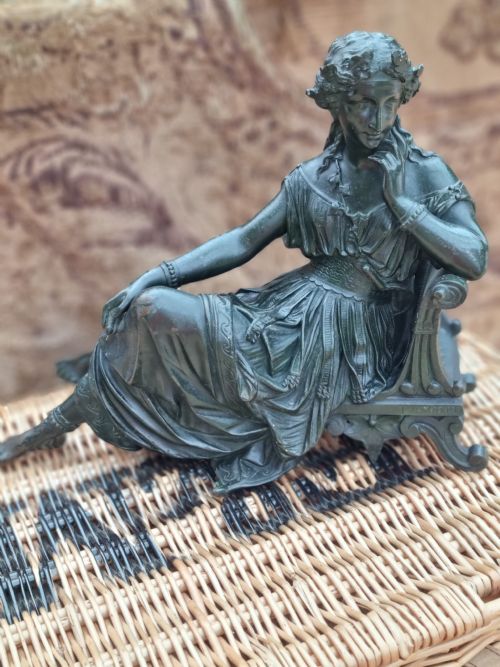
Patinated Bronze Lady
A patinated bronze lady brings character and sculptural grace to a room, ranging from neoclassical robed figures to fluid Art Deco dancers.
Patinated Bronze Lady
A patinated bronze lady encompasses a diverse array of sculptural forms, table lamps, figure groups and busts originating from the nineteenth and twentieth centuries. When searching for a patinated bronze lady, buyers encounter works spanning Victorian, Edwardian, Art Nouveau and Art Deco styles.
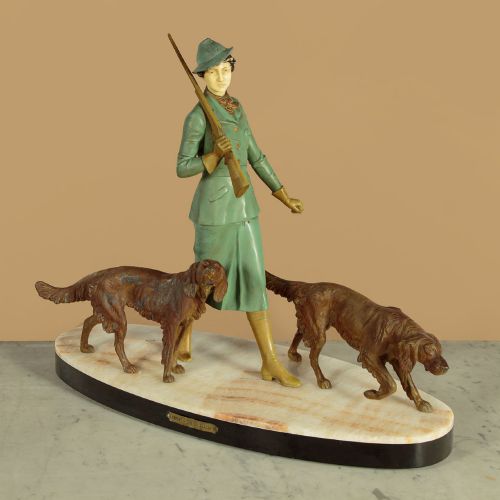
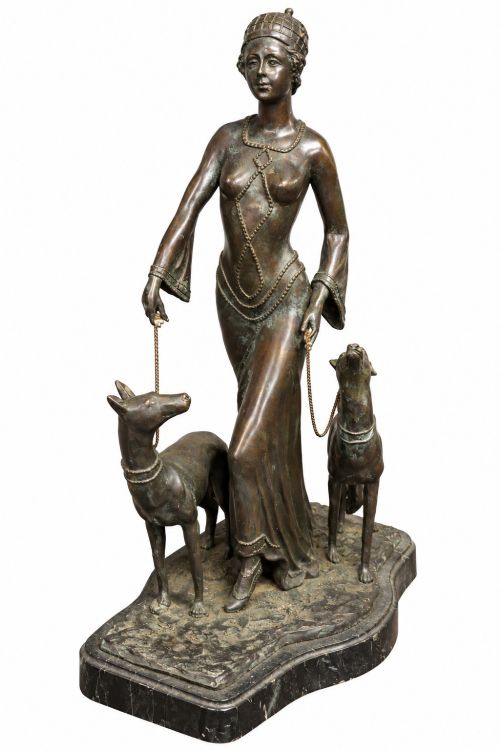
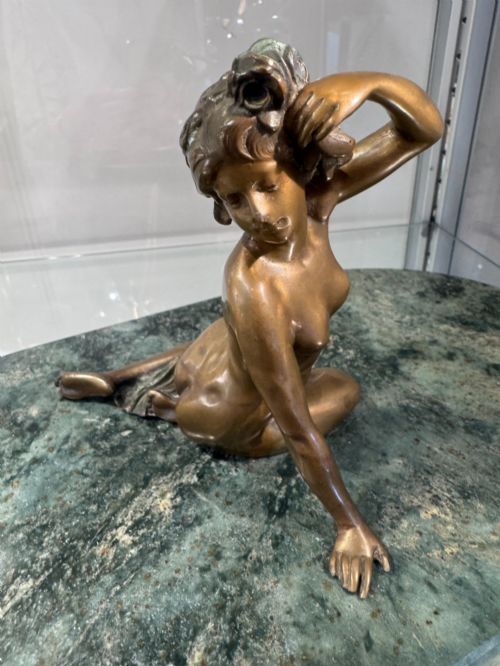
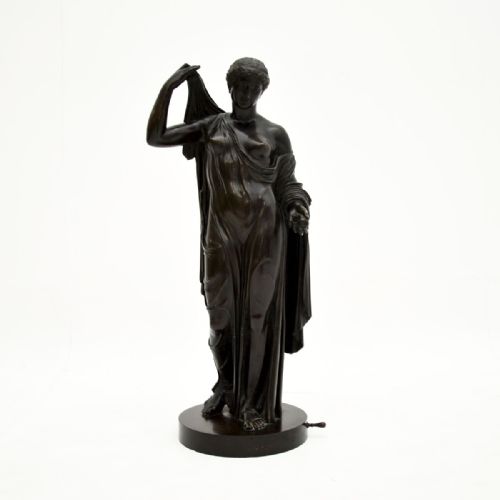
The selections on this page are dominated by French and English pieces, including seated women, running figures with greyhounds, and classical robed subjects. Figures vary from full-length nudes and costumed young ladies to detailed portrait busts and functional table mirrors.
Art Deco and Art Nouveau examples from the nineteen-twenties and nineteen-thirties appear frequently alongside nineteenth-century French casts. These figures capture female subjects in bronze, spelter and patinated metal, often mounted on bases of marble, onyx or alabaster.
Materials and casting methods
Foundries utilised bronze and spelter as primary metals, applying chemical treatments to create deliberate surface patination across robes, hair and skin. Figures were cast using traditional methods and frequently paired with heavy stone plinths.
Bases and integral mounts incorporated natural materials such as marble, onyx, alabaster and wood to provide weight and contrast to the metallic figures. Cold painting was occasionally applied to metal surfaces for added colour and detail.
Patinated Bronze Lady Retail Price Guide 2026
Typical asking prices for patinated bronze lady among the pieces listed under this phrase on Sellingantiques today, from the lower quarter to the upper quarter. They describe what is for sale here now, not the wider market.
Listings feature bronze, spelter, marble, onyx and alabaster across nineteenth-century, Edwardian, Art Nouveau and Art Deco periods.
Assessing sculptural quality and finish
The choice and execution of the base material reveal distinctions in workmanship, with tightly fitted marble or onyx mounts indicating higher production standards. Articulation in subsidiary elements, such as accompanying greyhounds or integrated mirror frames, determines the overall refinement of the piece.
Georges Gori·Sylvain Kinsburger·Jennings Brothers·Georges Van Der Straeten·Geo Maxim·Emmanuel Villanis·Pierre Hebert
The Patinated Bronze Lady Glossary
- Patination
- The chemical or natural surface treatment applied to metal to alter its colour and tone. This process accentuates sculptural detail and protects the underlying material.
- Spelter
- A zinc-based alloy commonly utilised as an alternative to bronze for decorative figures. It accepts metallic and painted finishes readily.
- Cold painted
- A technique where oil or enamel paint is applied to cold metal rather than fired in a kiln. This finish appears on specific figural studies.
- Plinth
- The solid base or block upon which a bust or sculpture stands. These supports frequently incorporate contrasting stones like marble or onyx.
- Figure group
- A sculptural composition comprising multiple human or animal subjects interacting within a single piece. These often depict sporting or narrative scenes.
Patinated Bronze Lady: Frequently Asked Questions
What periods do these bronze figures cover?
The pieces span from the nineteenth century through the Edwardian era into the Art Nouveau and Art Deco periods of the nineteen-twenties and nineteen-thirties.
Victorian and nineteenth-century French works sit alongside later twentieth-century designs, reflecting shifting aesthetic movements across European workshops.
How do I distinguish bronze from spelter?
Bronze offers a heavier weight and a warmer, more resonant metallic structure that accepts deep patination treatments effectively. Spelter is a softer zinc alloy that can show lighter fabrication marks and different surface ageing characteristics.
Examining the underside or mounting points often reveals the underlying density and colour of the metal.
Where were most of these sculptures made?
France and England produced the majority of the works recorded here, with French foundries particularly prominent in nineteenth-century neoclassical and Art Nouveau casting. British and American makers also contributed specific figural studies and decorative lamps during the interwar decades.
continental workshops dominated the supply of signed artistic bronzes and spelter models.
How are these figures mounted?
Many figures incorporate integral metal bases attached securely to heavy plinths made of marble, onyx, alabaster or wood. These stone bases provide necessary stability and visual contrast for slender standing or reclining subjects.
Some designs also integrate functional elements like mirrors or lamp fittings directly into the stone or metal assembly.