


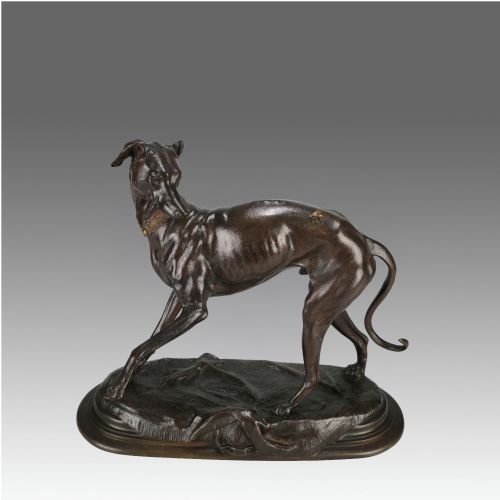

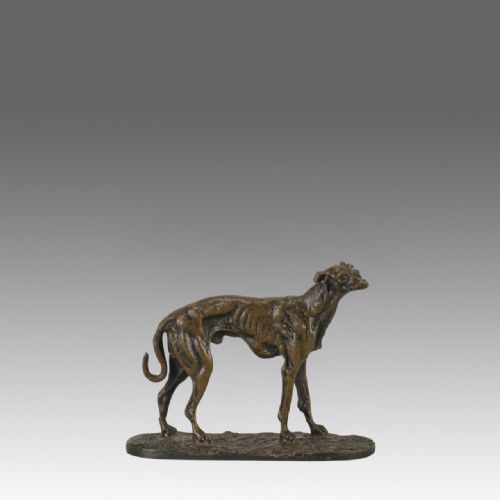
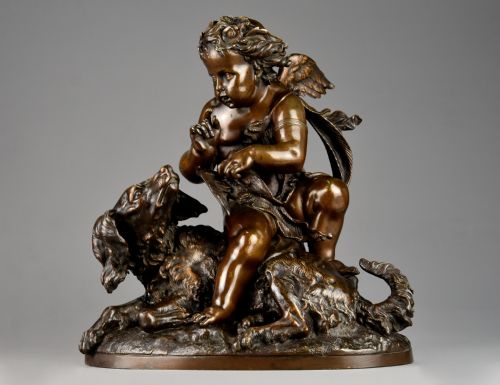


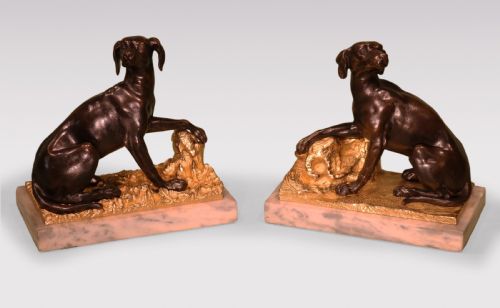

Patinated Bronze Dog Statue
A patinated bronze dog statue brings tactile weight and character to a room, capturing canine forms through centuries of foundry work.
Patinated Bronze Dog Statue
A patinated bronze dog statue embodies the focus of animalier sculpture, capturing breeds from greyhounds and setters to bulldogs and spaniels in naturalistic poses. These pieces emerge predominantly from nineteenth century French studios alongside twentieth century Art Deco workshops and Japanese Meiji period metalwork.
The selection ranges from solo studies of hunting hounds and playful terriers to functional bookends, incense burners and figural groups paired with children. French animalier bronzes dominate the offerings, bringing distinct realism to domestic and sporting breeds.
Foundations often incorporate natural materials, with sculptors mounting their casts on marble, onyx or timber bases to anchor the heavier metal compositions.
Materials and Technique
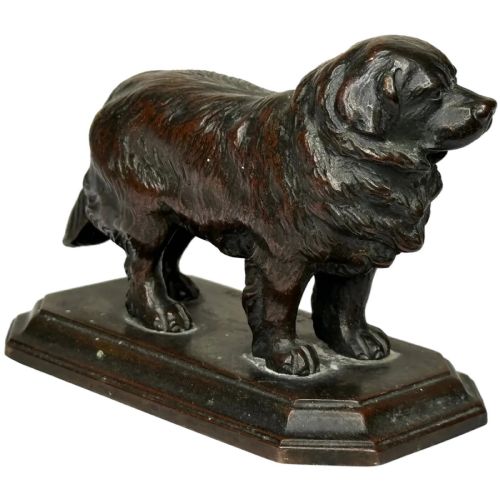
Foundries utilised the lost wax casting method to capture fine muscle tension, fur texture and collar details in molten bronze. Skilled artisans then applied chemical patination treatments to the metal surface, producing varied brown, black or greenish tones.
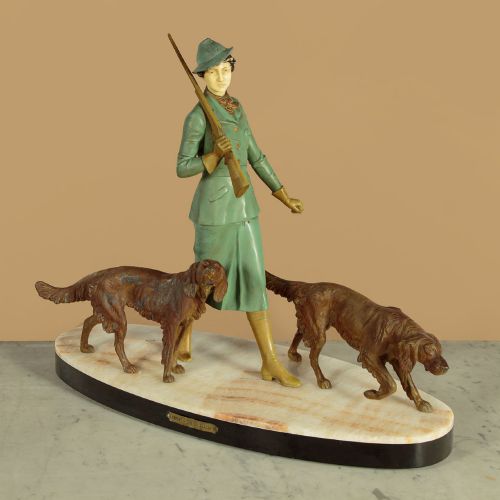
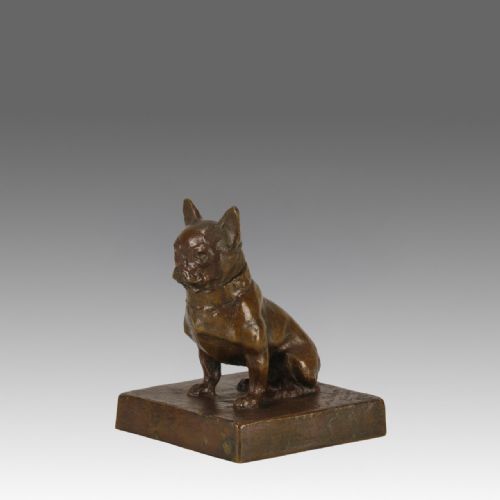
Certain works received cold painted finishes, applying polychrome pigment directly onto the bronze surface after casting to render realistic markings on breeds like bulldogs. Heavier compositions combined cast bronze with carved marble or onyx bases, whilst alternative works integrated spelter or patinated metal for distinct regional forms.
Patinated Bronze Dog Statue Retail Price Guide 2026
Typical asking prices for patinated bronze dog statue among the pieces listed under this phrase on Sellingantiques today, from the lower quarter to the upper quarter. They describe what is for sale here now, not the wider market.
Listings span the nineteenth and twentieth centuries, incorporating Victorian animalier bronzes, Japanese Meiji period okimono and later Art Deco interpretations.
The Spectrum of Workmanship
Quality rests upon the crispness of the chase work, where a skilled hand chased the cooled bronze to define musculature, expression and coat texture without softening the underlying cast. Superior examples display subtle tonal depth in the patination rather than flat, uniform colour.
The signature of a master sculptor or the mark of a known foundry elevates a piece, distinguishing workshop output from later after-casts that lose anatomical precision and proportional balance in translation.
Alfred Barye·Dora Heber·P J Mêne·Masaaki·Jules Moigniez·Antoine Louis Barye·Unno Shomin·Edith Parsons·Auguste Nicholas Cain·Alexandre Kelety·Arthur Waagen·P.de Soete·Geo Maxim·Joseph Francois Victor Chemin·Louis Riché
The Patinated Bronze Dog Statue Glossary
- Animalier
- A nineteenth century artistic movement focused on the realistic depiction of animals, particularly in sculpture. Practitioners studied live subjects in menageries to achieve anatomical accuracy.
- Patination
- The chemical or natural alteration of a metal surface over time or through applied acids. It creates protective and decorative colouration ranging from deep browns to verdigris.
- Lost wax casting
- An ancient metalworking method where a wax model is melted from a mould and replaced with molten bronze. This technique allows for intricate detail and undercut forms.
- Okimono
- A Japanese decorative statue designed for display on a shelf or in a tokonoma alcove. These pieces often depict animals, figures or mythical subjects in bronze or iron.
- Cold painted
- A finishing technique where paint is applied to an unheated bronze object, often associated with Viennese animal bronzes. The pigments sit on the metal surface rather than fusing through heat.
Patinated Bronze Dog Statue: Frequently Asked Questions
What defines the animalier style?
Animalier sculpture focuses on accurate anatomical study and natural movement, portraying beasts in moments of action or rest. Artists observed anatomy directly in veterinary settings and zoological gardens.
This movement gained prominence during the nineteenth century, shifting away from classical human subjects toward the honest depiction of animals.
How do I tell cast bronze from spelter?
Bronze feels notably heavier than spelter, a zinc alloy often used for more affordable nineteenth century figures. Tapping bronze produces a clear, resonant ring, whereas spelter yields a duller thud.
Examining the underside often reveals the warmer, reddish hue of bronze beneath the patina, contrasting with the greyish metal visible on chipped spelter.
Where should I display these statues?
Place figures on sturdy wooden furniture, desks or mantelpieces where their weight is supported safely. Ensure the display area avoids direct, prolonged sunlight to protect marble bases and patinated surfaces.
Keep pieces away from high moisture zones like kitchens to prevent unintended chemical reactions on the metal finish.