


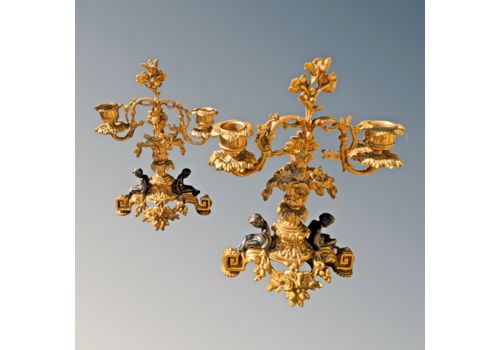


Patinated Bronze Candelabrum
A patinated bronze candelabrum brings sculptural presence and warm candlelight to a room, drawing the eye with its dark metallic contrast against gilt bronze or marble.
Patinated Bronze Candelabrum
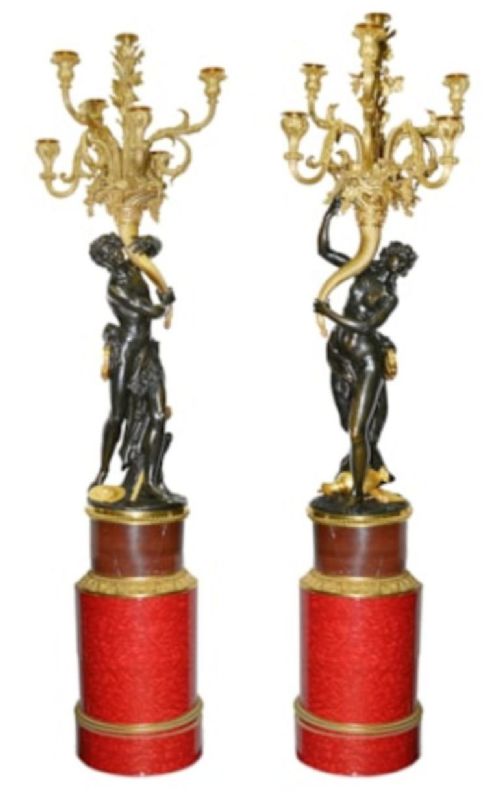
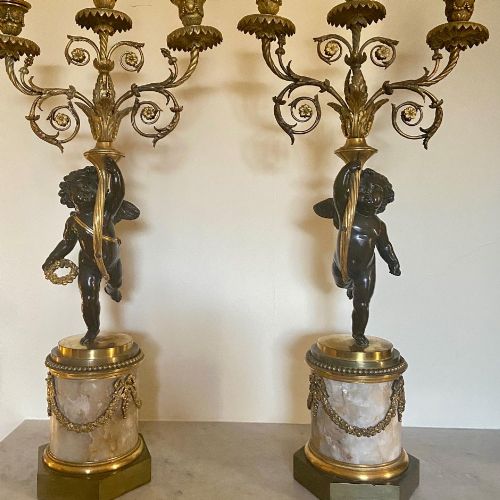
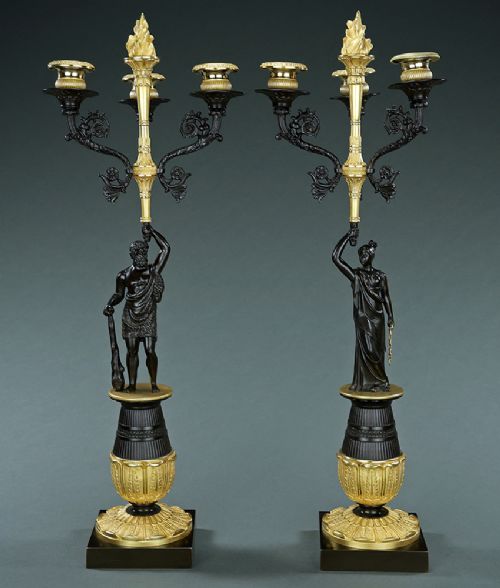
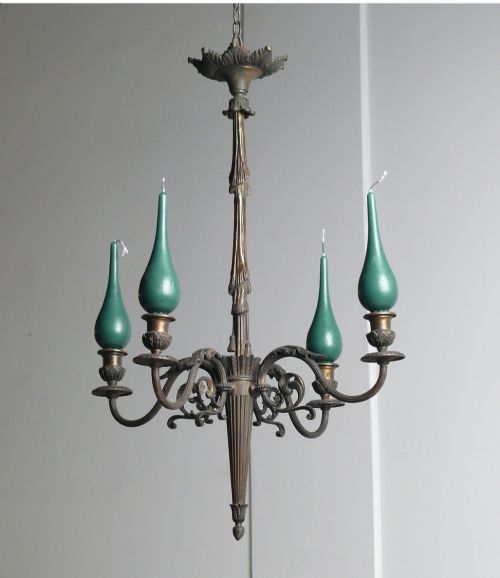
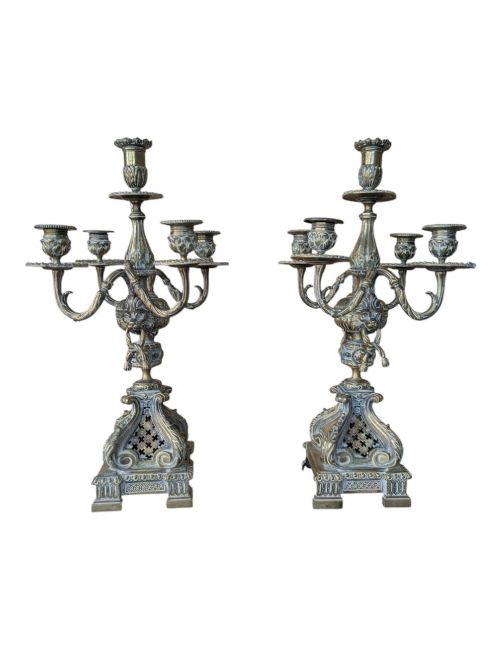
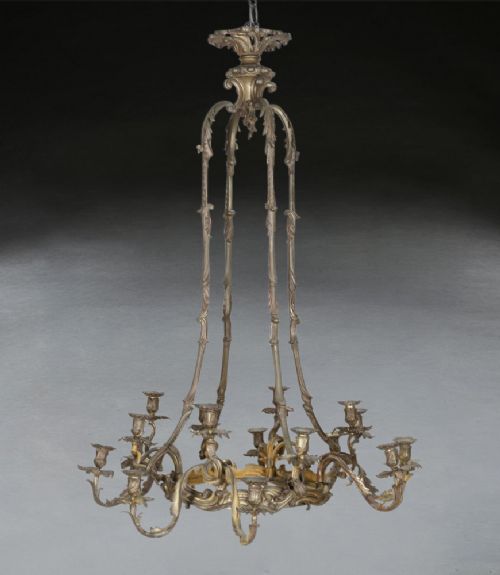
When you search for a patinated bronze candelabrum, you encounter multi-branched lighting fixtures that combine dark cast metal with classical figures, putti, or architectural mounts. The examples seen here originate primarily from the nineteenth century, spanning French Empire, Louis XVI style, and Regency aesthetics.
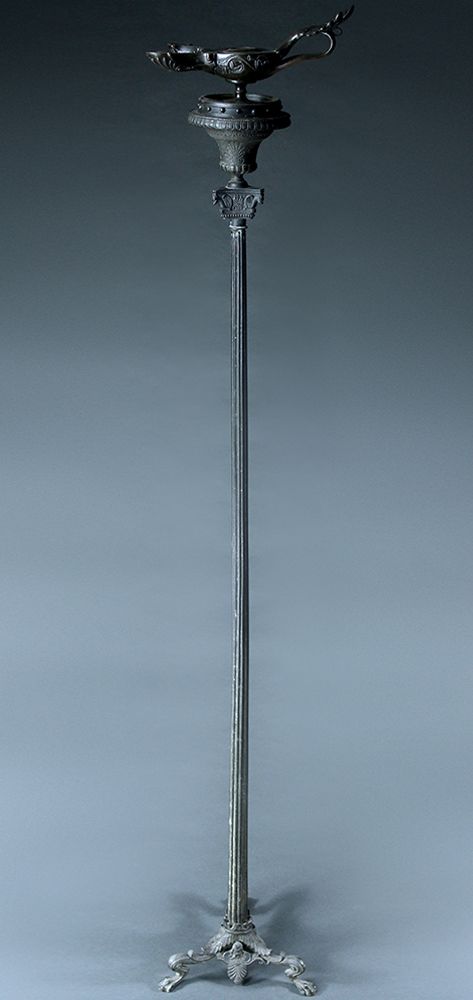
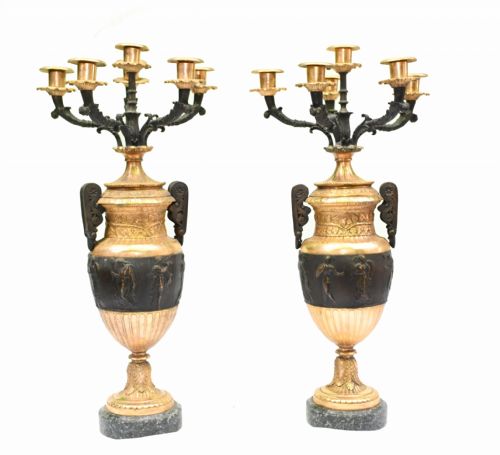
Most items meeting this description are matched pairs designed for mantelpieces or side tables, frequently incorporating marble bases or contrasting ormolu highlights. The forms range from three-branch candelabra to large figural torchères and clock garniture sets holding candle arms.
How they were made
These pieces rely on metal casting, where bronze is shaped into detailed figures and scrolling arms before receiving a chemical patination to achieve its characteristic dark surface. Gilt bronze and ormolu details are often applied alongside the patinated elements to create a sharp dual-tone finish.
Many items incorporate secondary materials such as white marble, slate, onyx, or fluorspar bases that anchor the heavy metal components. Glass lustre drops and enamel accents occasionally complete the construction of nineteenth-century lighting.
Listings feature items spanning the eighteenth century through the nineteenth century, incorporating marble, slate, and onyx alongside patinated and gilt bronze.
What varies in quality
The standard of a patinated bronze candelabrum is defined by the crispness of the chasing and the depth of the metalwork, where superior casting preserves fine facial expressions and feather details on putti. Lesser examples display softer lines and simplified surface textures that obscure the underlying form.
Integration of materials also separates tiers of production, as higher-quality pieces mount heavy bronze securely onto solid marble or slate bases with precise joinery. The harmony between the dark patinated bronze and the polished gilt ormolu determines the visual balance of the finished object.
Francois Redmond·Rabiat·Raingo Fres·Deniere·Clodion
The Patinated Bronze Candelabrum Glossary
- Patinated Bronze
- Bronze that has been treated with chemical solutions to produce a dark, stable surface colour. This finish protects the metal and highlights sculptural details.
- Ormolu
- A method of applying finely ground high-carat gold to a bronze object using mercury amalgamation. It provides a bright, durable golden contrast to dark patinated areas.
- Garniture Set
- A matched grouping of ornamental objects, commonly a mantel clock flanked by two matching candelabra or vases. These sets were designed to sit centrally on a fireplace mantel.
- Torchère
- A tall standing or bracketed light standard designed to hold candles or lamps. In nineteenth-century pieces, these often take the form of classical figures holding branches.
- Putti
- Depictions of chubby male infants, frequently winged, appearing often in French and Italian decorative art. They populate the stems and bases of nineteenth-century candle holders.
Patinated Bronze Candelabrum: Frequently Asked Questions
How do I clean a patinated bronze candelabrum?
Dust the surface gently with a soft, dry brush to prevent the accumulation of grit in the recesses of the casting. Avoid chemical polishes, as they strip the patination and damage the underlying bronze.
For gilt or ormolu sections, use a damp cloth without abrasive agents. Preserve the dry, stable finish of the metal rather than attempting to achieve a bright shine.
Were these candelabra wired for electricity?
Most nineteenth-century pieces were originally made to hold wax candles or oil. Many have since been adapted to take electrical wiring for modern table lamps.
When evaluating converted pieces, look for wiring that runs through existing apertures without drilling new holes into the bronze. Retaining the original candle sockets preserves the antique integrity of the object.
How do I distinguish French Empire style?
French Empire pieces display strict symmetry, martial motifs, and classical figures inspired by ancient Rome and Greece. The bronze work contrasts deep patination with bright, clean ormolu mounts.
Architectural elements such as columns, palmettes, and winged sphinxes frequently support the candle branches. This aesthetic dominated the early nineteenth century and the Regency period.
Can I use real candles in antique candelabra?
Real candles can be used safely if the drip pans and sockets are sound and the piece stands on a level surface. Ensure wax does not overflow onto the patinated bronze or marble base.
Snuff the flames before the wax burns down to the metal sockets. Use thin taper candles that fit securely into the antique drip pans without tilting.