


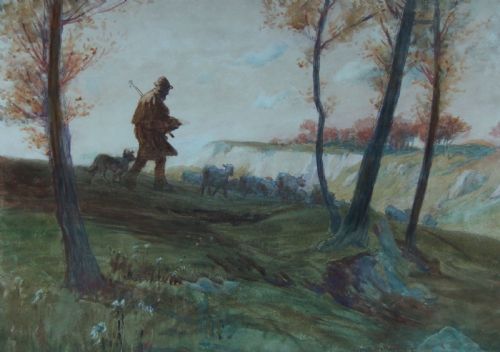


Pastoral Sheep Watercolour
These pastoral sheep watercolour works capture quiet rural scenes through delicate pigments applied to paper.
Pastoral Sheep Watercolour
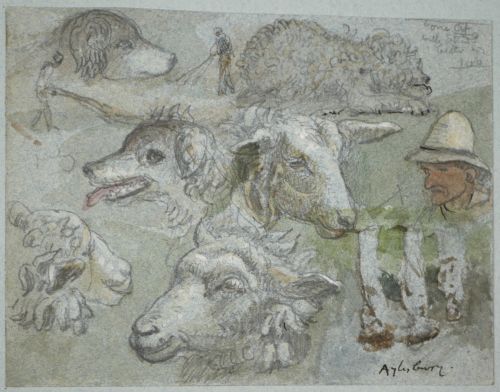
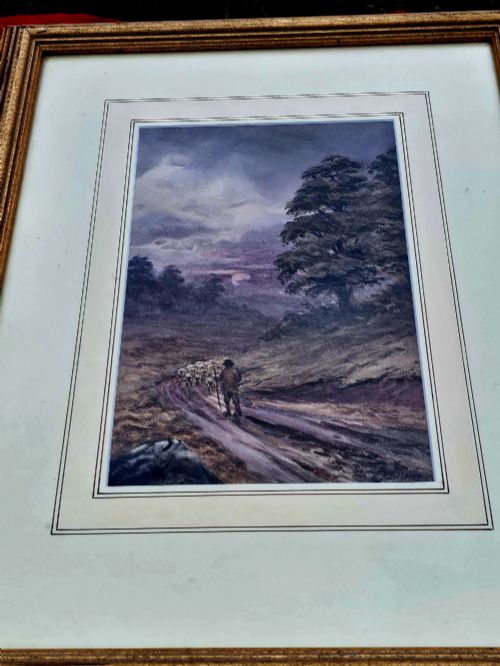
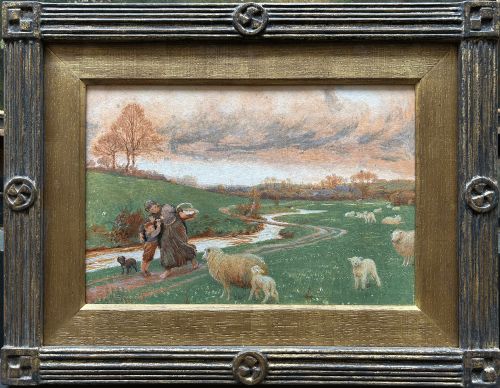
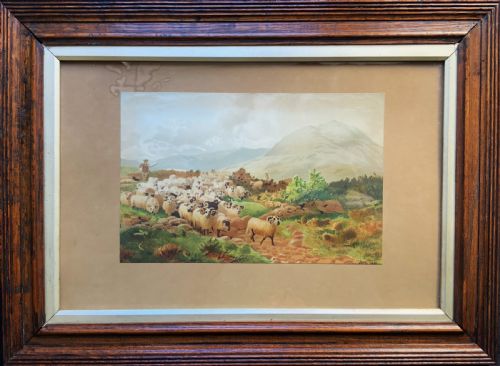
A pastoral sheep watercolour portrays rural and agricultural life, typically featuring flocks grazing across hills, downs, or moorland. These compositions reflect British countryside traditions from the nineteenth and early twentieth centuries, capturing agrarian scenes that felt familiar to contemporary viewers.
The version most commonly met on this page is a framed nineteenth century or Edwardian painting executed on paper. Such works often depict drovers, shepherds, and their flocks navigating rural lanes, river valleys, or coastal downs.
Works originate from various British schools and regional settings, ranging from Welsh estuaries to Dorset commons and Sussex cottages. Artists utilised watercolour pigment to render atmospheric skies, rolling hills, and domestic animals within domestic wall art formats.
Materials and Technique
Artists executed these works using watercolour pigment applied directly to paper supports. The medium allowed for fluid washes of colour to represent open skies, distant hills, and atmospheric weather conditions across rural landscapes.
Finished paintings were commonly housed behind glass within wooden frames, occasionally enhanced with gold leaf or gilt wood mouldings. These traditional mountings protected the delicate paper surfaces from moisture and handling.
Several sheep found themselves immortalised by wartime artists in nineteen eighteen.
Distinctions in Quality
Quality rests upon the artist's ability to render anatomical precision in animals and convincing atmospheric depth in the landscape. Works by established named painters demonstrate superior brushwork and compositional balance compared to anonymous school pieces.
The preservation of the paper and the vibrancy of the watercolour pigment determine the visual success of a piece. Fading from exposure to light alters the original tonal contrasts intended by the painter.
James Smetham·EJ Letheren·Frederick Walker·Cornelius Pearson·Henry Charles Fox·Bernard Walter Evans·Basil Bradley·A Winter Shaw·Henry Birtles·George Faulkner Wetherbee·Charles James Adams·Edmund George Warren·Jessie Hall·W Ramsey·John D Walker·JS Cooper·Wycliffe Egginton·T Sidney Cooper
The Pastoral Sheep Watercolour Glossary
- Watercolour pigment
- A colour substance ground in a water-soluble binder, applied in translucent washes on paper.
- Gilt wood
- Wood that has been coated with a thin layer of gold leaf or gold paint, frequently used for traditional picture frames.
- English School
- A classification for artists trained or working within England, sharing common stylistic approaches during specific historical periods.
- Pastoral
- A genre of art depicting rural life, shepherds, and domestic livestock in an idealized or traditional countryside setting.
Pastoral Sheep Watercolour: Frequently Asked Questions
What periods do these watercolours date from?
The works span the nineteenth century and the early twentieth century, including Victorian and Edwardian examples.
Specific dates within the titles range from the 1870s through the 1920s, reflecting traditional British landscape painting traditions.
How should I frame and hang these paintings?
These watercolours require protection behind glass to prevent atmospheric damage to the paper support.
Keep them away from direct sunlight to preserve the watercolour pigments and prevent the paper from yellowing over time.
What subjects typically appear in these scenes?
Common subjects include shepherds tending flocks, drovers moving sheep across moors, and rural cottages.
Settings frequently feature British countryside locations such as Welsh river estuaries, Dorset commons, and Sussex lanes.
Are these works signed by the artists?
Many of the listed watercolours are attributed to named nineteenth and early twentieth century artists and British school painters.
Signatures or historical documentation help identify specific creators such as Henry Charles Fox or Charles James Adams.