



Pastoral Cattle Scene Painting
Every pastoral cattle scene painting records a rural working day in oil paint, canvas or watercolour.
Pastoral Cattle Scene Painting
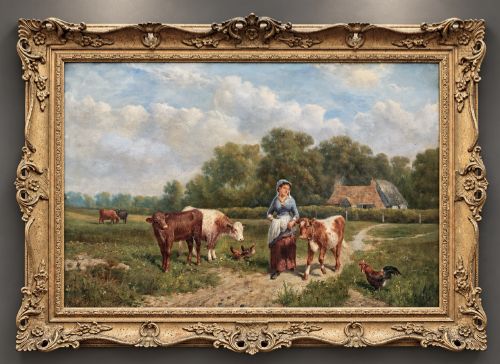
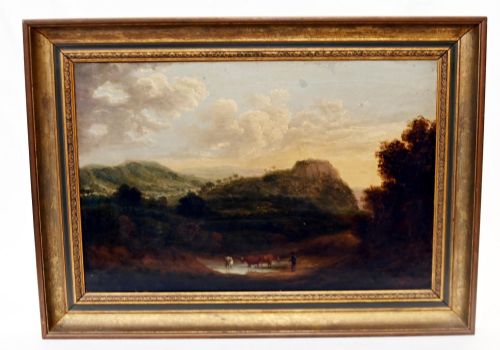
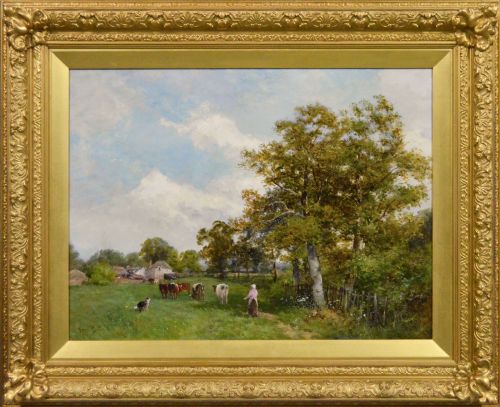
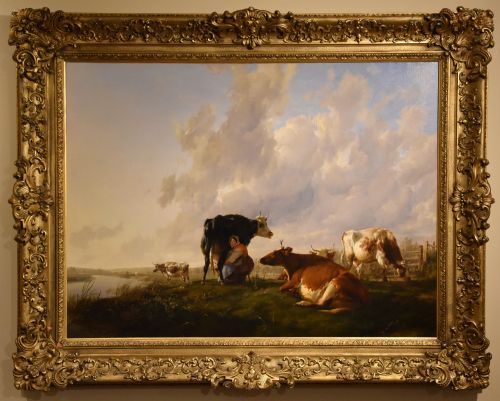
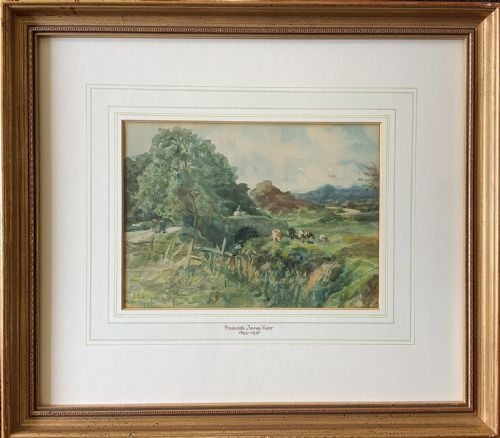
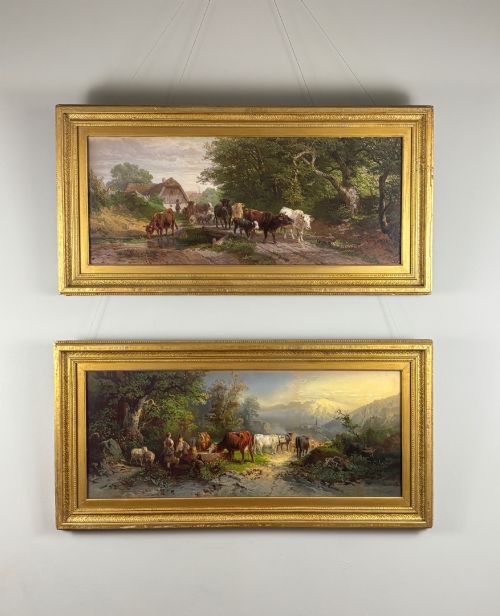
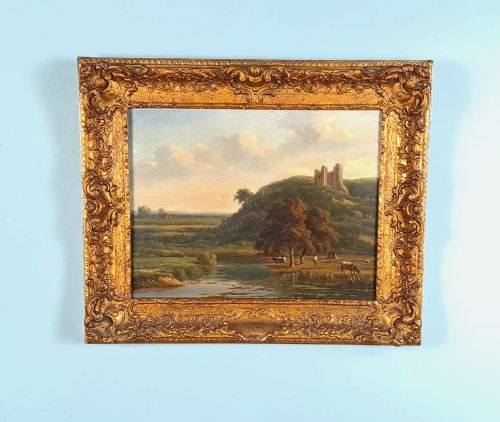
A pastoral cattle scene painting portrays livestock grazing in fields, near rivers or inside farmyards across British and European landscapes. These artworks document agricultural life through the nineteenth and early twentieth centuries, spanning Victorian, Edwardian and impressionist styles.
Most examples found here date from the nineteenth century into the 1920s, executed as oil paintings on canvas or board, alongside watercolours on paper. The subjects range from quiet riverbank watering spots to bustling farmyard scenes with milkmaids and herders.
Materials and construction
Painters applied oil paint to stretched canvas or wooden boards, often framing the finished work in decorative giltwood or gesso frames. Watercolours were worked on paper, occasionally preserved beneath glass in original wooden surrounds.
Pigments were handled with varying brushwork, moving from tight nineteenth-century realism to looser British impressionist touches. Wood and paper provided the stable supports for these detailed rural compositions.
Cows occasionally share the canvas with ducks, sheep, and remarkably attentive dogs.
Factors of quality
The success of a pastoral cattle scene painting relies on the handling of light, anatomical accuracy of the animals, and depth within the landscape. Superior works integrate the cattle naturally into their surroundings rather than placing them as static additions.
Framing also influences the piece, with original giltwood or burr frames enhancing the presentation. Stronger paintings demonstrate confident brushwork and a balanced composition that anchors the figures and livestock within the view.
David Bates·Thomas Sidney Cooper·Johann Friedrich Voltz·T C Hofland·Ernest Pile Bucknall·Samuel Joseph Clark·Frederick James Knowles·Robert Thorne Waite·Alfred Grey·George Cole·Thomas Baker of Leamington·Arthur Charles Dodd·John W Morris·Henry Brittan Willis·John R K Duff·Henry Cheadle·William Sidney Cooper·Owen Bowen·Sidney Richard Percy·Milton Drinkwater·Francois Charles Cachoud
The Pastoral Cattle Scene Painting Glossary
- Oil on Canvas
- Pigment mixed with drying oil applied to a woven fabric support stretched across a wooden frame. This medium allowed artists to build rich textures and deep tones.
- Watercolour
- Paint made of colourants suspended in a water-soluble binder, applied to paper. It produces translucent washes that capture soft atmospheric light.
- Giltwood
- Wood carved and coated with gold leaf or a gold-coloured metallic finish. It forms the decorative border surrounding many period paintings.
- Gesso
- A paint mixture consisting of a neutral binder mixed with chalk, pigment, or plaster. It prepared wooden panels and frames before gilding or painting.
- Pastoral
- A genre of art depicting rural life and agricultural landscapes in an idealized or picturesque manner. These scenes typically feature farms, fields, and grazing animals.
Pastoral Cattle Scene Painting: Frequently Asked Questions
What periods do these paintings cover?
The available selection spans from the late eighteenth century through the Victorian and Edwardian eras up to the early twentieth century. Most pieces originate from the nineteenth century.
Artists worked across various movements including realism, British impressionism, and traditional pastoral styles during these decades.
How do oil and watercolour differ here?
Oil paintings utilise pigment bound in oil on canvas or wood boards, offering thick textures and deep colour layering. Watercolours employ water-soluble paints on paper for a lighter effect.
Watercolours frequently require glass protection within their frames, while oil paintings on canvas remain open to the air.
Where were these scenes typically set?
Locations include British and European farmlands, riverbanks, woodlands, and upland pastures. Artists recorded specific regions such as Yorkshire, Kent, and the Lake District.
The settings reflect the working agricultural environment of the nineteenth-century countryside.
How should I care for a framed painting?
Keep paintings away from direct sunlight and damp conditions to protect the canvas, paper, and wooden or giltwood frames. Stable room temperatures prevent the wood and gesso from cracking.
Dust watercolours behind glass gently with a dry cloth, and avoid touching the painted surface of oil works.