




Pastoral Cattle Picture
A pastoral cattle picture brings the quiet rhythm of nineteenth-century farmland and riverbanks directly into a room.
Pastoral Cattle Picture
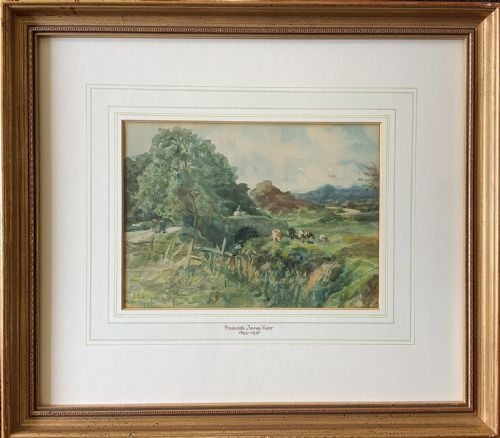
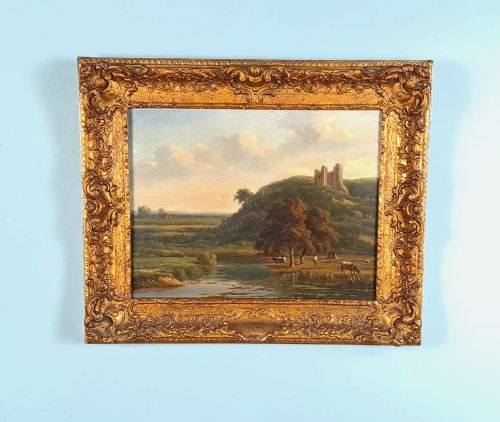
A pastoral cattle picture depicts herds resting by rivers, grazing in valleys, or driven through woodlands across British landscapes. These works capture rural life during the Victorian and Edwardian periods, often framed by notable artists working in oil or watercolour.
The most common examples on this page are nineteenth-century oil paintings on canvas or board, alongside delicate watercolours housed in original frames. Subjects range from gentle riverbank scenes to dramatic Scottish highland landscapes populated by cattle and herdsmen.
Materials and technique
Artists painted primarily with oil on canvas or applied watercolour to paper, occasionally utilising gouache for denser colouration. Canvases were stretched over wooden frames and frequently paired with ornate giltwood and gesso frames.
Framing played an integral role in presentation, with burr wood and gilded mouldings enclosing the painted compositions to protect the paper or canvas beneath glass.
Calves and ducks occasionally share the riverbank with the cattle, adding a charming touch of rural life to the composition.
What varies in quality
Quality rests in the fidelity of the animal anatomy, the handling of light across the landscape, and the depth of the background scenery. Skilled painters rendered the posture and weight of the cattle with anatomical precision rather than generic shapes.
The integrity of the original frame and the clarity of the artist signature or attribution also separate standard decorative works from finer collector pieces.
David Bates·Thomas Sidney Cooper·George Vicat Cole·Harold Lawes·Thomas Baker
The Pastoral Cattle Picture Glossary
- Gesso
- A plaster-like mixture applied to wooden frames before gilding to provide a smooth surface for moulding decorative details. It allows for intricate relief ornamentation around the perimeter of the picture.
- Giltwood
- Timber that has been coated with a thin layer of gold leaf. It creates the luminous golden borders characteristic of traditional nineteenth-century picture frames.
- Watercolour
- A paint consisting of pigment suspended in a water-based solution, typically applied to heavy paper. It yields translucent washes of colour well suited to atmospheric landscapes.
- Provenance
- The documented history of ownership associated with an artwork. It helps establish authenticity and trace the journey of the painting through time.
Pastoral Cattle Picture: Frequently Asked Questions
How do I hang a pastoral cattle picture?
Support the weight securely using picture hooks rated for the specific size of the canvas and frame. Hang the piece at eye level away from direct sunlight to protect the pigments.
Ensure the wall maintains stable humidity levels to prevent the wooden stretcher bars and canvas from warping over time.
Are these paintings signed by the artist?
Many of the works feature visible signatures or monograms applied by the painter, often located in the lower corners of the canvas or paper. Attributions are also recorded through historical labels and gallery documentation.
Unsigned pieces are frequently attributed to specific periods or artistic circles based on brushwork, subject matter, and framing style.
How should I clean an antique frame?
Dust the giltwood or gesso surface gently using a soft, dry brush to remove surface particles without disturbing the finish. Avoid liquid cleaners entirely, as moisture can damage the delicate gilded layers.
Professional conservators should handle deeper cleaning or restoration of cracked and flaking frame mouldings.
What subjects appear alongside cattle in these scenes?
Herdsmen, farmers, and drovers frequently accompany the cattle, often depicted navigating riverbanks, rural tracks, or highland valleys. Figures of women and dogs herding livestock also appear in nineteenth-century compositions.
Architectural elements such as distant castles, cathedrals, barns, and stone bridges frequently anchor the background of the landscape.