

Paste Stone Jewellery
Paste stone jewellery brings together centuries of hand-cut glass and crystal set in silver and gold to deliver the brilliance of precious gems without the weight or cost.
Paste Stone Jewellery
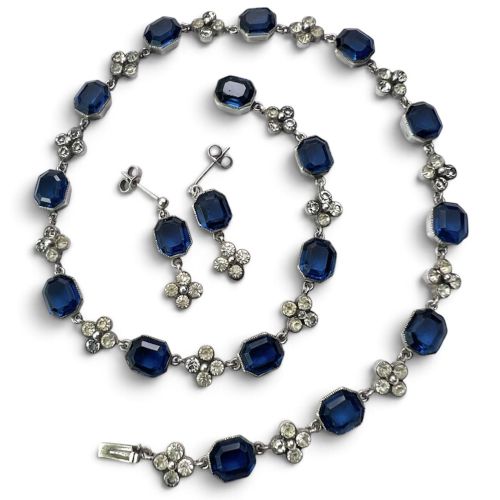
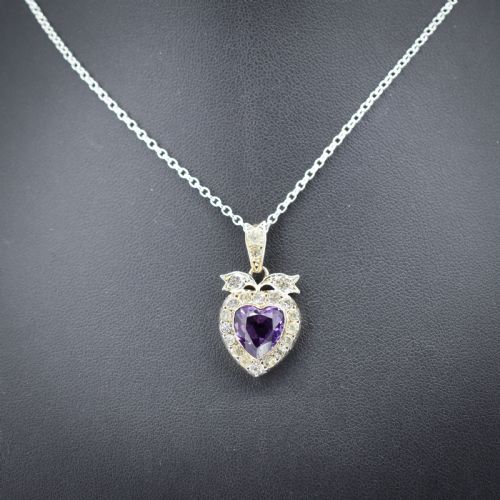
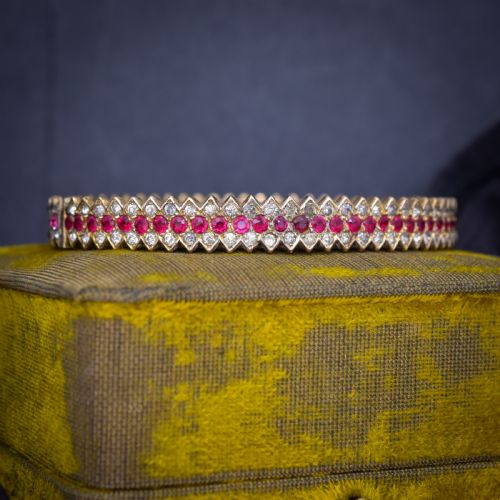
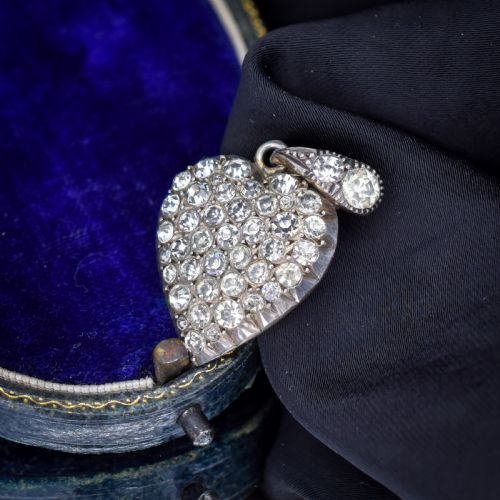
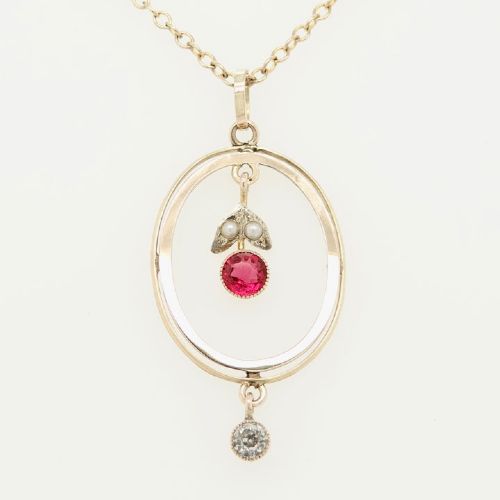
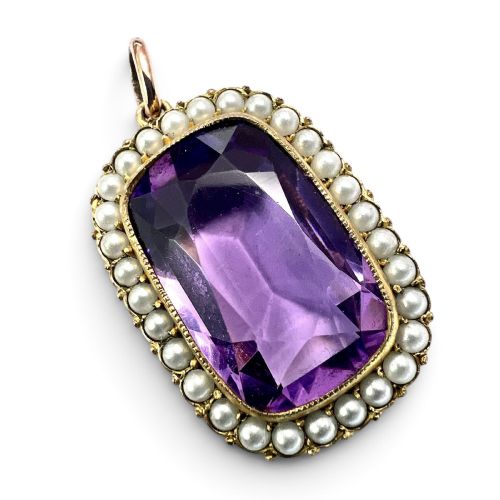
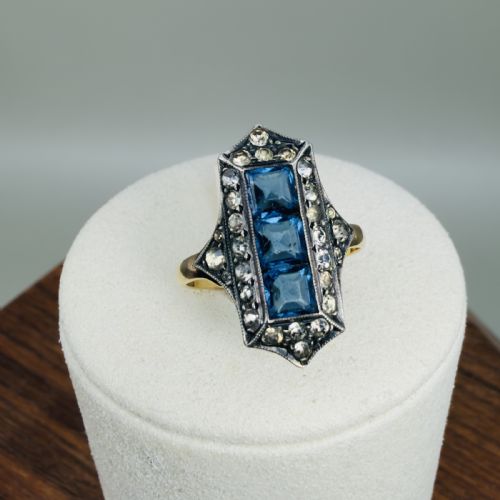
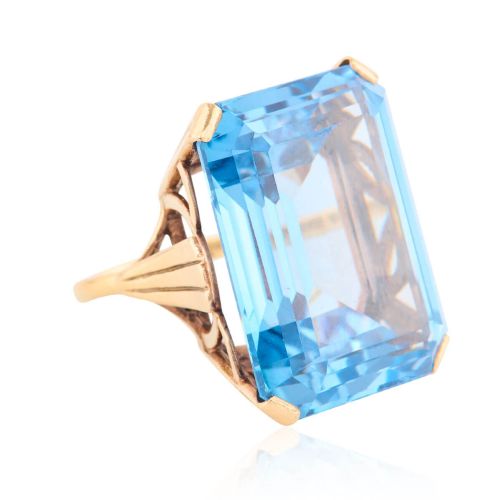
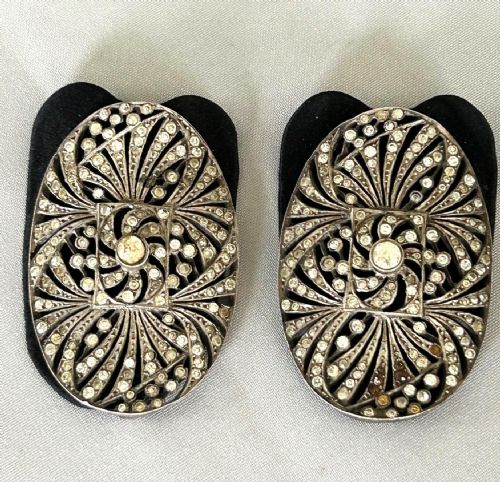
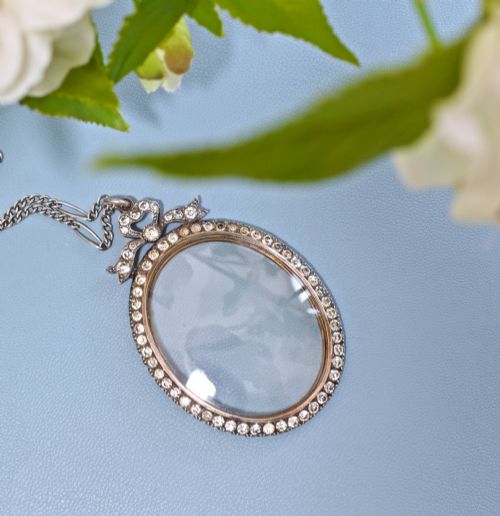
The pieces available on this page stretch across multiple eras, with Victorian, Edwardian, and Georgian examples appearing alongside Art Deco, Art Nouveau, and mid-century designs. You are most likely to meet silver and gold settings holding coloured or clear paste stones that reflect the prevailing aesthetic of their specific century.
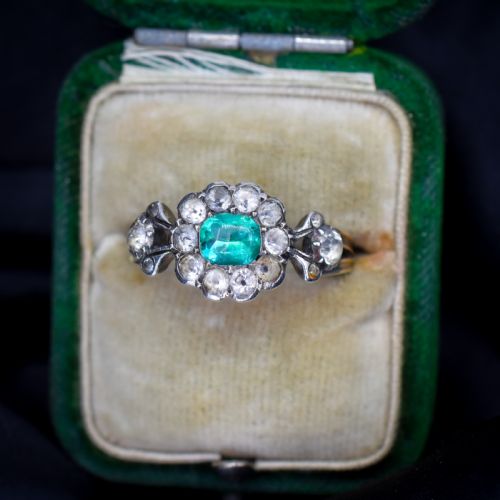
Earlier pieces often feature closed-back settings where coloured foil rests beneath the glass to enhance the hue, while later twentieth-century examples shift towards open-back mounting. This evolution in setting technique alters how light passes through the glass, defining the visual character of each period.
Materials and Construction
Makers fashioned paste jewellery using high-refractive-index lead glass, which was hand-cut and polished to imitate the facets of mined gemstones. This glass was then secured into metals ranging from sterling silver and fine silver to nine-carat, twelve-carat, fifteen-carat, and eighteen-carat gold.
Techniques shifted between centuries, moving from the heavy foil-backed settings and steel filigree of the Georgian period to the intricate wirework and silver-topped gold of the Victorian era. Edwardian and Art Deco pieces introduced lighter platinum-look silver mounts, geometric bails, and precise prong settings that held the glass stones securely.
Shoe buckles encrusted with glittering paste allowed eighteenth-century wearers to dance under candlelight with the foot-bound brilliance of an aristocrat's diamond fortune.
Defining Quality in Paste Pieces
The distinction between ordinary and exceptional paste jewellery lies in the precision of the stone-cutting and the integrity of the metalwork. Hand-cut facets with sharp, clean edges catch light differently than machine-pressed or worn glass, while secure prong settings or delicate closed-back foils indicate higher workshop standards.
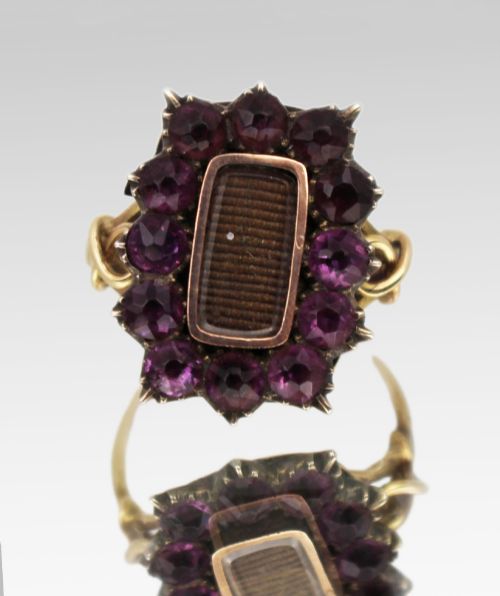
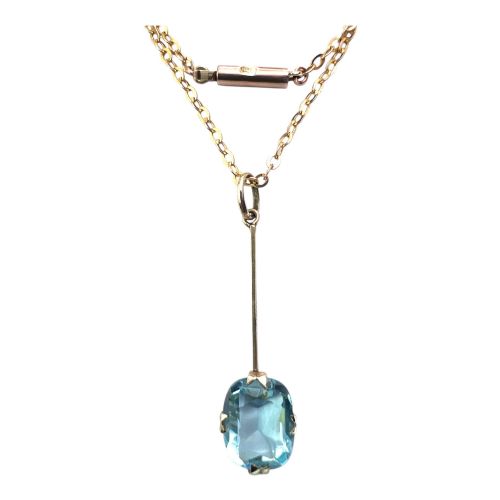
Design complexity also separates pieces, with intricate configurations such as multi-stone cluster rings, articulated drop necklaces, and figural brooches demanding greater skill from the jeweller. The weight and purity of the housing metal, whether sterling silver, gold gilt, or solid gold, further elevates the stature of the piece.
The Paste Stone Jewellery Glossary
- Paste
- A heavy, high-lead glass that is cut and polished to imitate precious gemstones. It has been utilised for centuries to create high-status ornamental items.
- Closed-back setting
- A mounting style where the metal completely encloses the rear of the stone. Jewellers frequently placed coloured foil behind the glass in this setting to intensify its colour.
- Giardinetti
- A decorative style translating to little garden, depicting a small basket or vase filled with floral and leaf motifs formed from various stones. This design is particularly common in Georgian and Victorian brooches and rings.
- Witches heart
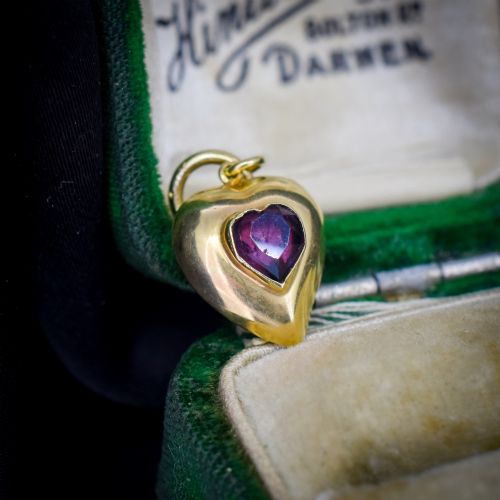
- A pendant or brooch shape featuring an asymmetrical, twisted heart with a scrolled terminus. It was traditionally given as a token of romantic affection.
- Riviere
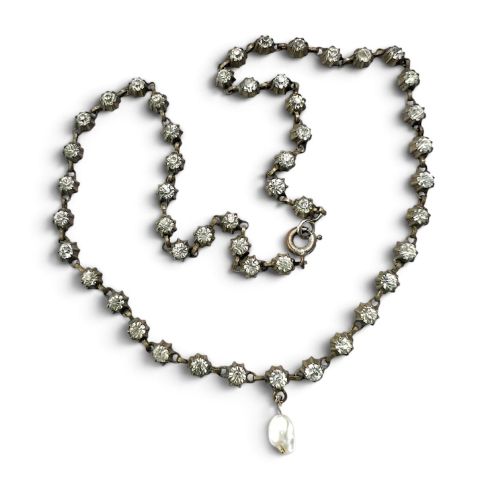
- A necklace composed of a continuous sequence of individually set stones of uniform or graduating size. These pieces sit closely against the skin around the base of the neck.
Paste Stone Jewellery: Frequently Asked Questions
How do I clean paste stone jewellery?
Clean paste jewellery using a soft, dry cloth to remove surface dust and skin oils. Avoid submerging older pieces in water, particularly foil-backed examples, as moisture damages the delicate backing behind the glass.
Harsh chemical dips and ultrasonic cleaners will strip gilt layers and loosen stones from their settings. Gentle wiping preserves both the metal patina and the integrity of the glass facets.
Are paste stones made of real glass?
Paste stones are indeed formed from specially formulated glass containing high amounts of lead to increase brilliance and weight. This material allows the glass to mimic the refractive properties of natural diamonds and coloured gems.
Unlike modern synthetic stones created in laboratories, historic paste is an artisanal product shaped by hand-cutting and polishing techniques developed over centuries.
Can I wear paste jewellery every day?
Paste jewellery can be worn regularly provided you take sensible precautions against physical impact and moisture. Glass is softer than diamond or sapphire and can scratch or chip if struck against hard surfaces.
Remove rings and bracelets before undertaking manual work, swimming, or bathing. Storing each piece in a separate lined compartment prevents the glass stones from scratching one another.