


Vintage Heart Pin
A vintage heart pin brings together sentiment and craftsmanship, offering wearable romance from Edwardian, Victorian, and later decades.
Vintage Heart Pin
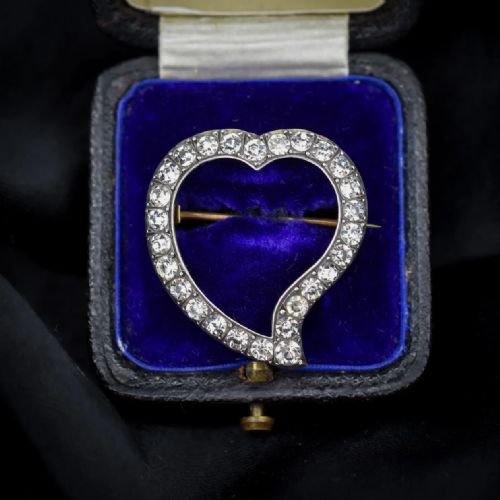
A vintage heart pin encompasses small brooches, bar brooches, and pin cushions shaped around the motif of a heart. These pieces draw on Victorian, Edwardian, and mid-century aesthetics, often incorporating symbolic elements like bows, witches hearts, or double heart configurations.
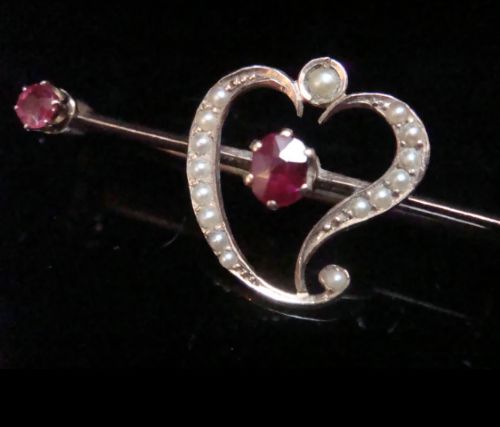
Buyers frequently encounter Edwardian and Victorian examples on this page, alongside pieces from the 1930s and 1960s. The forms range from simple gold outlines set with pearls to elaborate pierced gold structures pavé-set with diamonds.
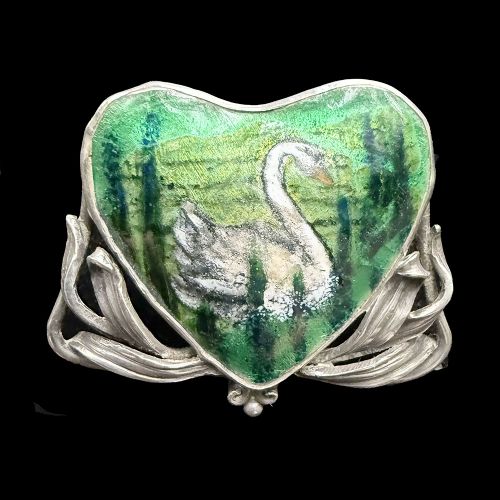
The materials span sterling silver, 9ct gold, 15ct gold, and 18ct gold, frequently enhanced with rubies, turquoise, amethysts, tourmalines, and enamel work. Pin cushions in silver provide a functional variation distinct from standard lapel brooches.
Materials and construction methods
Metals such as sterling silver and various carats of gold form the structural foundations of these brooches, shaped through casting, piercing, and wirework. Gold components often provide secure settings for precious stones while silver highlights paste or marcasite details.
Enamelling techniques, including plique-à-jour and coloured enamel layers, introduce vibrant hues to the metal frameworks. Stones like old-cut diamonds, seed pearls, and turquoise are handset into bezels, collets, or grain settings across the face of the heart.
A tiny silver heart sits quietly waiting to hold stray pins on a Victorian dressing table.
Assessing quality in heart pins
The refinement of the metalwork and the precision of the stone setting distinguish finer examples from standard production. Pierced goldwork with clean, symmetrical openwork and well-matched gemstones indicate careful workshop execution.
The integration of specialised techniques, such as translucent plique-à-jour enamel or carefully matched old-cut diamonds, elevates the piece. Maker attribution, evidenced by specific maker marks or distinct regional silverwork, also influences the character of the item.
George W Shiebler·Volmer Bahner
The Vintage Heart Pin Glossary
- Old-cut
- A diamond cut characterised by a small table, high crown, and open culet, typical of pieces made before the advent of modern brilliant cutting. These stones exhibit soft, broad flashes of light under candlelight.
- Plique-à-jour
- An enamelling technique where enamel is applied within a cellular framework without a backing, resembling miniature stained glass. This allows light to pass directly through the coloured glass.
- Seed pearl
- A very small natural or cultured pearl, often half-drilled and glued or pegged onto a gold stem. They appear frequently in clusters and borders on Victorian and Edwardian jewellery.
- Marcasite
- Small faceted pieces of pyrite set closely into silver mountings to resemble diamonds. Popularised during the Art Deco period, they provide a dark metallic sparkle.
- Witches heart
- A heart motif with a twisted or skewed tail at the base, historically given as a token of love that captured the recipient's heart. These designs date back centuries and reappear in Victorian revivals.
Vintage Heart Pin: Frequently Asked Questions
What periods do vintage heart pins cover?
The pieces span from the 19th century through the Edwardian and Victorian eras into the 1930s and 1960s. Styles reflect the prevailing tastes of those decades, including Arts and Crafts and Art Nouveau.
Victorian and Edwardian items often feature seed pearls and turquoise set in gold, while later 20th-century pieces utilise marcasite or modern white gold settings.
How were pin cushions used?
Silver pin cushions served as decorative desk or dressing table accessories rather than wearable items of jewellery. They combined functional utility with ornamental metalwork.
Master silversmiths shaped the silver into figural or geometric forms, including hearts, fitted with padded velvet or silk inserts to hold pins.
What materials are common in these pins?
Silver and gold in various carats, including 9ct, 15ct, and 18ct, form the primary metal bases. Gemstones such as diamonds, rubies, amethysts, and turquoise provide colour and brilliance.
Enamel work and seed pearls frequently complement the precious metals, adding texture and decorative contrast to the heart designs.
How do I distinguish Edwardian from Victorian pieces?
Victorian heart pins often display heavier gold weights, darker garnet or turquoise stones, and sentimental motifs associated with mourning or deep romance. Edwardian examples tend to lean towards lighter, airier platinum or silver-topped gold.
Edwardian jewellery frequently employs garlands, bows, and intricate openwork lace patterns, whereas Victorian pieces are more solid in construction.