

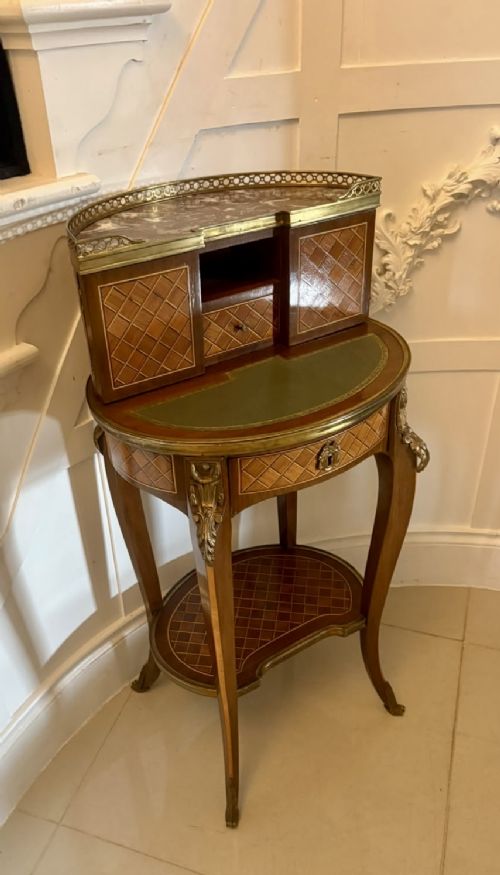
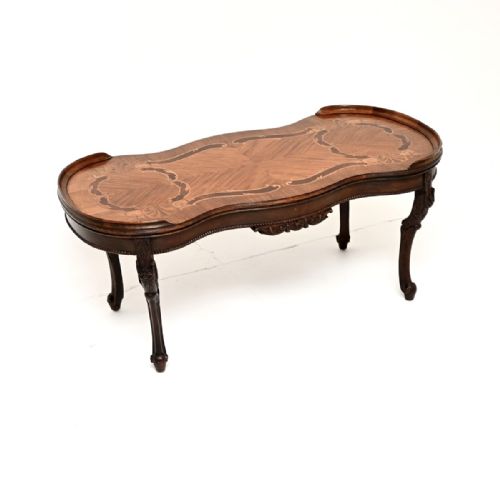
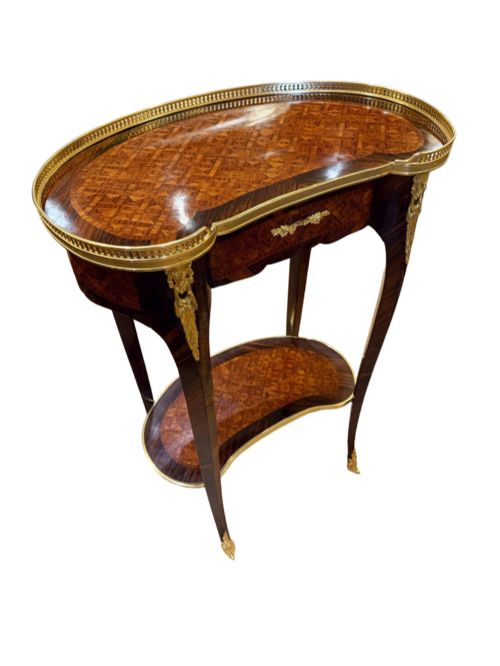

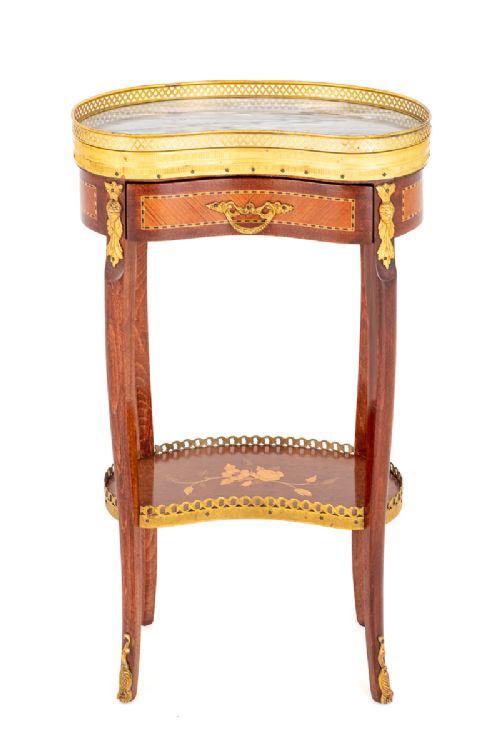


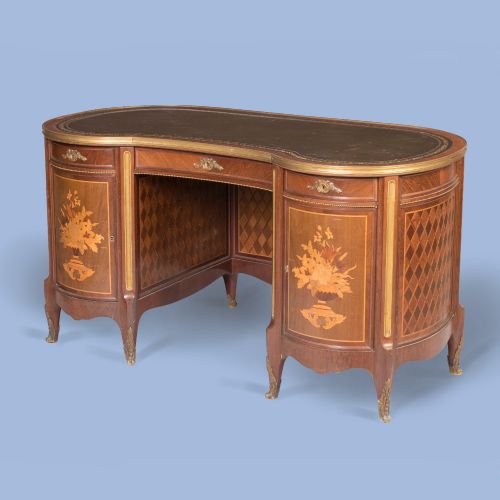
Parquetry Kidney Table
A parquetry kidney table offers a graceful curved silhouette paired with geometric wood mosaics, bringing understated elegance to any room.
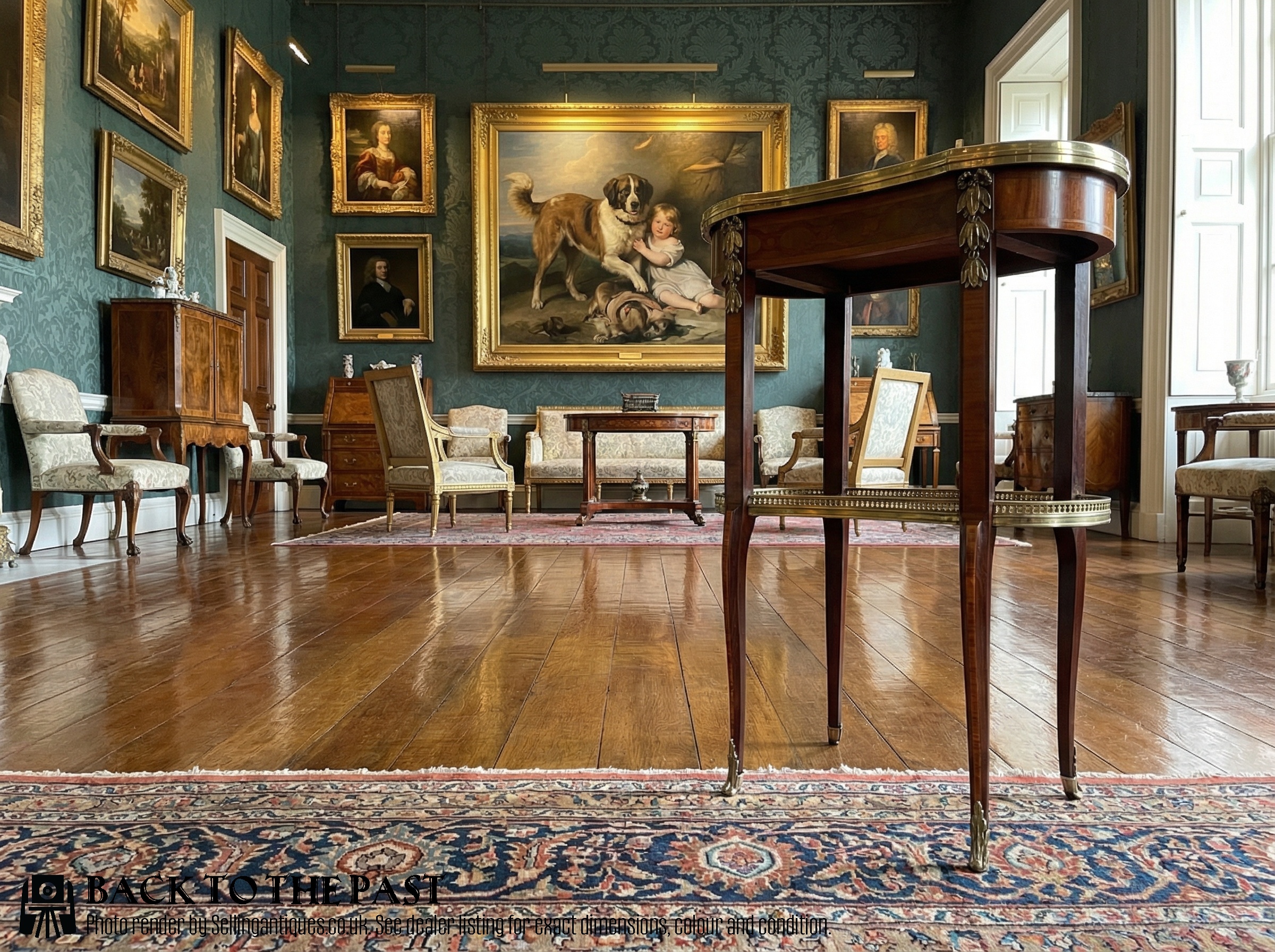
Parquetry Kidney Table
When you search for a parquetry kidney table, you enter a distinct realm of serpentine forms and geometric wood mosaics designed to hug a wall or sofa. These pieces appear in forms ranging from compact occasional tables and side tables to bedside tables, desks, and dressing tables.
The versions you are most likely to meet on this page hail primarily from the nineteenth century up through the nineteen-thirties. Makers drew heavily on French Louis XV and Louis XVI styles, incorporating curvilinear outlines and ornate mounts.
Origins lean towards continental workshops, with English interpretations also surfacing in rich timbers like kingwood and walnut. Each piece balances decorative surface work with a practical, indented outline meant to sit comfortably against the human form.
How they were made
Cabinet makers constructed these tables using solid carcases of timbers like mahogany or walnut, subsequently applying fine veneers to achieve the characteristic curved contours. Kingwood, rosewood, and fruitwood veneers were meticulously cut and pieced together in geometric parquetry or floral marquetry patterns across the kidney-shaped tops.
Metalworkers contributed cast brass and ormolu mounts, edging galleries, and sabots that accentuated the sweeping lines of the legs and aprons. Leather inserts frequently graced the surfaces of writing desks and dressing tables, providing a durable writing surface framed by inlaid borders.
Parquetry Kidney Table Retail Price Guide 2026
Typical asking prices for parquetry kidney table among the pieces listed under this phrase on Sellingantiques today, from the lower quarter to the upper quarter. They describe what is for sale here now, not the wider market.
Listings span the nineteenth century through the nineteen-thirties, dominated by French Louis XV revival styles executed in kingwood, walnut, and mahogany.
What varies in quality
The distinction between standard output and the finest workshop production rests in the precision of the veneer work and the crispness of the cast bronze mounts. Superior examples display tightly matched wood grains and complex geometric parquetry that flows seamlessly around the tight curves of the kidney shape.
Heavier gauge brass galleries, substantial ormolu enrichment, and the inclusion of secondary timbers such as oak for drawer linings elevate a piece. Lesser examples rely on simpler mahogany surfaces with minimal inlay and lighter stamped metal fittings rather than hand-chased bronze.
The Parquetry Kidney Table Glossary
- Parquetry
- Geometric mosaic woodwork formed by small pieces of veneer arranged in repeating patterns such as cubes, chequers, or diagonals. This technique creates a durable and visually striking decorative surface on table tops.
- Kidney shape
- A concave-curved outline resembling a bean, designed to fit snugly against the user when seated at a desk or dressing table. It became particularly popular in French revival furniture of the nineteenth and twentieth centuries.
- Kingwood
- A dense, heavy tropical timber featuring rich brown tones with darker violet and black streaks. It was highly favoured by elite cabinet makers for high-end veneering.
- Ormolu
- Gilt bronze mounts cast and chased to embellish the corners, legs, and aprons of fine furniture. The technique involves applying a gold-mercury amalgam to bronze before firing.
- Marquetry
- The art of forming decorative pictures or designs on wooden surfaces using thin slices of various tinted woods. Unlike parquetry, it typically depicts floral sprays or pictorial scenes.
Parquetry Kidney Table: Frequently Asked Questions
What is a kidney table used for?
These tables served various domestic functions depending on their exact form and height. Smaller iterations acted as occasional lamp or side tables in reception rooms, while larger versions functioned as writing desks or dressing tables.
The concave front curve allowed the user to sit closer to the surface, making them practical for correspondence or grooming while occupying a relatively compact footprint.
How do I date a kidney table?
Dating relies on observing construction methods, timber choices, and stylistic markers across the piece. Nineteenth-century examples often display hand-cut dovetails in drawer construction and heavier patination on the secondary woods.
Twentieth-century pieces from the nineteen-twenties and thirties frequently exhibit lighter carcass construction and machine-cut elements while continuing traditional French revival design motifs.
Are these tables French or English?
The overwhelming majority of these pieces follow French Louis XV and Louis XVI design traditions, though they were produced in both France and England. Continental makers specialised in intricate parquetry and elaborate bronze mounts.
English workshops also adopted the form during the nineteenth century, sometimes pairing the kidney shape with native walnut or imported kingwood veneers.
How do I style a kidney table at home?
The curved outline makes these pieces exceptionally versatile for placing beside a sofa, in a hallway, or as a freestanding writing desk in a study. Their finished backs allow them to sit away from walls without disrupting the room's flow.
Pair them with minimalist contemporary seating to let the geometric parquetry and curved timber lines remain the primary visual focus.