



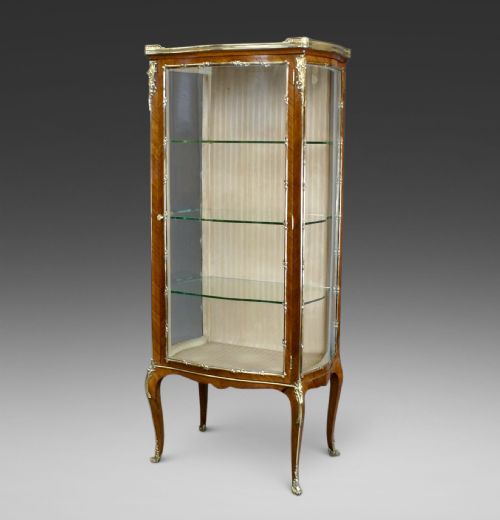
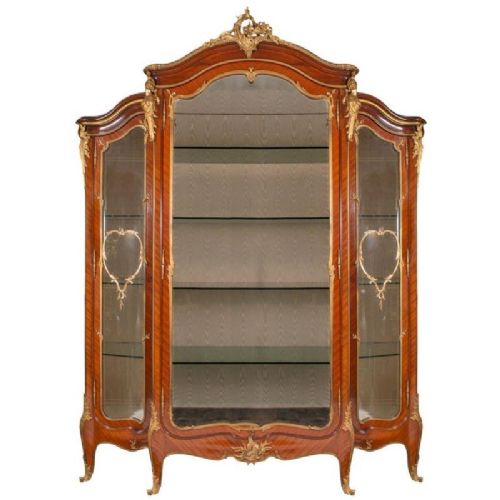


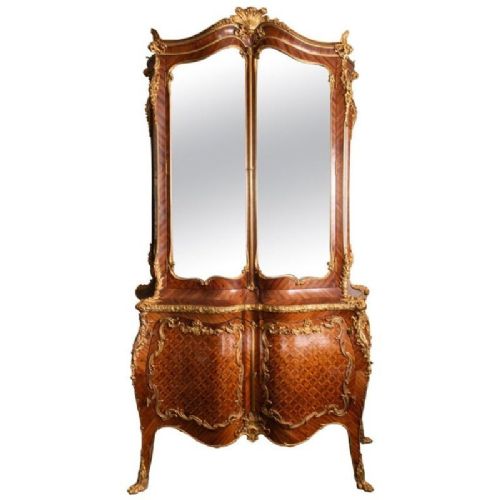

Parquetry China Cabinet
A parquetry china cabinet brings together precise geometric woodworking and glass display, offering a refined stage for porcelain and curiosities.
Parquetry China Cabinet
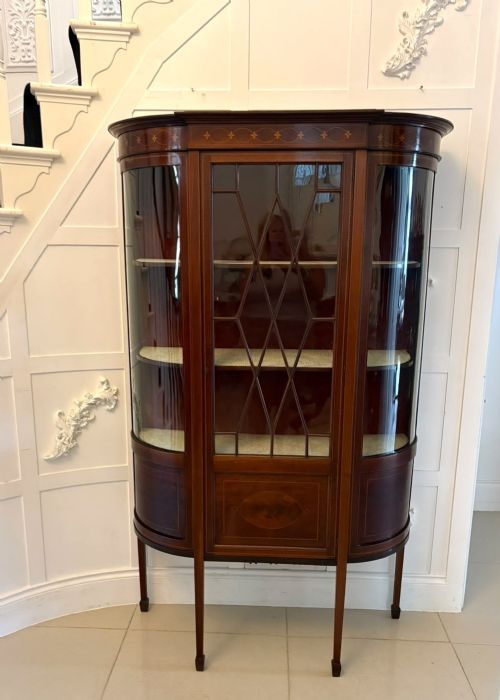
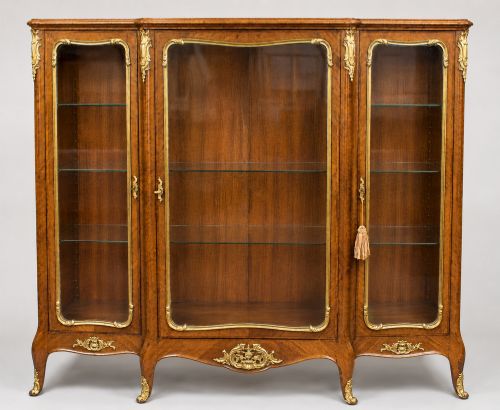
When searching for a parquetry china cabinet, buyers encounter display cabinets and vitrines originating primarily from the nineteenth century and the Edwardian era. These pieces combine glazed compartments for viewing objects with intricate geometric wood veneers.
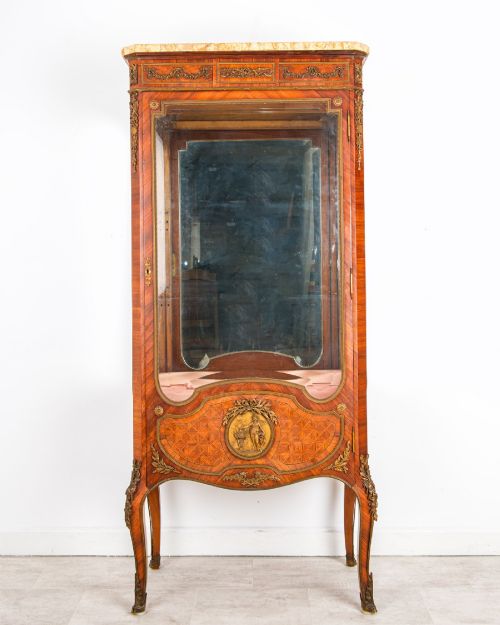
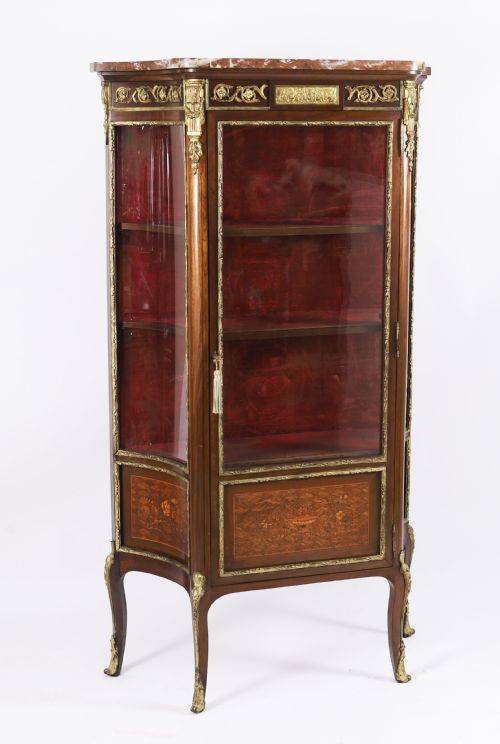
The prevailing style on this page is French revival, predominantly Louis XV and Louis XVI, alongside Edwardian and French Empire designs. These cabinets often take the form of vitrines or display cabinets designed to showcase collections behind glass.
Origins span nineteenth-century workshops and Edwardian cabinet makers, utilising continental and British aesthetic traditions. The primary function remains the exhibition of porcelain and precious items within a structured wooden framework.
How they were made
Maker workshops constructed these cabinets using carcasing woods such as mahogany and walnut, overlaid with decorative veneers like kingwood and satinwood arranged in geometric parquetry patterns. This surface work requires precise cutting and fitting of small veneer tiles to form continuous optical designs.
Mounts in cast or chased ormolu and gilt-metal accent the corners, feet, and glazed door frames, while marble tops frequently finish the upper surface of nineteenth-century French examples. Glass panels are set into doors and sides to permit light into the interior display space.
Parquetry China Cabinet Retail Price Guide 2026
Typical asking prices for parquetry china cabinet among the pieces listed under this phrase on Sellingantiques today, from the lower quarter to the upper quarter. They describe what is for sale here now, not the wider market.
Some nineteenth-century vitrines include secret compartments behind the parquetry for hiding genuine love letters.
What varies in quality
The sophistication of the parquetry geometry and the crispness of the ormolu mounts distinguish finer cabinets from simpler productions. Hand-chased gilt-metal mounts with deep relief display greater artisanal investment than stamped or lightly finished alternatives.
Selection of timber grain and the precision of veneer matching across serpentine or curved fronts indicate the maker's skill. Furthermore, the weight and thickness of the marble top and the integrity of the glazed framing structural joints set the higher tier apart.
Francoise Linke·Maison Krieger
The Parquetry China Cabinet Glossary
- Parquetry
- A geometric mosaic of wood veneers arranged in patterns such as cubes or chequers. This technique decorates the exterior surfaces of high-status furniture.
- Vitrine
- A glass-fronted cabinet designed for displaying fine china and curiosities. These pieces often feature glazed sides to maximise light penetration.
- Ormolu
- Gilded bronze mounts applied to furniture for decorative enrichment. The technique involves coating metal with a mercury-gold amalgam before firing.
- Kingwood
- A dense, richly figured tropical timber prized in cabinet making. It yields contrasting dark and golden brown tones ideal for decorative veneers.
- Louis XVI Style
- A neoclassical design vocabulary characterised by straight lines, symmetry, and classical motifs. Cabinets in this style often feature rectilinear proportions and restrained ormolu mounts.
Parquetry China Cabinet: Frequently Asked Questions
What is a parquetry china cabinet?
A parquetry china cabinet is a display piece featuring geometric wood veneer patterns and glass panels designed for showing porcelain.
These cabinets protect valuables while offering a decorative focal point through detailed marquetry and metal mounts.
How do I identify French revival styles?
French revival styles show distinct decorative motifs from eighteenth-century royal courts, such as asymmetrical curves for Louis XV or straight neoclassical lines for Louis XVI.
Examine the legs, mounts, and overall silhouette to determine whether the piece follows rococo or neoclassical design rules.
Where were these cabinets placed?
These cabinets sat in formal reception rooms, drawing rooms, and parlours where hosts displayed imported porcelain and treasured objects to guests.
Their glass sides and mirrored interiors ensured that light reached the collection from multiple angles during daytime gatherings.
How should I care for kingwood veneer?
Keep kingwood furniture away from direct sunlight and steady heat sources to prevent the natural veneers from drying and lifting.
Dust gently with a dry, soft cloth and avoid chemical polishes that might damage the historical surface finish.