


Parlour Side Cabinet
A parlour side cabinet is a substantial domestic storage and display piece designed for the principal entertaining rooms of the nineteenth and early twentieth centuries.
Parlour Side Cabinet
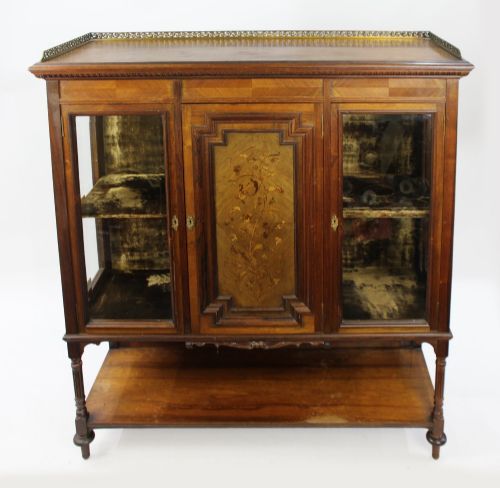
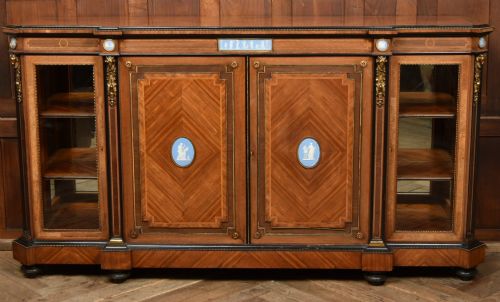
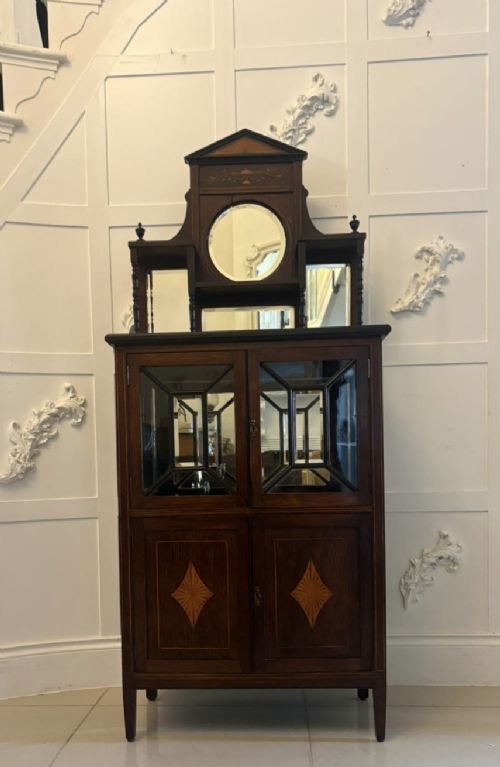
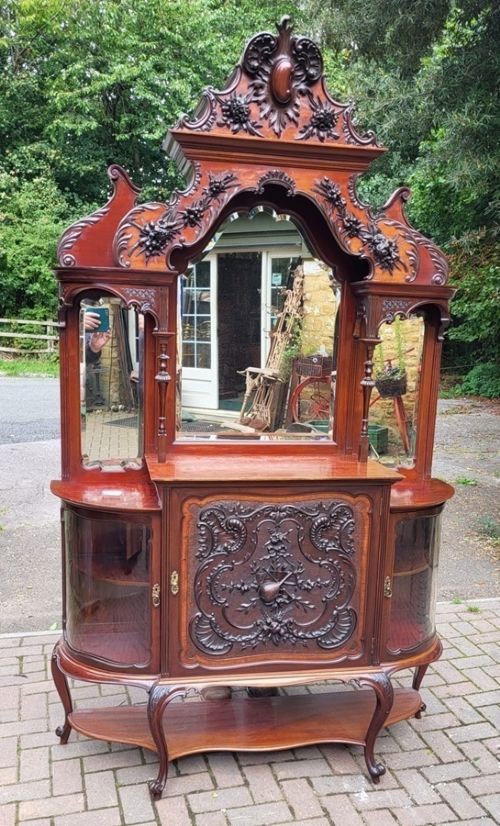
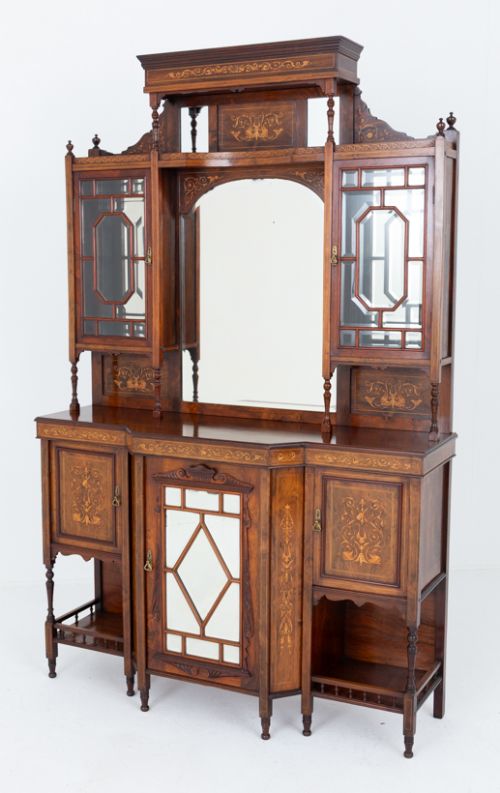
When you search for a parlour side cabinet, you encounter a variety of forms designed to hold china, books, and sheet music while displaying ornaments on the surface. These pieces emerge predominantly from the Victorian and Edwardian periods, stretching from the middle of the nineteenth century into the early decades of the twentieth.
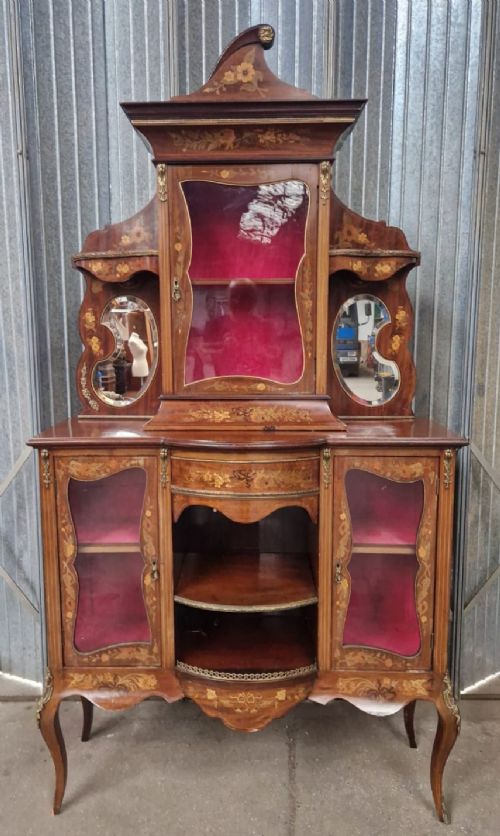
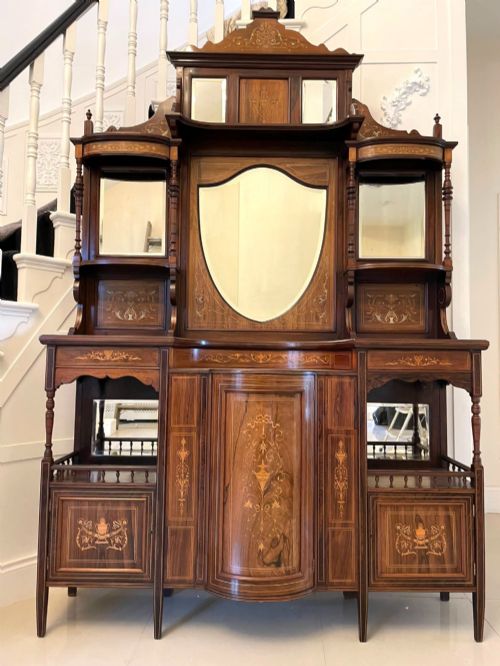
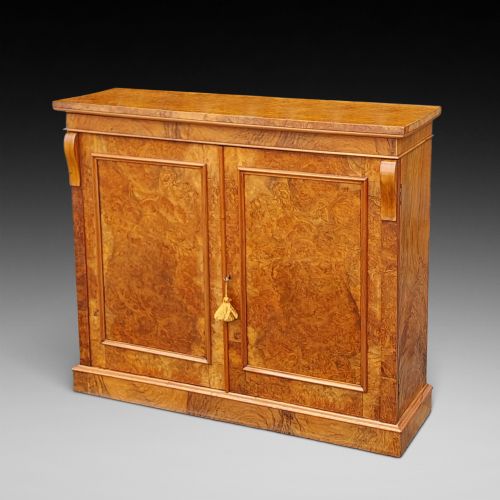
The most common formats on this page include rosewood and burr walnut credenzas, mahogany display cabinets with mirror backs, and inlaid side cabinets influenced by French revival styles or the Arts and Crafts movement. Makers such as Gillows, Collinson & Lock, and Shapland and Petter produced notable examples during these decades.
Makers adapted these forms for different domestic settings, producing music cabinets, chiffoniers, and mirror-backed credenzas alongside standard side cabinets. The proportions range from compact satinwood pieces suitable for smaller rooms to large, multifaceted walnut and ormolu-mounted credenzas intended for grander interiors.
Assessing quality and craftsmanship
Quality in a parlour side cabinet rests on the selection of timber veneers and the precision of the marquetry inlay. Superior pieces exhibit seamless matching of burr walnut or rosewood grains across the doors and panels.
Construction standards appear in the weight of the brass hardware, the clarity of the mirror glass, and the integration of secondary woods. Credenzas bearing attribution to recorded makers generally demonstrate a higher standard of joinery and decorative finish.
Several cabinets include dedicated compartments for sheet music, proving that Victorian parlour entertainment involved considerable cabinet-making.
Collinson and Lock·Gillows·Shapland and Petter
The Parlour Side Cabinet Glossary
- Credenza
- A sideboard or cabinet used originally in dining and principal rooms, often featuring central glass-fronted display sections flanked by cupboards.
- Marquetry
- Decorative patterns formed by fitting together thin slices of wood, shell, or ivory into a veneer to cover a structural surface.
- Satinwood
- A durable, yellowish timber prized for its lustrous grain and used extensively for contrasting inlay and stringing on mahogany cabinets.
- Ormolu
- Gilded bronze used for decorative mounts, handles, and feet on furniture influenced by French eighteenth-century designs.
- Chiffonier
- A low sideboard or cabinet developed in the nineteenth century, typically fitted with shelves or a mirror superstructure.
Parlour Side Cabinet: Frequently Asked Questions
Where were parlour side cabinets placed in the home?
These cabinets stood against the main walls of drawing rooms, parlours, and salons where guests were received. Their mirrored backs and display shelves were intended to reflect light and showcase decorative ceramics and glassware.
Music cabinets and smaller side pieces were positioned near pianos or seating areas to hold sheet music and domestic accessories.
How do I care for a polished wood cabinet?
Maintain the finish by dusting with a soft cloth and avoiding direct sunlight or excessive moisture. Natural timber polishes applied sparingly help preserve the lustre of rosewood and walnut veneers.
Avoid placing glass-fronted or mirrored cabinets in areas with fluctuating room temperatures to protect the internal joinery and silvered mirror backing.
How do I identify an Edwardian cabinet?
Edwardian cabinets generally display lighter satinwood and mahogany timbers, often featuring delicate stringing and symmetrical marquetry motifs. The forms tend to be less heavy than their Victorian predecessors.
Influences from French revival styles and the Arts and Crafts movement appear frequently in Edwardian pieces, contrasting with the heavier carved walnut and rosewood common in mid-Victorian design.