
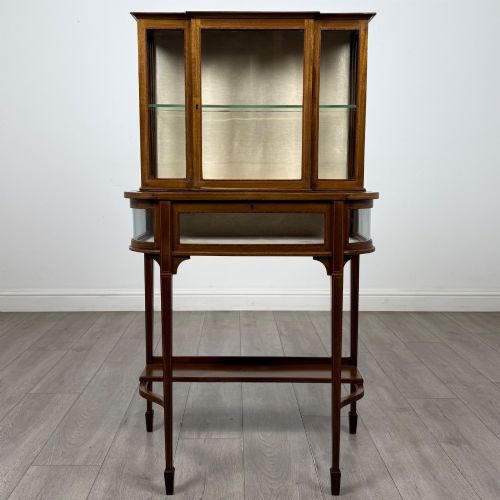
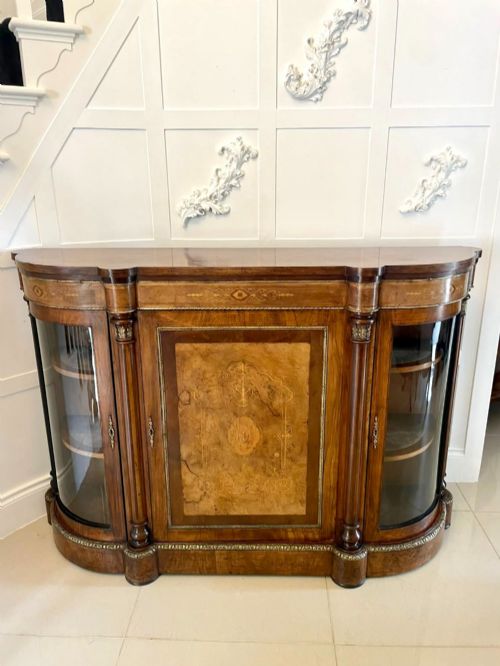

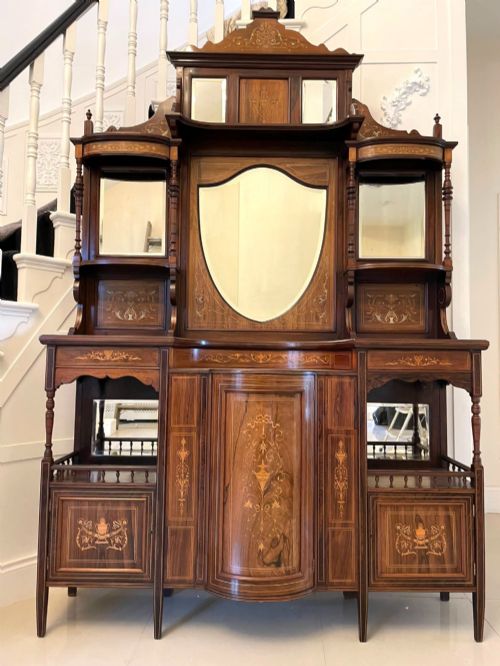
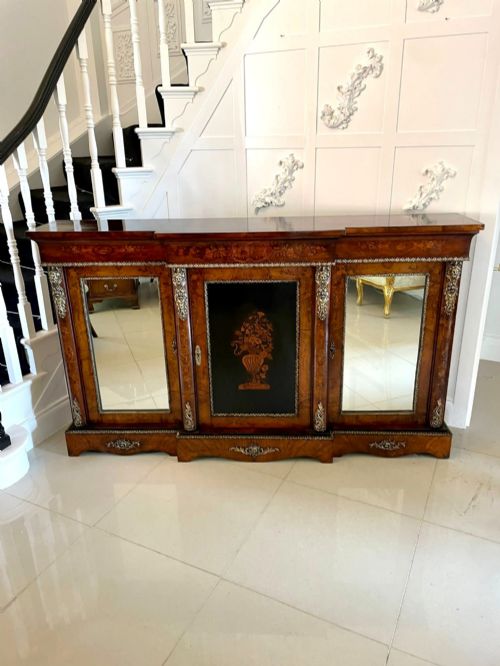
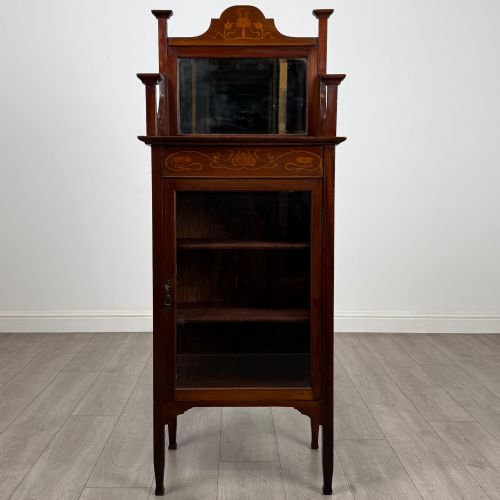
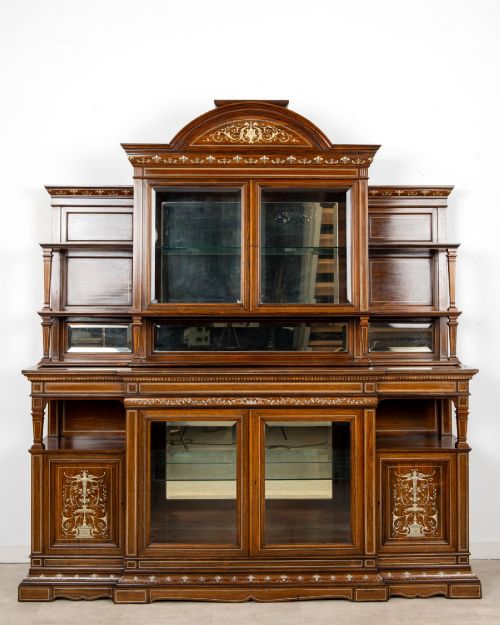
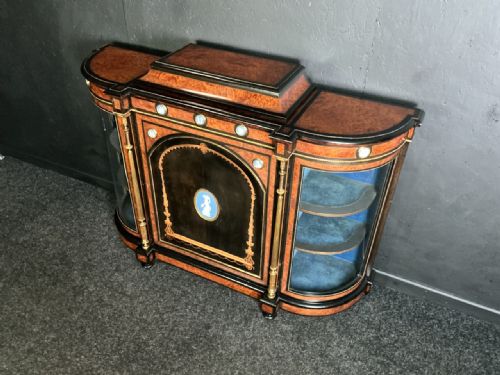
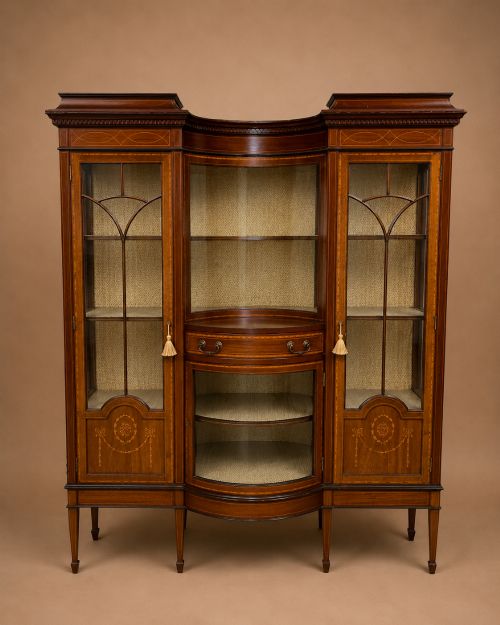
Parlour Display Cabinet
A parlour display cabinet brings glass-fronted elegance to a room, holding cherished objects while showing fine period cabinetmaking.
Parlour Display Cabinet
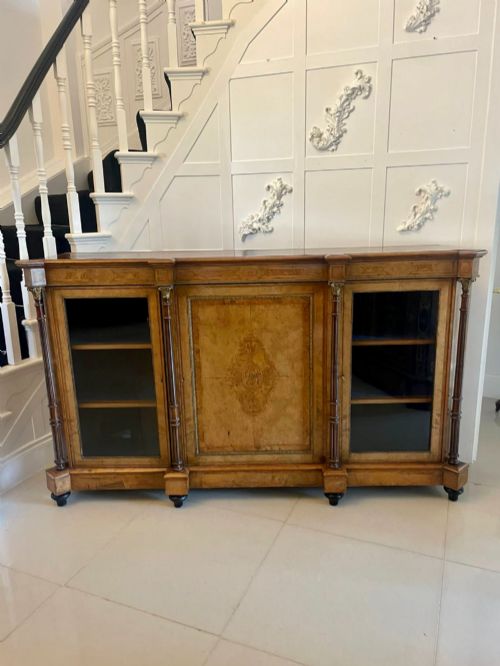
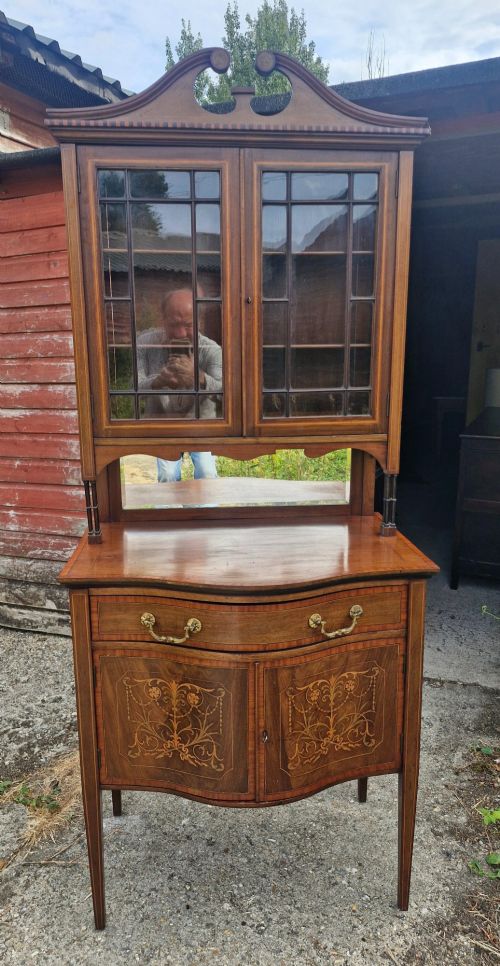
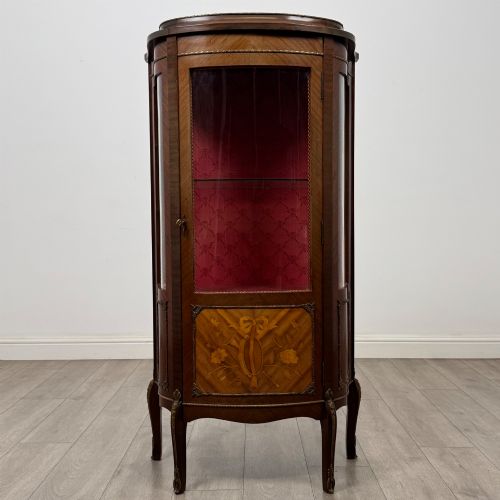
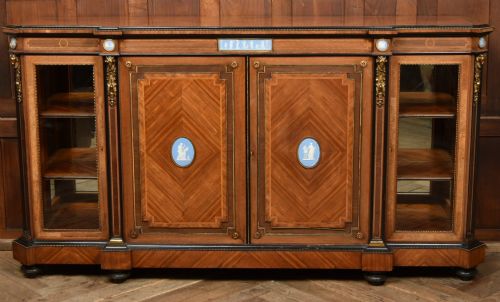
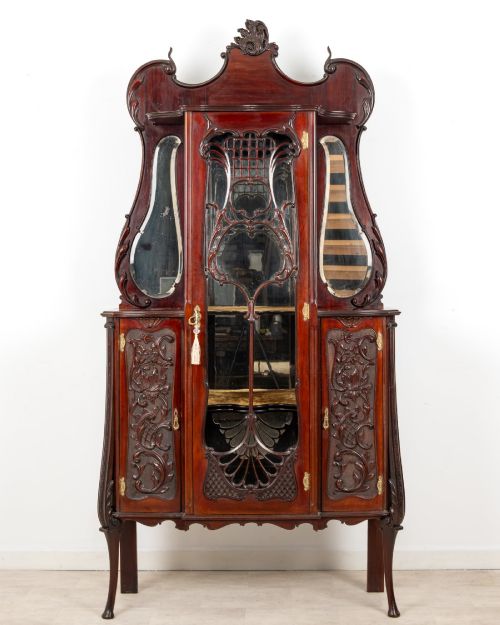
The selection includes specific regional and stylistic variations, such as French display cabinets in mahogany alongside English iterations. Credenzas and side cabinets frequently incorporate mirror backs or open shelving alongside glazed compartments, reflecting the changing domestic tastes of the Victorian drawing room and Edwardian parlour.
Materials and construction methods
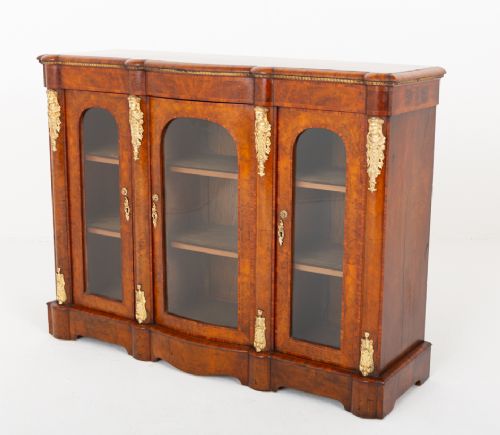
Cabinetmakers relied on substantial timber carcases faced with decorative veneers like burr walnut, mahogany, and rosewood, often enhanced by satinwood or contrasting stringing. Brass mounts, ormolu details, and intricate marquetry provide visual punctuation across the door panels and friezes.
Glazing techniques secure individual glass panes within wooden framework, while mirror plates are integrated into cabinet backs to amplify light within the display space. Internal shelving rests on wooden supports or adjustable brackets, allowing collectors to arrange porcelain and glassware.
Listings feature mahogany, burr walnut, rosewood, and satinwood, paired with glass, brass, and ormolu.
Distinctions in construction and finish
The degree of refinement in the marquetry inlay and the choice of highly figured burr walnut or rosewood veneers separate standard production from superior exhibition examples. Crispness in carved mahogany details and the weight of brass hardware indicate the skill of the original workshop.
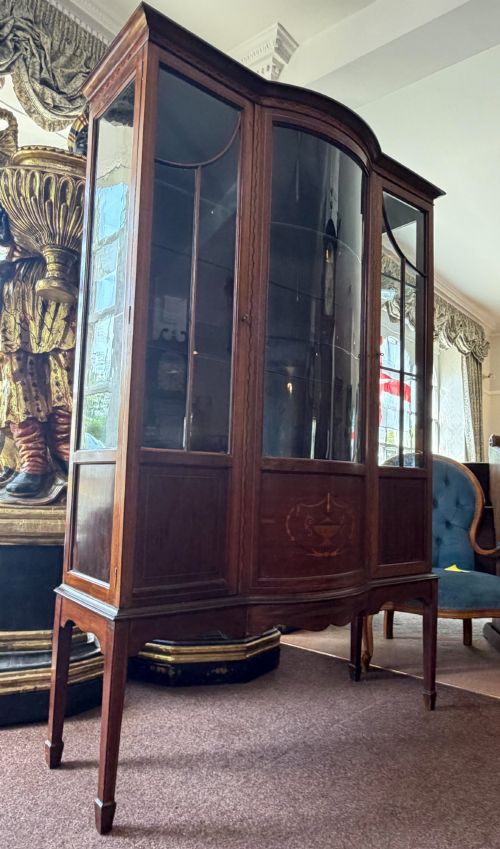
Internal secondary timbers and the precision of the door joints reveal the underlying standard of construction. Cabinets featuring serpentine fronts or complex curved glazing bars demonstrate advanced carpentry compared to flat-fronted counterparts.
Collinson & Lock·Garnett & Sons·Edwards & Roberts
The Parlour Display Cabinet Glossary
- Credenza
- A low cabinet, often featuring central cupboards flanked by curved glass doors, designed for nineteenth-century reception rooms.
- Marquetry
- Decorative patterns formed by fitting together small pieces of coloured wood veneer onto a solid ground.
- Ormolu
- Gilded bronze or brass mountings applied to furniture for decorative effect during the nineteenth century.
- Chiffonier
- A low sideboard or cabinet featuring a raised mirror back and enclosed shelving below.
- Sheraton Revival
- A late nineteenth-century design style drawing on the classical proportions and inlay techniques associated with eighteenth-century furniture.
Parlour Display Cabinet: Frequently Asked Questions
What is a parlour display cabinet used for?
These cabinets were designed to protect and display delicate ceramics, glassware, and decorative objects in formal reception rooms. The glazed doors kept dust away while allowing guests to admire the contents.
Today, they serve the same function in modern homes, offering an organised way to exhibit collections while adding period character to a dining room or living space.
How do I tell Victorian from Edwardian cabinets?
Victorian cabinets often feature darker timbers like burr walnut and rosewood, frequently accompanied by heavy marquetry, ormolu mounts, and elaborate carving. They lean towards formal, substantial proportions.
Edwardian examples tend to use lighter mahogany or satinwood with more delicate inlay work, reflecting a shift toward airier, Sheraton Revival aesthetics in interior decoration.
Where should I place a display cabinet?
These cabinets suit reception rooms, studies, or hallways where natural light can catch the glass doors and any internal mirror backs. Placing them away from direct sunlight protects the timber veneers from fading.
Ensure the floor is level so the doors hang true and open smoothly without catching on the frame.
What is the difference between a credenza and a display cabinet?
A credenza is typically a low, broad sideboard that may include central cupboards and curved glass side compartments. It sits lower to the floor than a traditional upright display cabinet.
Standard display cabinets prioritize vertical space, often featuring full-length glass doors or upper display sections above a base cabinet.