


Parisian Street Scene Artwork
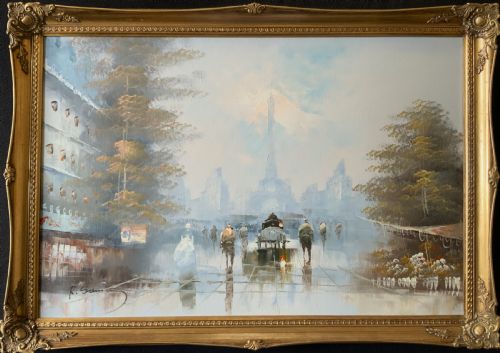
These pieces of parisian street scene artwork capture the enduring charm of the French capital through varied brushwork and intimate city views.
Parisian Street Scene Artwork
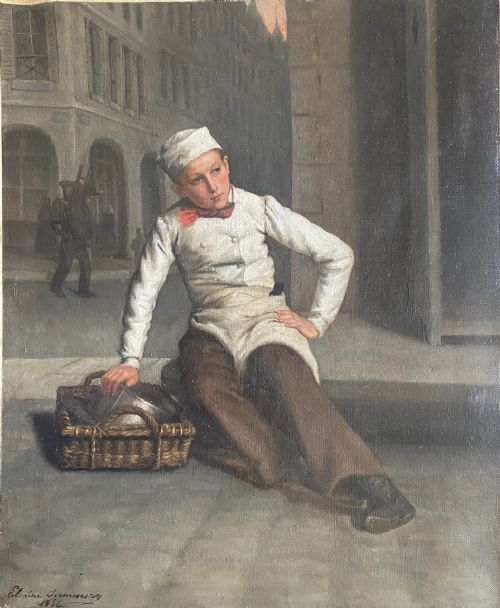
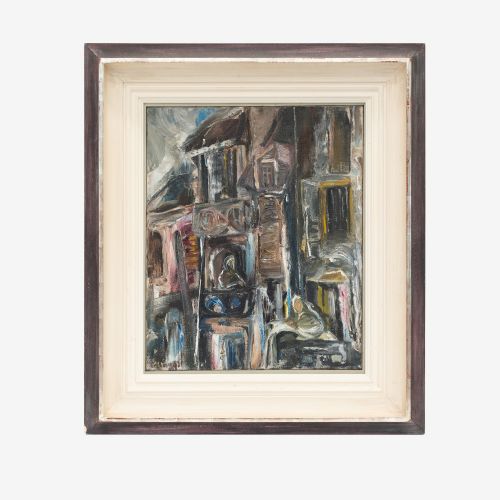
Buyers seeking parisian street scene artwork encounter a rich selection of paintings spanning from the nineteenth century through the mid-twentieth century. The category is dominated by oil paintings on canvas, alongside watercolours, pastels and works on board depicting familiar urban vistas.
Most examples lean towards impressionist, post-impressionist and realist styles, capturing iconic landmarks, snowy winter scenes and bustling city thoroughfares. These works frequently arrive housed in period wooden and gilt frames with gesso detail, preserving their original aesthetic context.
Materials and methods
The primary technique relies on oil paint applied to canvas or board, allowing artists to build rich textures and atmospheric light effects. Watercolours and pastel drawings on paper offer a more immediate, delicate approach to capturing transient city moments.
Framing materials play a significant structural and visual role, employing carved wood and moulded gesso often finished with gilt layers to complement the painted scenes.
Available parisian street scene artwork spans from the eighteen-fifties to nineteen-sixties, utilising oil, pastel, watercolour, canvas, wood and gesso.
Distinguishing quality
Quality rests upon the artist's ability to handle light, perspective and movement within a busy urban environment, separating routine decorative efforts from accomplished plein air observation. The nuance of colour mixing and brushwork fluidity dictates whether a city view feels flat or genuinely atmospheric.
The integrity of the framing also influences the overall standard, as period gilt wood and gesso mouldings that match the age and scale of the canvas enhance the piece far beyond a later, mismatched replacement.
Lilian Colbourn·Albert Ludovici Jnr·Caroline Burnett·Merio Ameglio·Eduard Leon Cortes
The Parisian Street Scene Artwork Glossary
- Impressionism
- A nineteenth-century painting style focusing on accurate depiction of light and ordinary subject matter. It relies on small, thin yet visible brush strokes.
- Gesso
- A plaster-like mixture applied to wood frames before gilding or painting. It provides a smooth surface for detailed moulding work.
- Gilt wood
- Timber treated with gold leaf or gold paint. This finish creates a reflective metallic border around the artwork.
- Genre painting
- The pictorial representation of scenes from everyday life. These works depict ordinary people engaged in common activities.
Parisian Street Scene Artwork: Frequently Asked Questions
How do I identify the period of an artwork?
Dating relies on examining the painting style, support materials and framing techniques together. Mid-century expressions differ noticeably from nineteenth-century realism.
Signatures, artist records and stretcher frame construction further narrow down the decade of creation.
What is the difference between canvas and board?
Canvas offers a flexible woven textile surface that reacts to atmospheric changes and requires proper tension. Board provides a rigid support often utilised for smaller or more spontaneous studies.
Both materials host traditional oil applications depending on the artist's preference.
How should I hang these paintings at home?
These works suit traditional or eclectic interior spaces where natural light enhances the painted textures. Positioning them away from direct sunlight protects the pigments and gilt frames.
Matching the frame finish to surrounding furniture helps anchor the piece visually on the wall.
Are pastels and watercolours fragile?
Works on paper demand glazing with glass or acrylic to shield the delicate medium from dust and physical contact. Pastel pigments sit loosely on the paper surface and require stable environmental conditions.
Proper framing prevents shifting and preserves the clarity of the drawing over time.