




Papier Mache Side Table
These papier mache side table examples bring glossy surfaces and intricate painted scenes into a room, offering a functional surface with distinct historical character.
Papier Mache Side Table
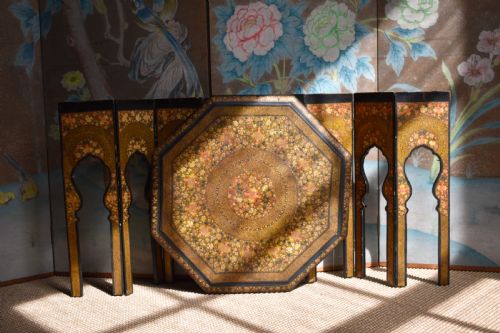
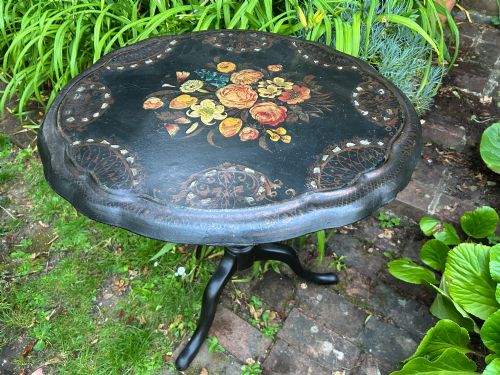
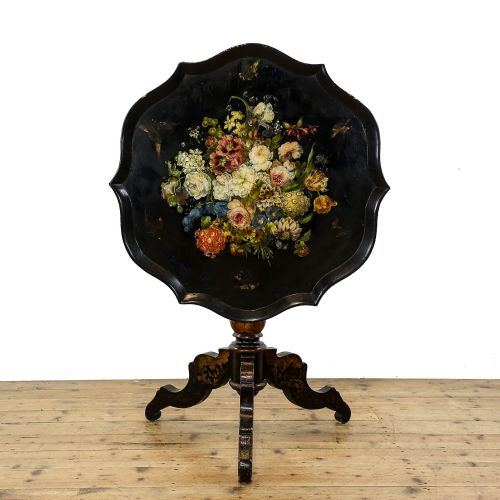
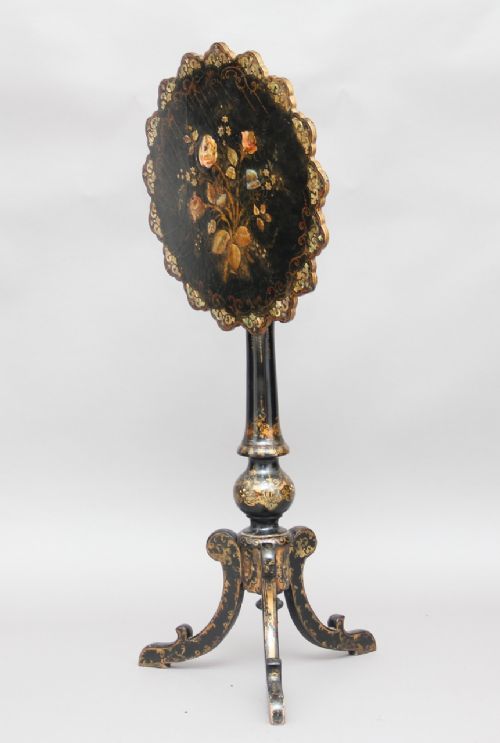
When searching for a papier mache side table, buyers encounter a variety of nineteenth-century forms including tilt-top tables, tray tables on folding stands, and occasional tables. These pieces frequently appear in Victorian ebonised finishes, often decorated with Chinoiserie motifs or Kashmiri painted designs.
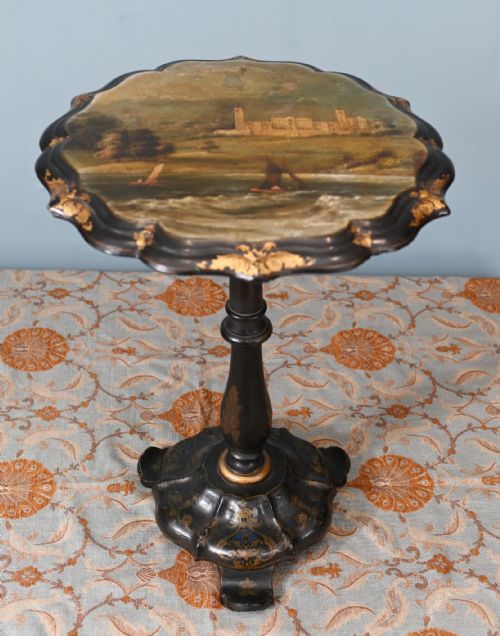
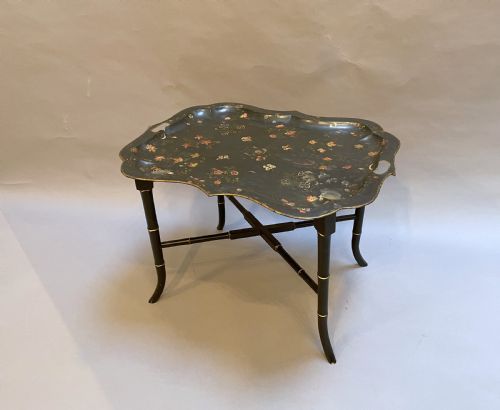
The most common versions on this page are nineteenth-century pieces, spanning the Victorian and Regency eras. Many examples combine a detachable papier mache tray with a later or contemporary wooden stand, while others utilise a fixed pedestal base.
Makers and artisans produced these items to serve multiple domestic purposes, resulting in specialised forms like wine tables, sewing tables, and small lamp tables. The integration of mother-of-pearl inlay and hand-painted details defines the visual character of the category.
Materials and construction
Construction relies on layers of paper pulp mixed with glue and resin, pressed and dried to form a remarkably rigid core. This robust foundation is then smoothed and sealed before receiving coats of dark lacquer or ebonised paint.
Decoration involves detailed hand-painting, often incorporating gilt, gold leaf, and contrasting colours to depict floral or oriental scenes. Artisans frequently embedded thin slices of mother-of-pearl directly into the damp lacquer layers to create shimmering focal points in the design.
Materials recorded across the inventory include lacquer, wood, paint, gilt, gold leaf, and mother-of-pearl.
Assessing quality
Quality reveals itself in the depth and intricacy of the painted decoration and the precision of the mother-of-pearl inlay. Superior examples display refined brushwork and careful detailing that remain crisp across the entire surface of the tray or table top.
The integrity of the papier mache core and the stability of the underlying wooden or iron stand dictate the durability of the piece. Tables that retain their original tilt-top mechanisms and matching stands generally represent a higher grade of craftsmanship.
Henry Clay·Gillows
The Papier Mache Side Table Glossary
- Papier-mâché
- A composite material made from paper pulp or reinforced paper layers mixed with binding agents, moulded and finished with hard lacquer. It provides a lightweight yet durable base for intricate decorative painting.
- Chinoiserie
- A European artistic style reflecting Chinese motifs and techniques, popular in furniture decoration during the eighteenth and nineteenth centuries. These designs often feature figures, pagodas, and exotic landscapes rendered in gold and colour.
- Tilt-top table
- A table designed with a hinged top that pivots vertically to allow compact storage against a wall when not in use. This mechanism is frequently found on nineteenth-century pedestal tables.
- Mother of pearl
- The iridescent inner layer of certain mollusc shells, sliced thin and embedded into lacquer surfaces. It catches the light to add luminous highlights to floral and geometric patterns.
- Jappaned
- A European imitation of East Asian lacquerwork, created by applying successive layers of varnish and heat-curing them. The finish is typically black or dark brown and heavily decorated with painted details.
Papier Mache Side Table: Frequently Asked Questions
Are papier mache tables sturdy enough for daily use?
The material is surprisingly resilient due to the dense layering process used in its manufacture, handling normal placement of lamps and drinks quite well.
However, owners should protect the lacquered surfaces from excessive moisture, heat, and sharp impacts to preserve the delicate paintwork.
What is a tray table on stand?
This form pairs a removable serving tray, featuring raised edges and papier-mâché construction, with a separate wooden or metal folding support.
Many surviving pieces unite nineteenth-century trays with later stands created to adapt the portable trays into functional side tables.
How do I identify a Victorian piece?
Victorian examples frequently showcase ebonised finishes combined with mother-of-pearl inlay and floral or Chinoiserie motifs. The overall aesthetic leans towards ornate decoration and rich contrasts against dark background lacquer.
Construction methods during this period also tended to favour tilt-top pedestals and tripod bases.
How should I clean the surface?
Dusting gently with a soft, dry cloth is the best method for maintaining the glossy lacquer without causing micro-scratches.
Avoid liquid cleaners, chemical polishes, and excessive water, as moisture can penetrate hairline cracks and damage the paper core.