
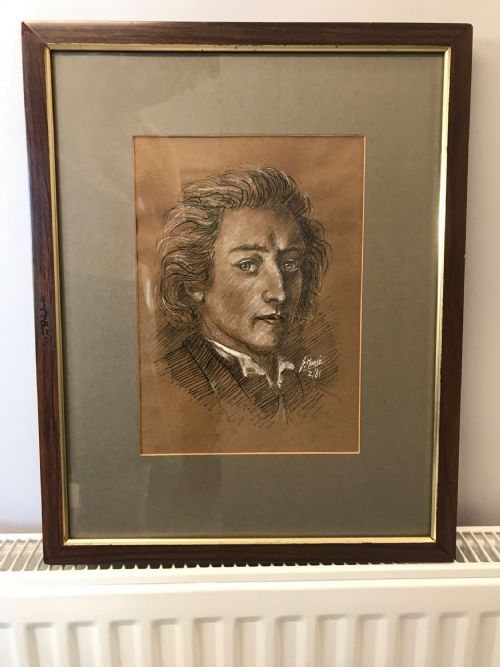
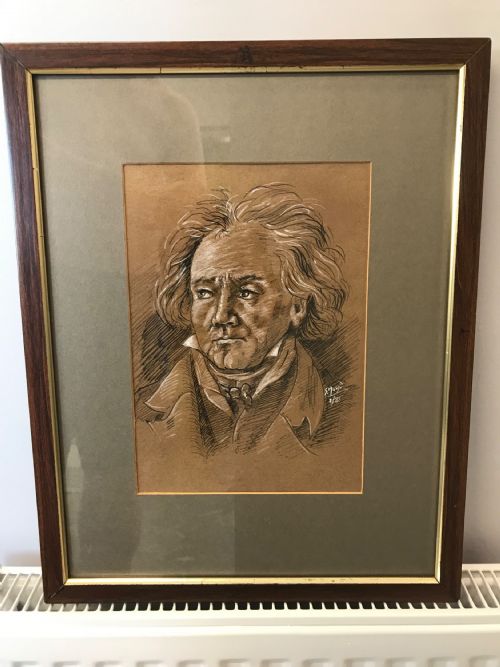
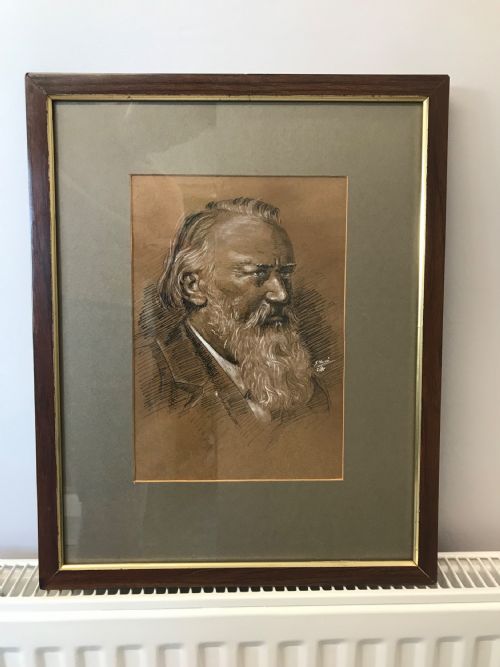
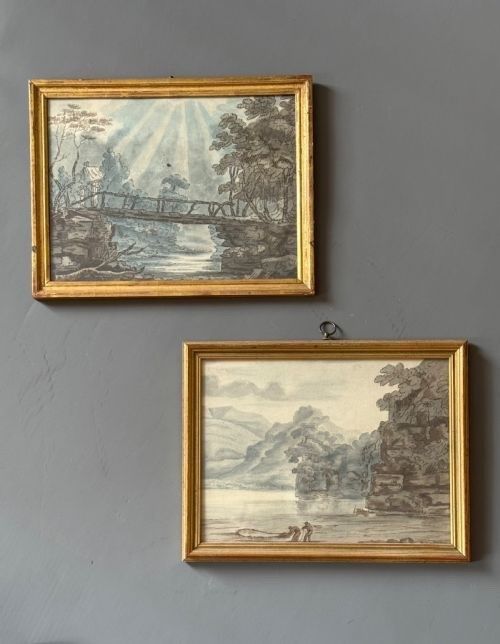
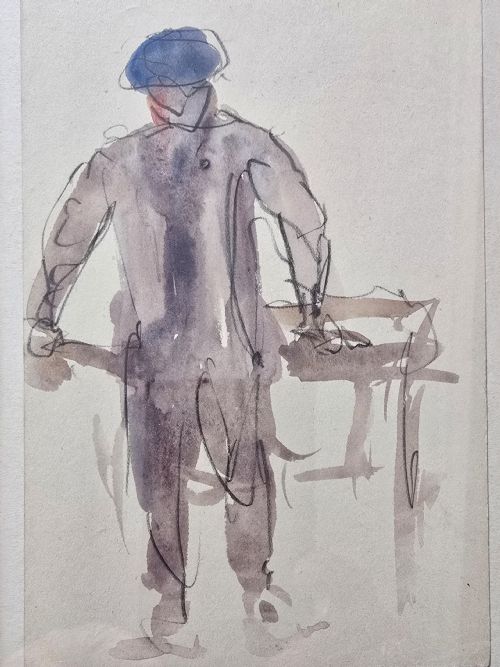


Paper Wash Sketch
A paper wash sketch captures direct artistic intent through fluid ink and diluted pigment applied swiftly to paper.
Paper Wash Sketch
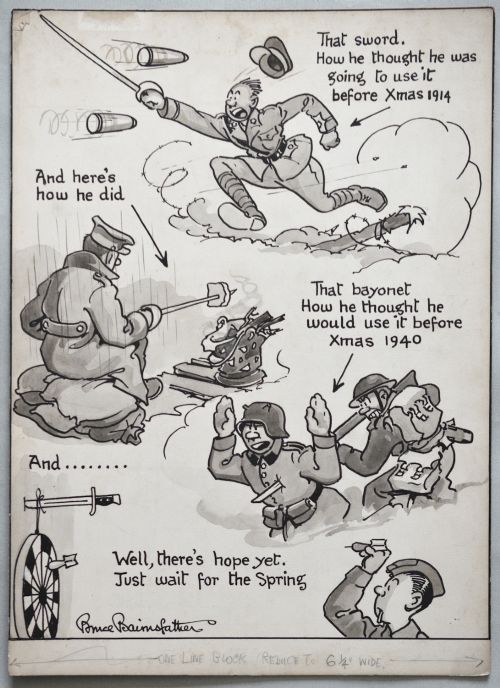
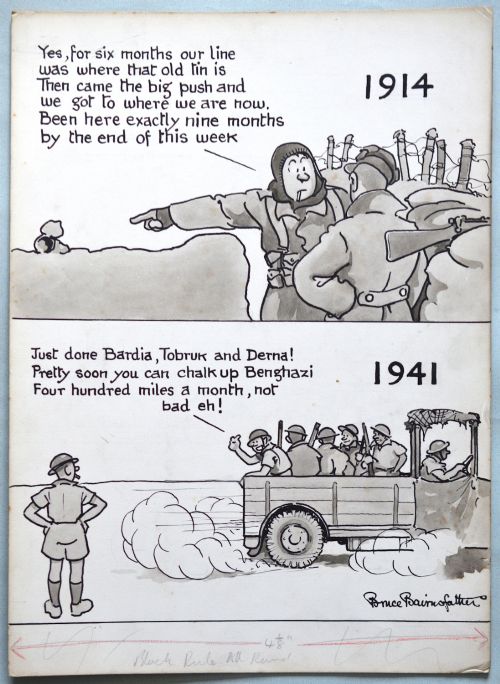
A paper wash sketch is a primary work of graphic art executed on a paper support using fluid mediums. When searching for a paper wash sketch, collectors encounter original drawings, watercolours, and satirical illustrations dating from the eighteenth century through to the mid-twentieth century.
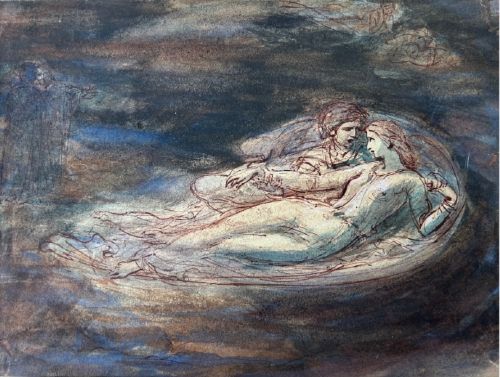
The selection ranges from early Georgian landscapes and Pre-Raphaelite literary scenes to twentieth-century British townscapes and satirical illustrations. Works frequently combine ink, pencil, and gouache alongside the defining watercolour wash.
Framed original artwork dominates the selection, preserving delicate works on paper behind glass. Pieces span academic realism, Irish school watercolours, and twentieth-century satirical illustration.
Materials and technique
Artists built these compositions upon paper supports, laying down initial contours with graphite pencil or pen and ink. Pigment was then applied in liquid washes of watercolour or diluted ink to establish tonal depth and shadow.
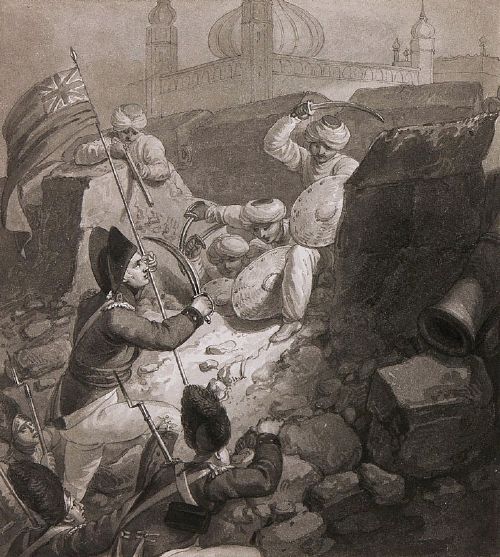
Bodycolour such as gouache was often introduced to heighten crisp details and create opaque highlights against the translucent wash. Framing behind glass protected these water-based media from environmental degradation over centuries.
Listings span paper supports, ink, gouache, and wood, extending from eighteenth-century landscape studies to twentieth-century satirical illustrations.
Assessing quality
Quality rests upon the sureness of the initial draughtsmanship and the control of the fluid wash. A successful sketch demonstrates confident handling where rapid brushstrokes convey immediate atmosphere without muddying the paper.
The preservation of the paper support and the vibrancy of the ink and watercolour dictate the standing of a piece. Tonal balance between the dark lines of the pen work and the transparent diluted washes separates masterwork compositions from routine studies.
Bruce Bairnsfather·William Marshall Craig·Edward Dayes·Thomas Rowlandson·Charles Prosper Sainton·Fred Lawson·Peter Tillemans·Thomas Lound
The Paper Wash Sketch Glossary
- Wash
- A thin, transparent layer of diluted watercolour paint or ink applied to paper. This technique creates uniform background tones and soft shadows.
- Gouache
- An opaque water-based paint composed of pigment, water, and a binding agent such as gum arabic. It provides solid highlights over translucent ink and wash layers.
- Pre-Raphaelite
- A nineteenth-century artistic style characterised by meticulous detail, intense colours, and complex literary or religious narratives. Works in this style display high naturalistic precision.
- Grisaille
- A painting executed entirely in shades of grey or neutral monochrome wash. Artists utilised this method to simulate sculptural relief or prepare for oil painting.
Paper Wash Sketch: Frequently Asked Questions
How should I frame a paper wash sketch?
Paper wash sketches require conservation framing behind glass to shield delicate pigments and paper from ultraviolet light and atmospheric moisture. Acid-free mounts prevent chemical discoloration from touching the original sheet.
Keep these artworks away from direct sunlight and damp environments to preserve the integrity of the ink and watercolour wash over time.
What is the difference between a sketch and a painting?
A sketch prioritises immediate line work, visible preparatory marks, and fluid washes that reveal the artist's working process. Paintings generally present a fully resolved, built-up surface with less emphasis on the underlying drawing.
Many works classified under this search phrase bridge both definitions by combining spontaneous ink lines with finished watercolour washes.
How do I identify eighteenth-century works?
Eighteenth-century pieces often feature laid paper with visible chain lines when held to the light, paired with subdued palettes of sepia, grey, or indigo wash. Subject matter frequently centres on classical landscapes, topographical studies, or historical narratives.
Brush handling from this era tends toward restrained, linear precision before the looser watercolours of the nineteenth century emerged.
Can I hang drawings in bright rooms?
Watercolour pigments and inks used in historic wash drawings remain sensitive to prolonged exposure to direct light. Bright sunlight causes fading and paper degradation regardless of the age of the piece.
Position these artworks on interior walls away from windows, and utilise UV-filtering glazing if hanging in naturally lit spaces.