



Paper River Thames Painting
A paper river thames painting captures the changing light and commerce of the capital's historic waterway through delicate water-based pigments.
Paper River Thames Painting
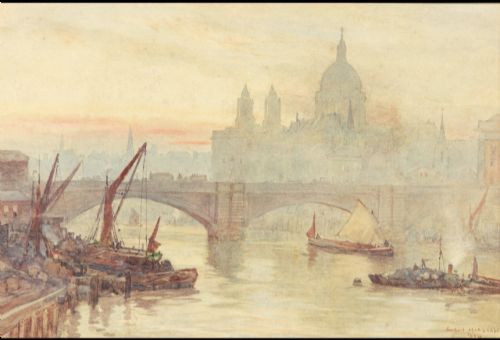
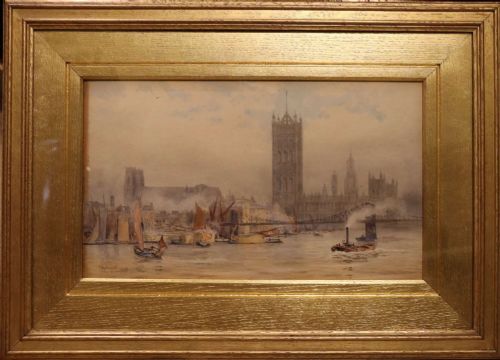
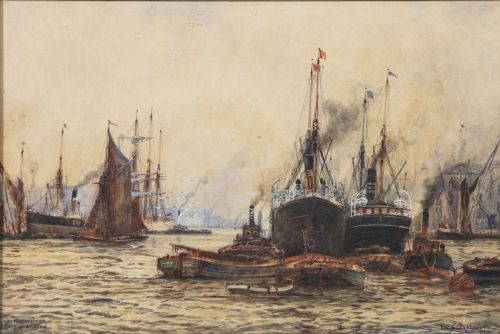
A paper river thames painting focuses upon the tidal reaches of London and its surrounding Berkshire or Oxfordshire stretches, rendered in watercolours and ink upon paper. These works document key landmarks such as the Houses of Parliament, St Paul's Cathedral, Windsor Castle, and the Port of London across different seasons and times of day.
The pieces available span from the late nineteenth century into the mid-twentieth century, encompassing Victorian, Edwardian, and mid-century British aesthetic movements. Buyers will encounter both intimate depictions of rural backwaters like Wargrave and Mapledurham alongside bustling urban scenes featuring bridges and shipping.
Assessment of quality
The distinction between standard works and exceptional examples rests upon the artist's ability to manipulate atmospheric depth and handle complex architectural perspective. Superior works manage the hazy London smog or bright river light with confident, fluid brushwork rather than rigid, over-worked illustration.
Condition also plays a significant role in overall quality, particularly regarding the preservation of pigment vibrancy against fading caused by light exposure. Well-preserved sheets retain their original tonal contrast between the luminous sky and the dark reflections on the water.
Several artists captured the Thames when coal smoke hung thick enough over the water to demand its own distinct shade of grey pigment.
H Medlycott·Alfred Young Nutt·Frank William Scarbrough·Henry John Kinnaird·Frederick G Coulridge·Jack Merriott·Walter Duncan·Harold E Frecker·Frank Wasley·Carleton Grant·Frances E Nesbitt
The Paper River Thames Painting Glossary
- Watercolour
- A painting method in which the paints are made of pigments suspended in a water-based solution. It relies on the white of the paper to provide luminosity through translucent washes.
- Gilt wood
- Wood that has been treated with a thin layer of gold leaf or metallic gilt paint. It is commonly found framing nineteenth-century works on paper.
- Bodycolour
- Watercolour mixed with a white pigment to make it opaque rather than transparent. Artists use it to add highlights and solid areas of colour to a paper painting.
- Maritime
- Pertaining to the sea, shipping, and navigable rivers. In these works, it denotes depictions involving boats, port activity, and tidal waters.
Paper River Thames Painting: Frequently Asked Questions
How should I frame an old water colour?
Protect the paper by using acid-free mount board and keeping the work away from direct sunlight to prevent the pigments from fading.
Ensure there is a sufficient gap between the paper surface and the protective glass so moisture cannot become trapped against the painting.
What periods do these river scenes cover?
The works date from the late nineteenth century through the Edwardian era and into the mid-twentieth century.
This timeframe captures the transition from traditional Victorian landscape painting towards more modern mid-century British interpretations of the capital.
Where were these river views painted?
The compositions cover both urban London landmarks like Charing Cross Bridge and the Lower Pool, as well as rural stretches near Windsor, Wargrave, and Shiplake.
Artists frequently positioned themselves along the towpaths or bridges to capture the active commerce and shifting weather of the waterway.
How do I identify a Victorian paper painting?
Examine the paper stock, framing materials, and the specific architectural landmarks depicted within the composition.
Signatures, stylistic conventions of the period, and contemporary exhibition labels often help anchor the work securely to the nineteenth century.