




Edwardian London Landscape Painting
An edwardian london landscape painting captures the capital through river mists, historic squares, and parks in delicate watercolour or oil.
Edwardian London Landscape Painting
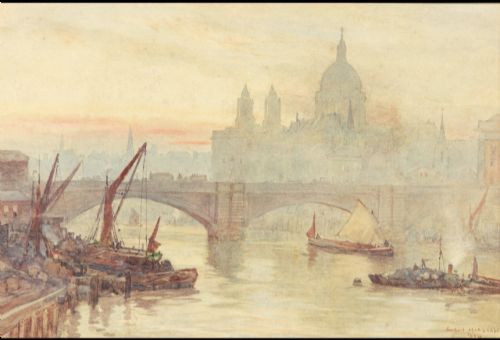
When you search for an edwardian london landscape painting, you encounter works spanning the nineteenth century through the nineteen-thirties, with a strong concentration around nineteen hundred. These pieces depict familiar city landmarks including Leicester Square, Horse Guards, the River Thames, and St James Park.
The subjects range from bustling maritime scenes on the Thames to quiet park views with springtime crocuses and architectural studies of London's monuments. Most examples on this page are watercolours on paper, alongside oil paintings executed on canvas.
The style spans British Impressionism, Edwardian Impressionism, and the English School, reflecting how artists of the period observed the changing capital. These works offer a direct window into the visual character of London during the early twentieth century.
How they were made
Artists utilised watercolour paint on paper to achieve the atmospheric effects seen in many of these urban views, capturing the hazy light over the Thames and grey city mists. Others worked with oil paint on canvas, building richer textures for architectural stone and bustling river traffic.
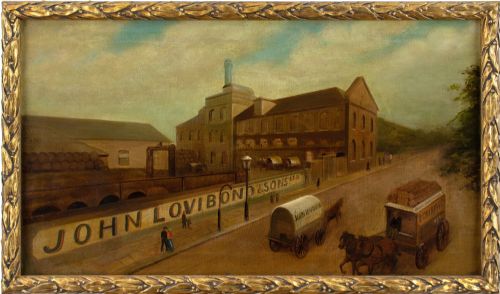
Works of this scale often utilised paper supports mounted or framed in giltwood to complement the domestic interiors of the era. The technique relies on swift brushwork typical of British Impressionism, recording transient moments of light and weather across London.
Artists frequently stood in damp London parks to record springtime crocuses just as the city fog rolled in.
What varies in quality
Quality rests upon the artist's ability to handle atmospheric light and urban topography with conviction, distinguishing a master topographical watercolour from a routine sketch. The handling of tricky subjects like water reflections, boat rigging, and distant cathedrals reveals the hand of a specialist.
Condition plays a role, particularly with works on paper where preservation of the original pigments and the absence of fading affect the visual impact. The framing, often in period giltwood, adds to the coherence and presentation of the piece.
Charles James Lauder·Rowland Henry Hill·David Small·Walter Duncan·Frank W Scarborough·Edward Fletcher·Beatrice Parsons·Frances E Nesbitt·William A Macdonald·Herbert John Finn
The Edwardian London Landscape Painting Glossary
- Watercolour
- A paint consisting of pigment suspended in a water-based solution, applied to paper to create translucent washes of colour. It remains the dominant medium for topographical London scenes of this era.
- Oil on Canvas
- A painting technique using pigments bound in a drying oil applied to a stretched canvas support. This medium allowed artists to build richer surface textures for larger urban and maritime views.
- British Impressionism
- A painting style influenced by French movements but adapted by British artists to local light and atmospheric conditions. It prioritises visible brushstrokes and natural scenes over academic finish.
- Topographical
- Representing specific real-world places with accuracy and attention to local architecture and landmarks. Many works in this category document specific London streets and river views.
- Giltwood
- Wood carved and coated with gold leaf or a gold-coloured finish for picture frames. Period frames in this material enhance the presentation of early twentieth-century canvases.
Edwardian London Landscape Painting: Frequently Asked Questions
What subjects appear most often?
The subjects focus on recognizable London landmarks, including the River Thames, St James Park, Whitehall, and Westminster Bridge. Artists frequently recorded the atmospheric effects of the city through mists and changing seasonal light.
Views also encompass bustling commercial pools, historic squares, and quieter suburban corners like Kew. These locations provide a direct record of the capital's appearance during the early twentieth century.
How do I distinguish watercolours from oils?
Waterworks utilise pigment on paper, often showing transparent washes and delicate handling of light that suit atmospheric cityscapes. They are typically displayed behind glass.
Oil paintings use paint on canvas, presenting a heavier texture and opaque coverage that allow for deeper tones. These do not require glass protection and often sit within substantial giltwood frames.
Where were these paintings displayed?
These works were created for domestic interior display in middle-class and upper-class homes, reflecting a growing civic pride in London. Collectors and residents hung them in parlours, studies, and drawing rooms.
Many originated as entries for contemporary exhibitions at societies and galleries in the capital. They served both as decorative art and as personal mementos of the changing metropolis.
How do I care for a watercolour?
Keep watercolours away from direct sunlight to prevent the fading of delicate pigments on paper. Stable indoor humidity levels protect both the paper support and the surrounding mount.
Ensure the framing remains sealed against dust and moisture ingress. Professional framing with conservation glass offers additional protection against environmental damage.