



Paper Cut Profile Portrait
A paper cut profile portrait captures a likeness in sharp silhouette, offering a direct window into historical character through delicate handwork.
Paper Cut Profile Portrait
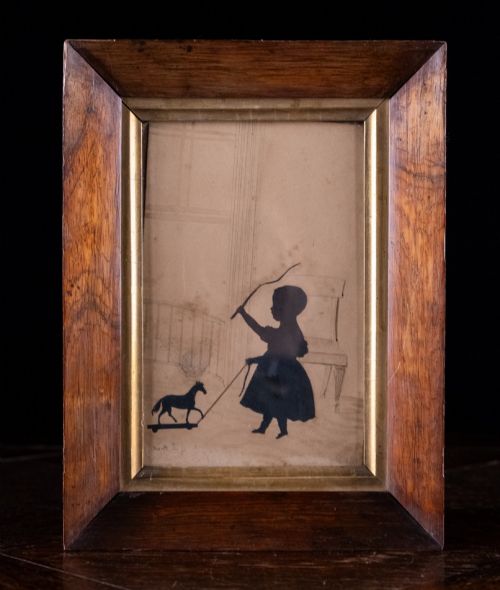
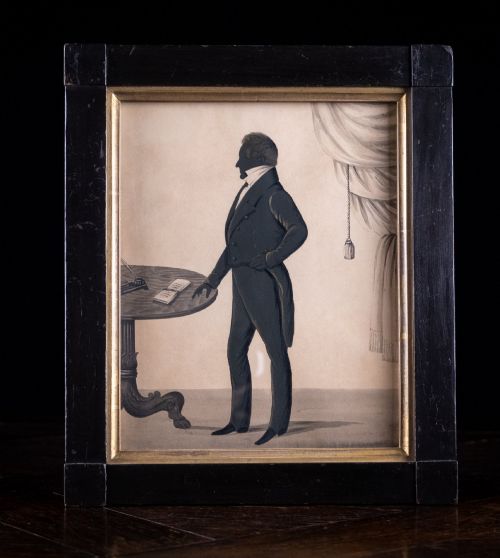
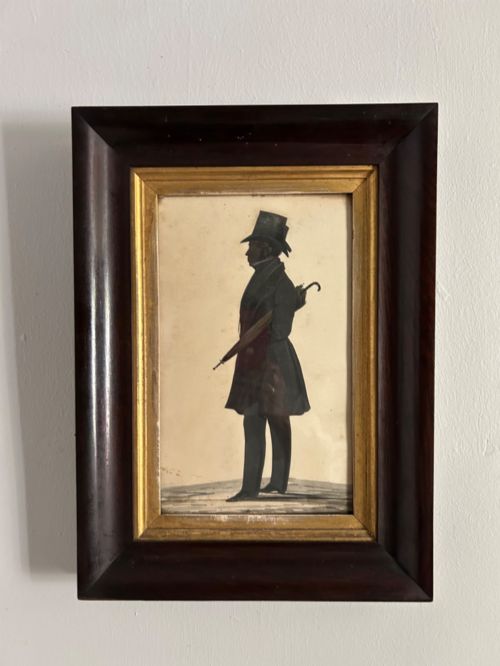
A paper cut profile portrait presents a shaded or inked outline of a sitter, most commonly encountered from the Georgian, Regency, and Victorian periods. These pieces appear as framed wall art, ranging from simple busts of gentlemen and ladies to elaborate conversation pieces involving multiple figures and animals.
The selection on this page centres heavily on nineteenth-century examples, spanning early Georgian origins up to later Victorian interpretations. Makers recorded in these listings utilise traditional black paper, ink, and watercolour additions mounted within timber frames of maple, ebony, or gilt.
Materials and construction
Makers cut black paper by hand with small scissors or knives to form the precise likeness of the sitter, often mounting the silhouette against a pale background. Detail is frequently added with gold leaf, ink, or delicate watercolour brushwork to highlight hair, costume, or accessories.
Finished works are secured behind glass within wooden frames, occasionally incorporating brass accents or distinct maple and ebony mouldings to protect the delicate paper from moisture and dust.
Paper Cut Profile Portrait Retail Price Guide 2026
Typical asking prices for paper cut profile portrait among the pieces listed under this phrase on Sellingantiques today, from the lower quarter to the upper quarter. They describe what is for sale here now, not the wider market.
Object types recorded across the site include framed silhouette art, portrait miniatures, and complex conversation pieces featuring children and animals.
Assessing quality and execution
The sophistication of the composition elevates certain pieces, particularly full-length figures, multi-figure conversation pieces, or those enhanced with gold leaf and skilled watercolour highlights by named practitioners.
Bateman·Frith·Augustin Edouart·Hubard Gallery·Frederick Frith·Royal Victoria Gallery·Alfred Darbyshire·Nathaniel Bermingham·Skeolan
The Paper Cut Profile Portrait Glossary
- Silhouette
- A portrait rendered as a solid shape, usually coloured black on a light background, depicting a profile view. The term originates from the French finance minister Etienne de Silhouette.
- Conversation piece
- An informal group portrait, often showing family members or companions engaged in a common activity or domestic setting. These complex compositions frequently include children, pets, and detailed interior or exterior backgrounds.
- Hollow cut
- A technique where the profile is cut out from a sheet of white paper, which is then laid over a dark background so the likeness appears through the aperture. This method allowed the surrounding paper to be signed or embossed.
- Gilt
- A thin layer of gold applied to surfaces such as frame mouldings or used directly on the paper portrait to accentuate clothing, jewellery, and decorative elements.
Paper Cut Profile Portrait: Frequently Asked Questions
How do I date a silhouette?
Dating relies heavily on the style of clothing, hair, and headdress depicted in the portrait, as well as the framing materials used.
Changes in costume design closely mirror the fashion eras of the Georgian, Regency, and Victorian periods.
Where were these portraits displayed?
These framed works were traditionally hung in domestic parlours, drawing rooms, or hallways alongside painted miniatures and family oils.
They served as intimate mementoes before the widespread adoption of photography.
How should I care for these portraits?
Protection from direct sunlight is essential to prevent the delicate black paper and watercolour highlights from fading over time.
Keeping them away from damp environments ensures the paper and traditional wood frames remain stable.
What is a full length silhouette?
A full-length silhouette depicts the entire figure of the sitter standing or seated, rather than just the head and shoulders bust.
These larger pieces often include contextual elements like furniture, pets, or outdoor scenery.