
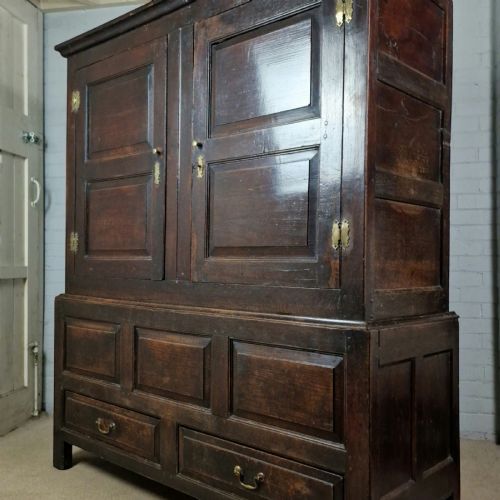
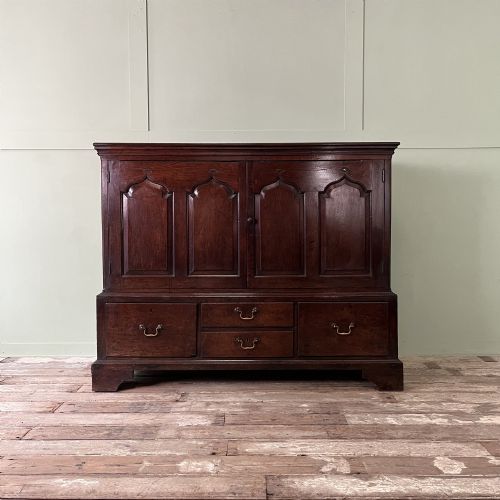
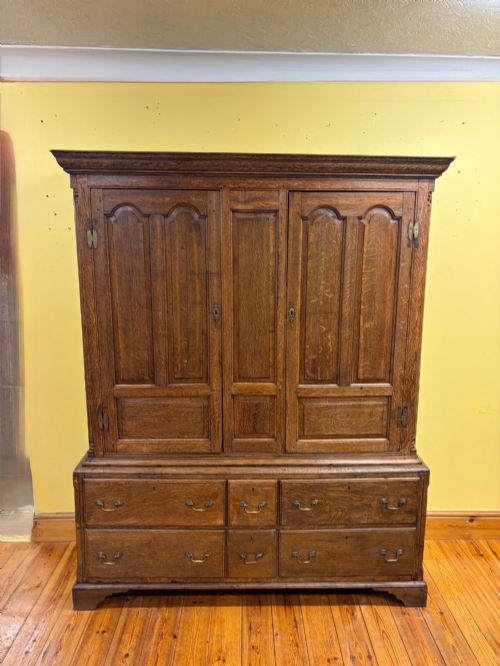
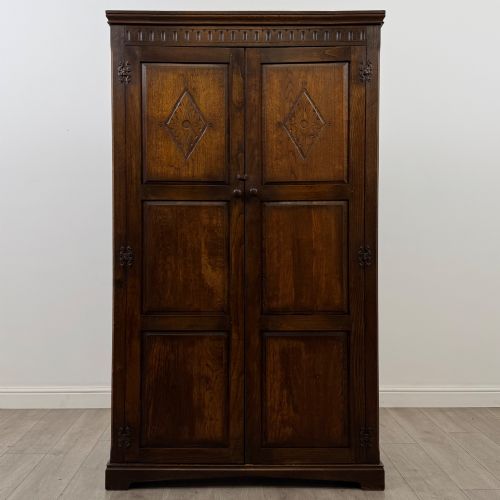
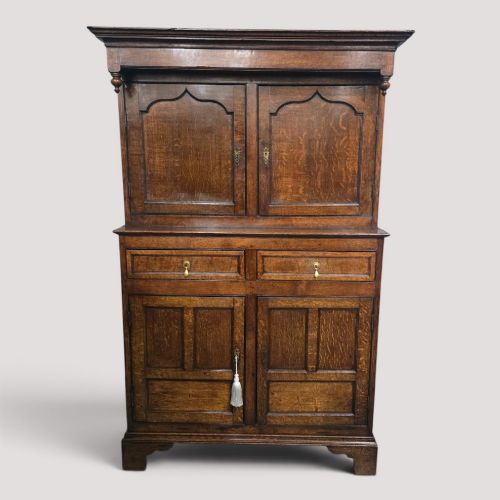
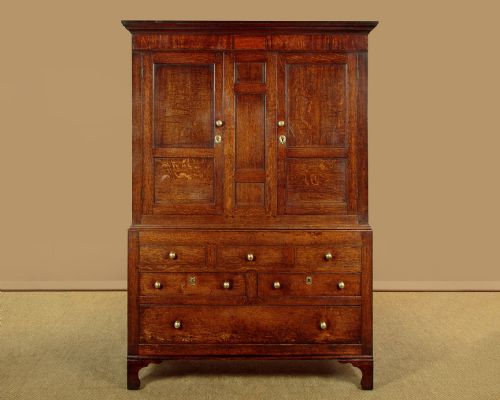
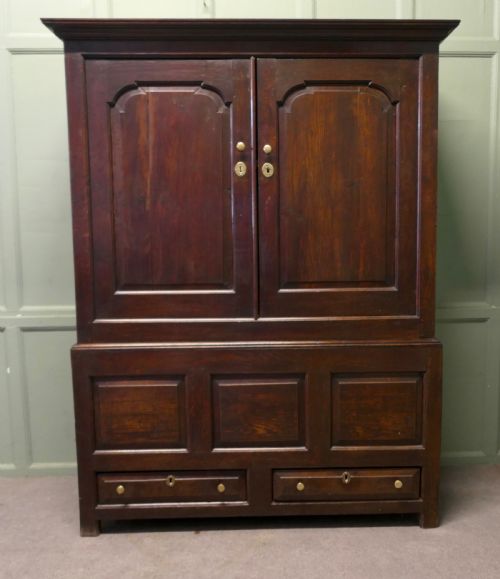
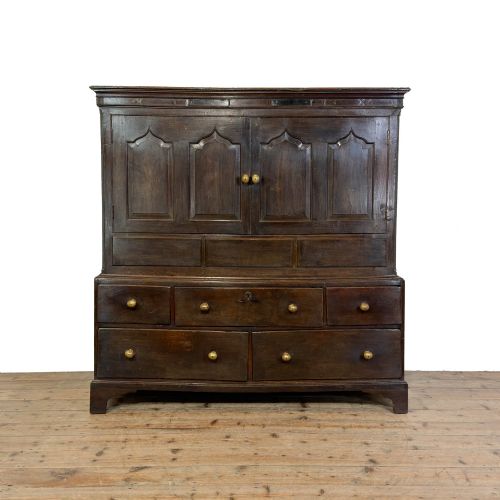
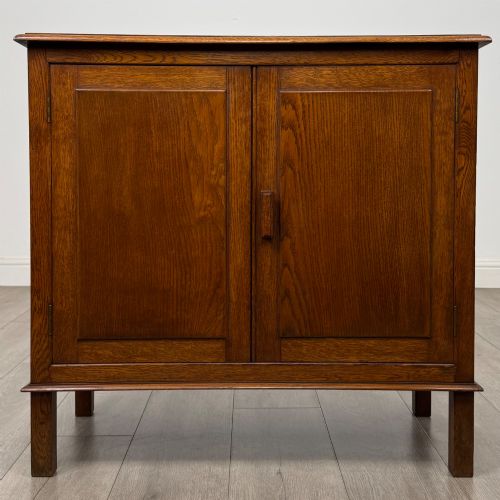

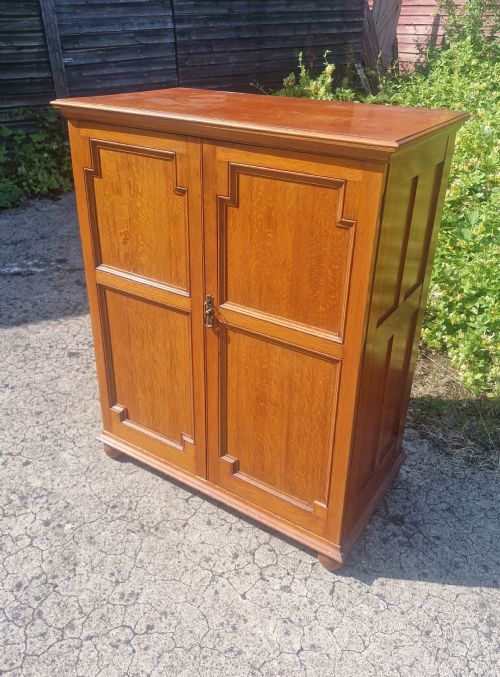
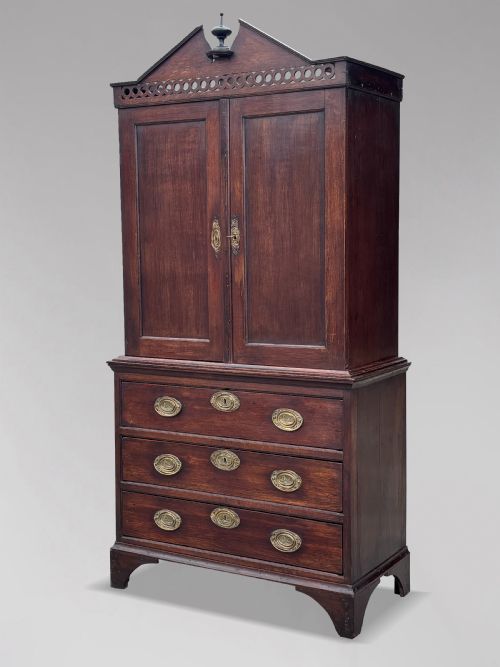
Panelled Oak Linen Cupboard
A panelled oak linen cupboard is a sturdy storage piece built to hold household textiles, spanning periods from the seventeenth century to the twentieth.
Panelled Oak Linen Cupboard
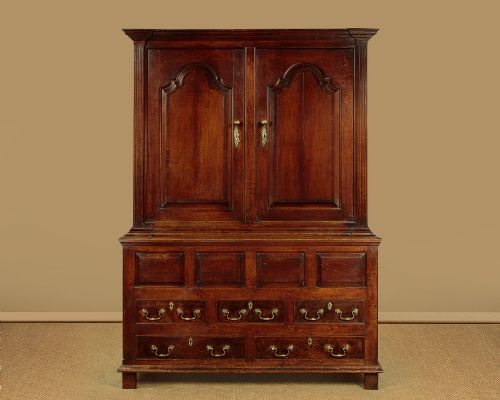
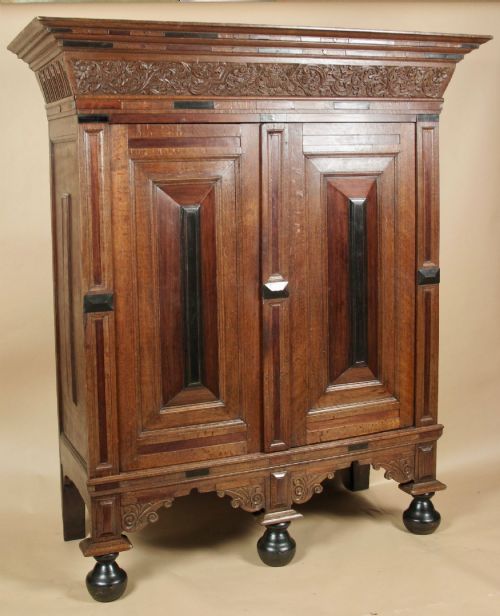
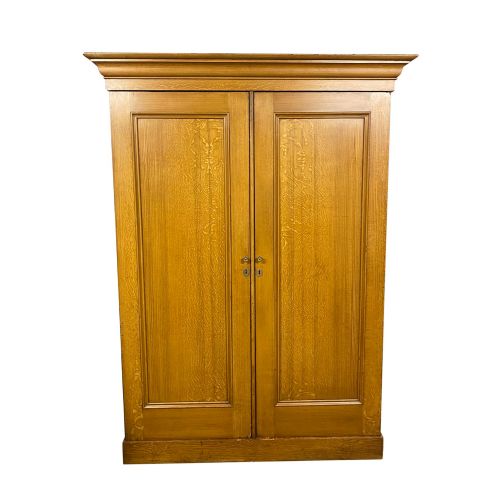
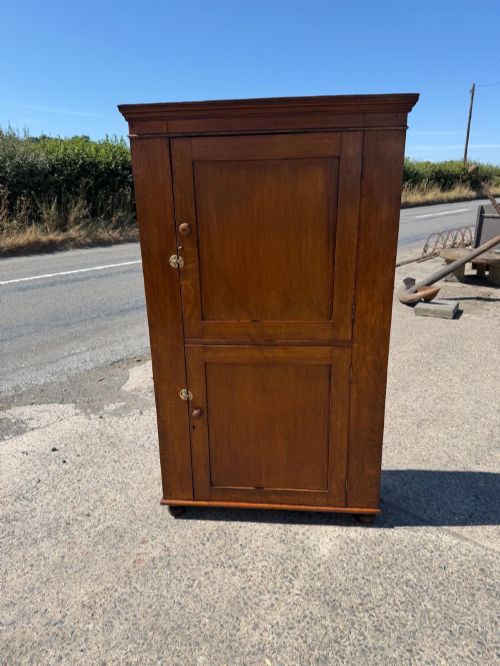
A panelled oak linen cupboard encompasses traditional storage forms such as press cupboards, housekeeper's cupboards, livery cupboards, and wardrobes. These items served domestic households across English, Welsh, Dutch, and regional European settings to store garments, linens, and provisions.
The pieces appearing on this page date predominantly from the Georgian and eighteenth-century eras, alongside seventeenth-century examples, nineteenth-century iterations, and early twentieth-century Edwardian pieces. Buyers frequently encounter vernacular Welsh designs and formal Georgian pieces built with heavy framing.
Forms vary from low press cupboards and dwarf housekeeper's furniture to tall compactum wardrobes and double-door storage units. Many retain structural compartmentalisation designed for folded textiles or hanging garments.
What varies in quality
Quality rests in the selection of the timber grain, the crispness of the panel mouldings, and the survival of original surface finishes and hardware. Pieces exhibiting tight growth rings in the oak and well-proportioned stiles demonstrate superior cabinet-making pedigree.
The integrity of the internal configuration, including original linen slides, shelving, and backboards, dictates the desirability of a press or housekeeper's cupboard. Alterations to internal spaces or replaced cornices shift a piece away from its original state.
Recorded finishes range from natural golden oak and carved decoration to decorative marquetry inlay and scumble faux paintwork.
The Panelled Oak Linen Cupboard Glossary
- Press cupboard
- A large storage piece featuring upper cabinet doors enclosing shelving or linen slides, often positioned above a base section containing drawers.
- Housekeeper's cupboard
- A tall functional storage unit traditionally utilised in large domestic properties for housing household linen, blankets, and provisions.
- Livery cupboard
- An antique storage cabinet historically used for keeping food or clothing, characterised by panelled doors and sometimes pierced ventilation slats.
- Scumble paint
- A decorative surface finish applied with translucent glazes to imitate the grain pattern of higher-status timbers like oak.
- Bun feet
- Rounded, flattened ball-shaped feet frequently supporting seventeenth and nineteenth-century case furniture.
- Compactum wardrobe
- A fitted wardrobe designed to maximise internal storage capacity through a combination of hanging space, drawers, and shelving compartments.
Panelled Oak Linen Cupboard: Frequently Asked Questions
What is a panelled oak linen cupboard?
A panelled oak linen cupboard is a traditional timber storage unit built with framed panels to house household textiles, garments, and domestic provisions. These items encompass press cupboards, housekeeper's furniture, and wardrobes dating across several centuries.
They reflect vernacular and formal cabinet-making traditions from British and European workshops, utilising sturdy oak construction designed for daily household utility.
How were these cupboards used historically?
Historically, these pieces stood in bedrooms, hallways, and estate service rooms to store freshly laundered linen, woollen blankets, and everyday garments. Housekeeper's cupboards also held dry stores and household accounts.
The internal shelving and sliding trays kept textiles organised and protected from dust in large residential properties.
How do I identify a Georgian piece?
Georgian examples are identified by proportion, classical mouldings, and construction methods characteristic of the eighteenth century. They frequently feature fielded oak panels, brass hardware, and pegged joinery.
Regional variants, such as Welsh country pieces, often display simpler geometric lines and heavier proportions compared to urban metropolitan furniture.
Can I use an antique wardrobe for modern clothes?
Many antique cupboards and wardrobes adapt well to modern clothing storage, though internal depths and hanging heights vary significantly by period. Earlier pieces often rely on shelves or linen slides rather than modern clothes rails.
Buyers should check internal dimensions carefully to ensure the cabinet accommodates contemporary coat hangers and garment lengths.