

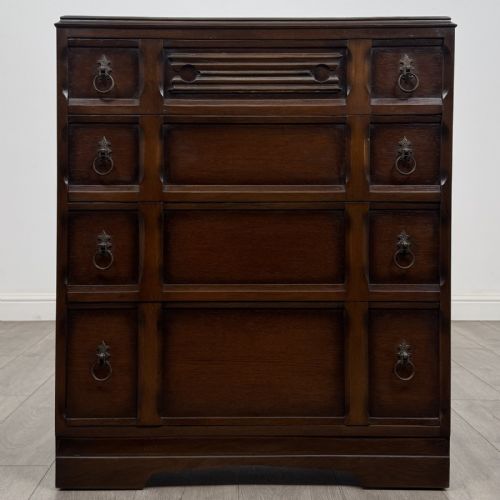
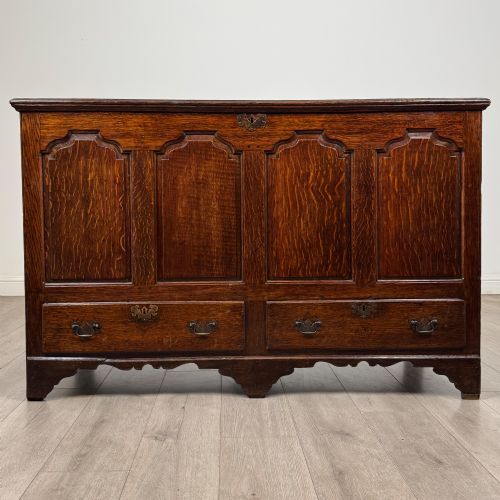
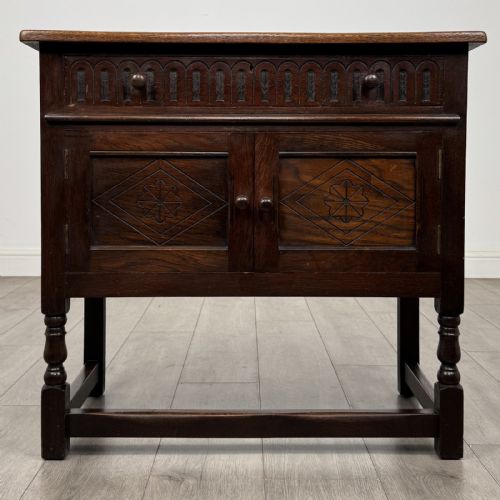
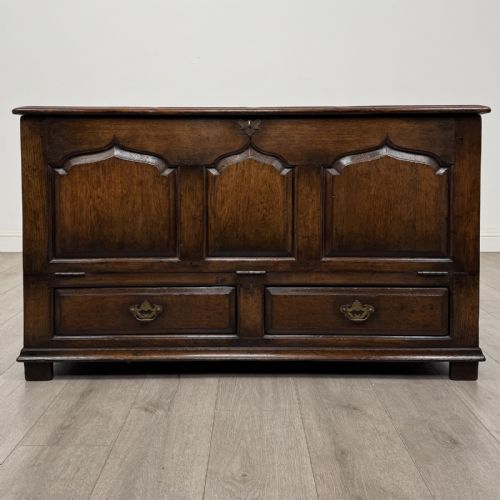
Panelled Oak Drawers
These panelled oak drawers combine centuries of sturdy carpentry with utilitarian storage, offering practical surfaces and deep compartments for domestic spaces.
Panelled Oak Drawers
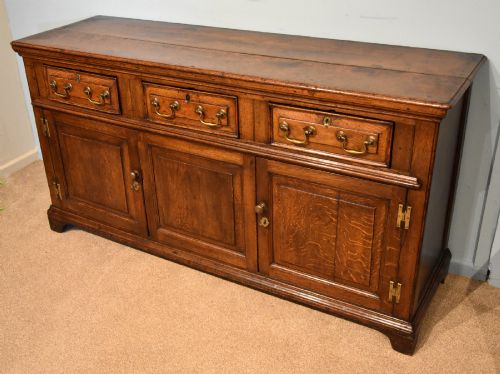
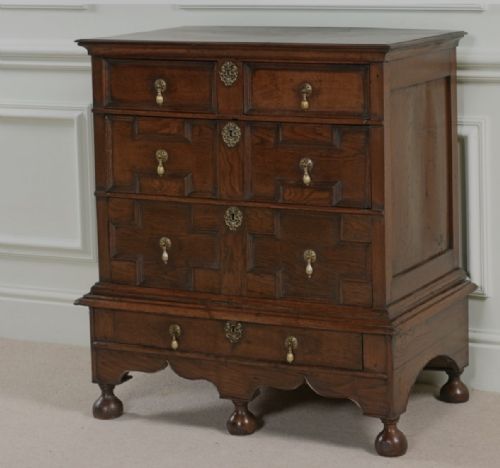
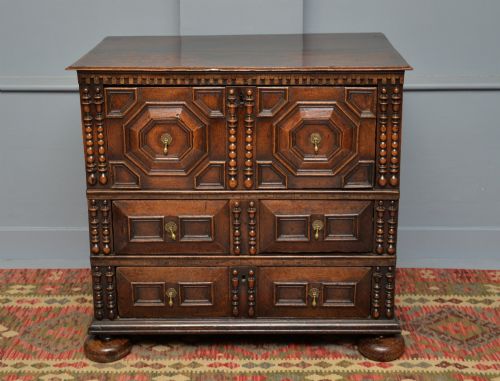
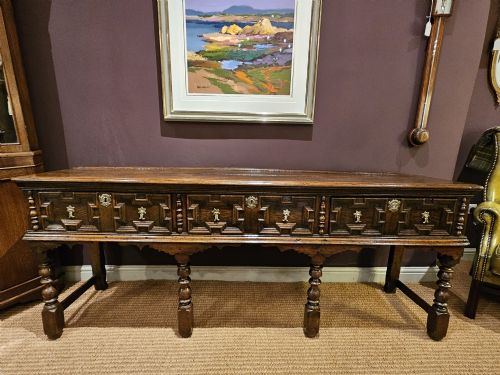
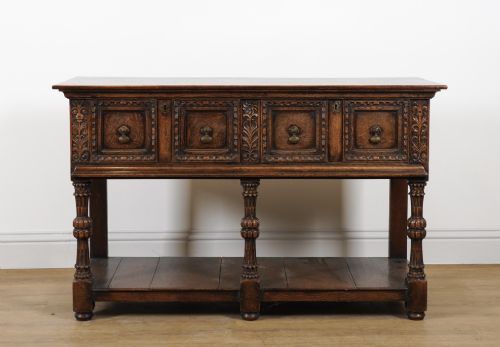
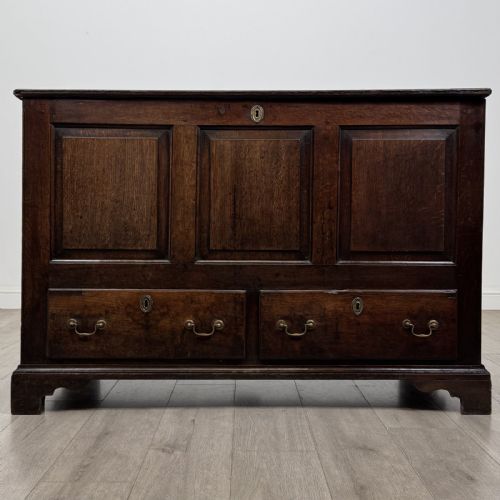
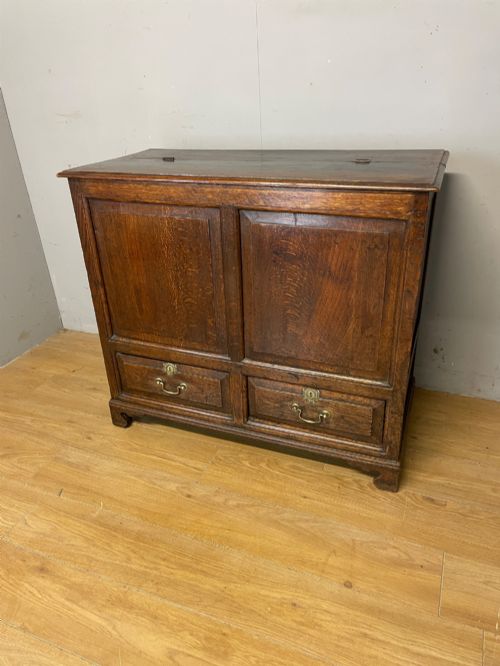
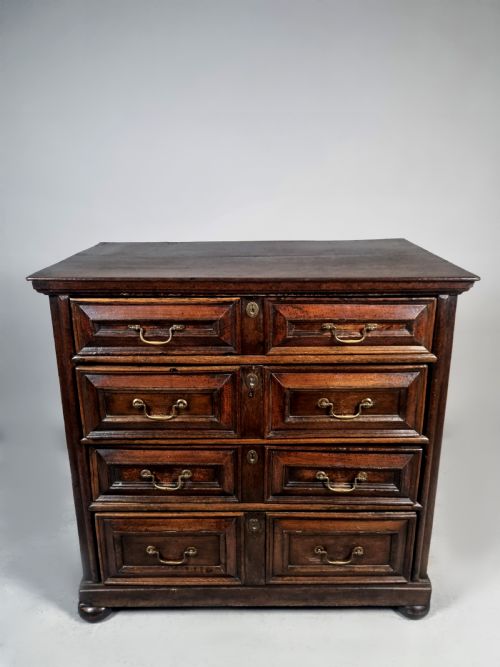
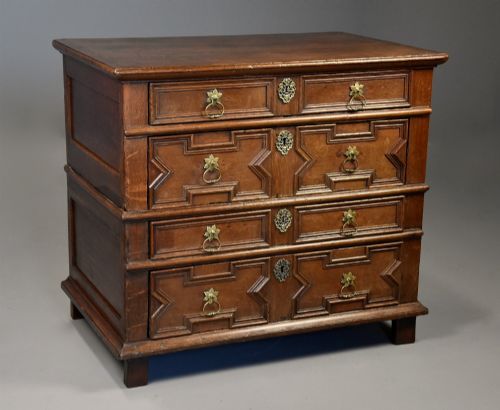
Panelled oak drawers encompass various forms including chests of drawers, mule chests, and dresser bases originating from the seventeenth century onward. Buyers exploring panelled oak drawers frequently encounter seventeenth-century geometric designs alongside eighteenth-century vernacular pieces and early twentieth-century revivals.
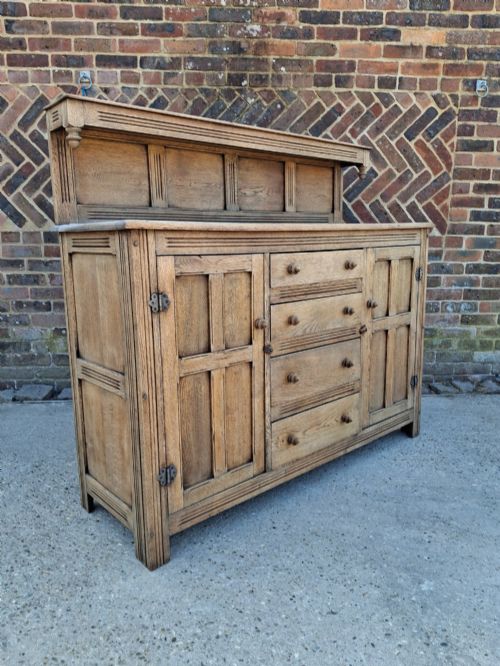
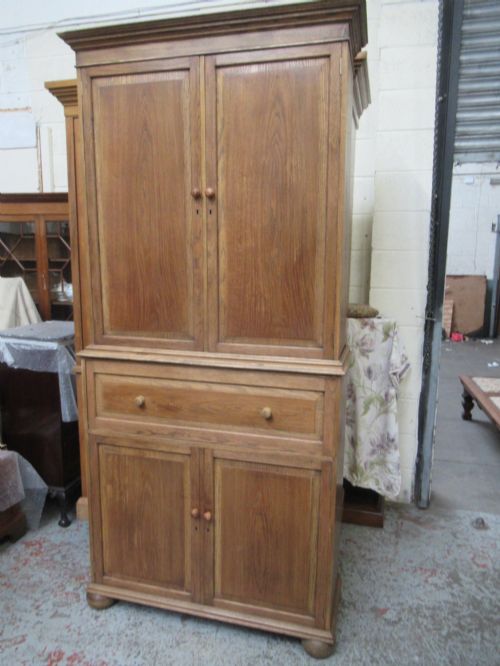
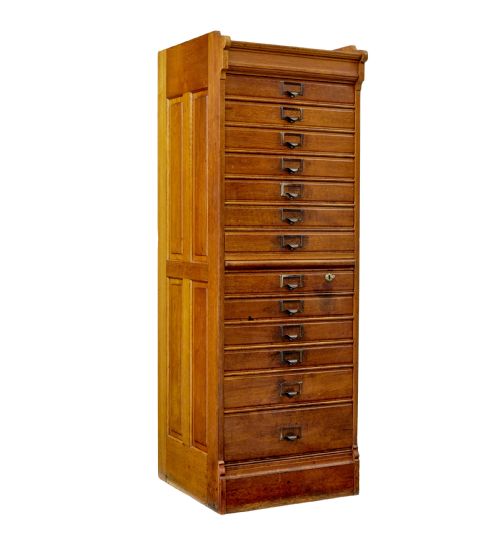
The selection ranges from Charles II moulded fronts and Welsh coffer bachs to Edwardian filing cabinets and sideboards. These items serve modern interiors by providing robust, compartmented storage built from durable hardwood.
The architectural structure relies heavily on framed panels, whether geometric mouldings on seventeenth-century carcases or simpler inset panels on later vernacular furniture. Each period brings distinct proportions, from low seventeenth-century proportions to taller Edwardian formats.
Materials and construction methods
Carpenters constructed these pieces primarily using solid oak, occasionally incorporating secondary timbers like fruitwood or walnut for contrast and marquetry inlay. Iron and brass hardware, including drop handles and keyplates, secure the structural elements and drawers.
Joinery techniques define the era, employing pegged mortise and tenon frames around floating panels to allow the timber to expand and contract naturally. Surface finishes range from ebonised treatments and painted accents to waxed patinas developed over centuries of use.
Panelled Oak Drawers Retail Price Guide 2026
Typical asking prices for panelled oak drawers among the pieces listed under this phrase on Sellingantiques today, from the lower quarter to the upper quarter. They describe what is for sale here now, not the wider market.
Current listings feature solid oak, walnut, brass, and iron across periods spanning from the seventeenth century to the Edwardian era.
Assessing quality in construction
Superior examples display crisp geometric mouldings, original hardware, and tight joinery that has survived centuries without major reconstruction. The depth of the timber's patina and the integrity of the original panel framing distinguish higher-tier pieces from later revivals or heavily altered items.
The sophistication of the carving and inlay work separates standard utility furniture from high-status commissions. Consistency in timber selection across the carcase and drawer linings indicates careful workshop practices.
The Panelled Oak Drawers Glossary
- Coffer bach
- A small Welsh chest, often featuring a single drawer beneath the main compartment, traditionally used for holding linen or valuables.
- Geometric moulding
- Applied mitred mouldings arranged in repeating geometric patterns across drawer fronts, typical of seventeenth-century joinery.
- Mule chest
- A storage chest fitted with one or more drawers at the base, bridging the transition between traditional coffers and modern chests of drawers.
- Raised gallery
- An upright wooden rim attached to the top surface of a sideboard or chest to prevent items from sliding off.
- Bun feet
- Rounded, slightly flattened wooden feet turned on a lathe, frequently found supporting seventeenth-century and revival case furniture.
Panelled Oak Drawers: Frequently Asked Questions
How do I date panelled oak drawers?
Dating relies on examining construction techniques, joinery marks, and the style of the mouldings or hardware. Seventeenth-century examples often use hand-riven oak with pegged frames, while later pieces incorporate standardised machine-sawn components.
Secondary woods and drawer linings also provide clues. Hand-cut dovetails generally point to the eighteenth century or earlier, whereas later revivals use more uniform mechanical joints.
What is a mule chest?
A mule chest is a traditional storage piece that combines a top-opening coffer with one or more drawers built into the base. This design evolved to provide easier access to belongings without needing to lift items out from the top.
These pieces served domestic households for storing garments, textiles, and household provisions. The lower drawers made frequent items accessible while the upper compartment held bulkier goods.
How should I maintain oak furniture?
Maintain oak surfaces by applying occasional coats of traditional beeswax to nourish the timber and preserve the patina. Avoid placing the furniture near direct heat sources or in fluctuating humidity to prevent wood splitting.
Dust regularly with a soft, dry cloth. Harsh chemical cleaners strip the historic finish and dry out the grain.
Are these drawers suitable for daily use?
Solid oak construction makes these drawers exceptionally durable for everyday storage needs in modern rooms. The robust hardwood frames handle regular opening and closing without losing structural stability.
Interior dimensions vary compared to modern furniture, so checking drawer depths helps ensure they suit specific storage requirements. Proper placement away from moisture protects the antique wood.