


Panelled Oak Bedstead
A panelled oak bedstead anchors a bedroom with solid joinery and honest grain, offering robust construction and enduring presence for daily use.
Panelled Oak Bedstead
When you search for a panelled oak bedstead, you encounter substantial timber furniture designed to form the centrepiece of a sleeping chamber. These pieces range from seventeenth-century tester frames to twentieth-century revival designs.
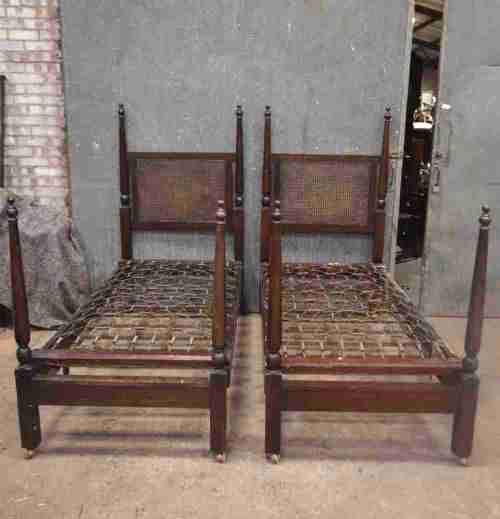
The versions most commonly met on this page span the Edwardian period and the nineteen-twenties, frequently appearing as single beds, small doubles, or four-poster configurations. Makers often drew inspiration from earlier Jacobean and seventeenth-century traditions.
Alongside standard wooden constructions, variations include pieces incorporating cane panels, fruitwood inlay, or iron elements. Some examples emerge directly from known workshops such as Heal's, while others reflect regional styles like French Breton or Colonial Revival.
Construction and materials
Makers built these bedsteads primarily using solid oak, sometimes accented with fruitwood inlay or combined with cane, brass, and iron hardware. Timber selection dictated the weight and structural integrity of the frame.
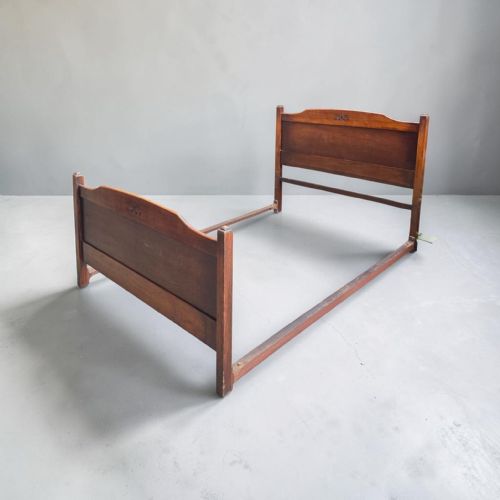
Joinery relied on traditional framing techniques to create recessed panels within the headboards and footboards. Carved details and applied moulding frequently decorated the stiles and rails of Edwardian and earlier examples.
Even sleeping quarters need good company, which explains why certain oak bedsteads arrive with ensuite bedside cabinets ready for duty.
Judging quality and craftsmanship
Quality in these bedsteads rests on the depth of the timber selection and the precision of the joinery. Superior examples display crisp, hand-carved detailing and well-balanced proportions across the headboard and posts.
The integration of secondary materials, such as finely woven cane or subtle fruitwood inlay, distinguishes finer workshop pieces from standard commercial production. Original components and intact structural framing elevate the integrity of the bedstead.
Heal s
The Panelled Oak Bedstead Glossary
- Tester bed
- A bed featuring a wooden canopy or ceiling supported by four posts. This grand form typically dates from the seventeenth century.
- Bergere
- A type of upholstered armchair, or in this context, a bed frame incorporating woven cane panels. It brings a lighter texture to heavy oak furniture.
- Jacobean
- A British design style spanning the early seventeenth century, characterised by straight lines and geometric panel moulding. Later revival pieces often emulate these motifs.
- Panelling
- The construction method of fitting thin wooden boards into a grooved frame. It provides strength and decorative relief to headboards and footboards.
Panelled Oak Bedstead: Frequently Asked Questions
How do I assemble an antique oak bedstead?
Most historic frames utilise traditional bed bolts or slot-in side rails that lock the headboard, footboard, and rails together securely. Take care to align the joints properly without forcing the timber.
Enlist a second person to support the heavy oak panels during assembly to avoid straining the original corner joints and hardware.
Will a standard mattress fit these antique beds?
Many older bedsteads vary slightly from modern standard sizing conventions, particularly seventeenth-century and early twentieth-century examples. Measure the internal frame dimensions carefully before ordering a mattress.
Slatted wooden bases or modern support platforms can often be custom-fitted within the side rails to accommodate contemporary mattresses safely.
How do I care for oak bed panels?
Maintain the timber by dusting regularly with a soft, dry cloth and applying natural beeswax occasionally to nourish the grain. Avoid placing the bedstead near direct heat sources or strong sunlight.
Keep humidity levels stable in the room to prevent the solid oak panels and joints from drying out or splitting over time.
How do I date a panelled oak bed?
Examine the construction marks, tool traces, and the style of the carving on the headboard panels. Seventeenth-century pieces display hand-riven timber characteristics, while Edwardian and later revival beds show machine-finished uniformity.
Check for maker labels or stamps, particularly on pieces from the early twentieth century, which often attribute the work to specific workshops.