




Dark Wood Four Poster
A dark wood four poster brings profound architectural presence to a bedroom, anchoring the room with centuries of cabinet-making history.
Dark Wood Four Poster
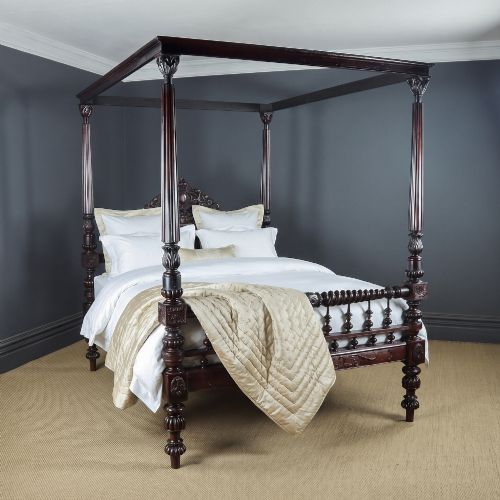
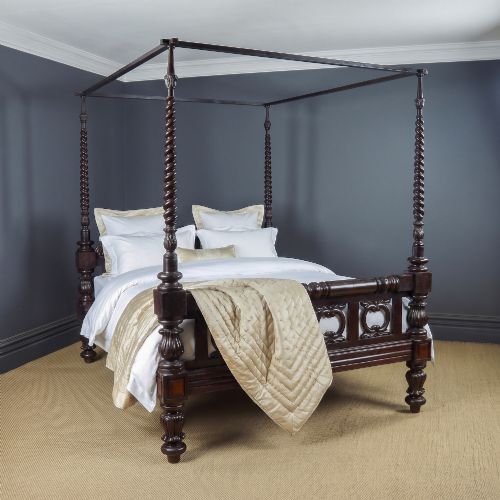
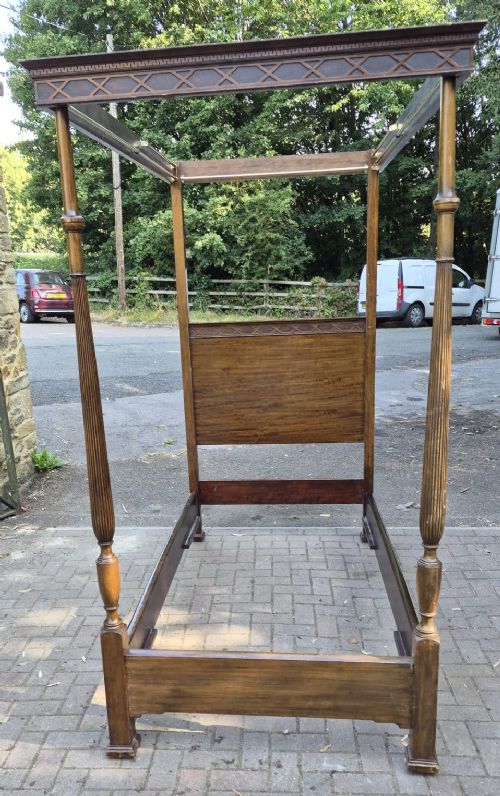
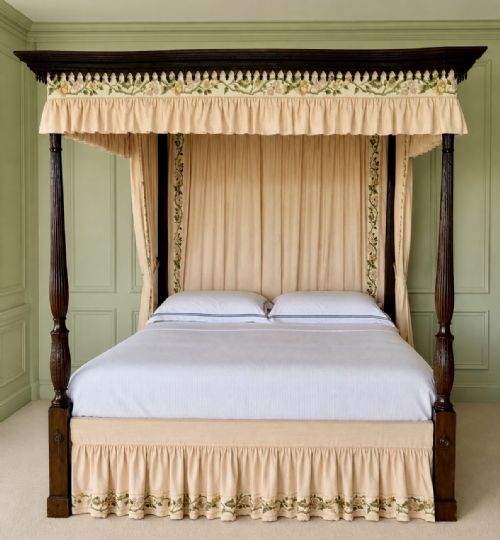
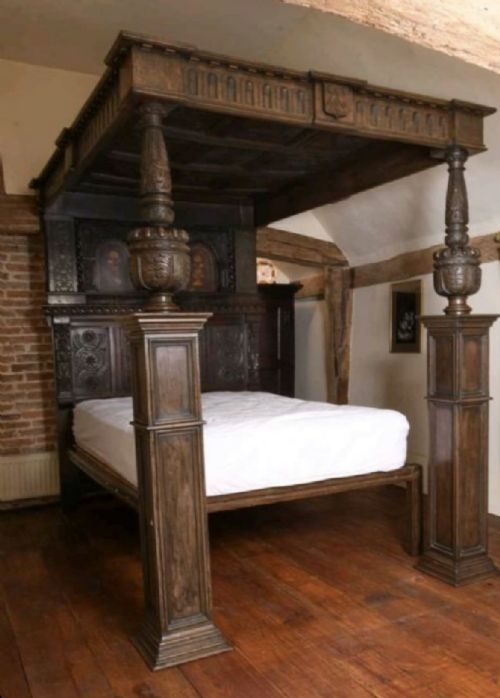
A dark wood four poster is a grand bedstead defined by four vertical posts supporting an overhead tester or canopy frame. Buyers searching for a dark wood four poster encounter substantial forms ranging from early oak examples to refined Regency and Victorian mahogany iterations.
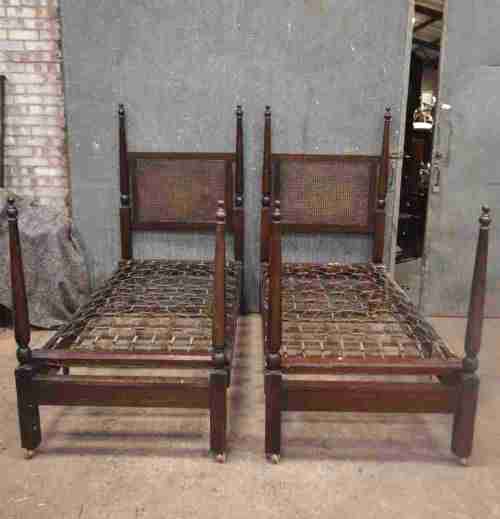
The selection encompasses full tester frames alongside architectural bed posts and matched pairs of single beds. Pieces span multiple centuries, touching upon 17th-century vernacular traditions through to Anglo-Indian Colonial interpretations and later Revival styles.
Materials and construction
Cabinet-makers relied heavily on dense hardwoods such as mahogany, oak, teak, and rosewood to support the weight of the tester frame and heavy textiles. Structural integrity depended upon deep hand-carving, pegged joinery, and turned carpentry.
Surfaces were frequently finished with cane panelling, applied fabric, or left with a rich natural polish to emphasise the deep grain of the timber.
Dark Wood Four Poster Retail Price Guide 2026
Typical asking prices for dark wood four poster among the pieces listed under this phrase on Sellingantiques today, from the lower quarter to the upper quarter. They describe what is for sale here now, not the wider market.
Early cabinet-makers occasionally carved hidden faces into the inner timber of bed posts to ward off nocturnal spirits.
Factors of distinction
Quality rests upon the depth and crispness of the hand-carved ornamentation on the posts and headboard, alongside the architectural proportions of the tester. Superior examples display cohesive timber selection and sophisticated regional design influences, such as Anglo-Indian or Regency styling.
The integrity of the original joints, the retention of matching posts, and the subtlety of the turning separate standard workshop output from exceptional commissions.
Howard & Sons
The Dark Wood Four Poster Glossary
- Tester
- The canopy frame suspended above a four poster bed. It often holds decorative drapery or architectural cornicing.
- Bergere
- A type of enclosed armchair or bed component featuring woven cane panels. It appears alongside timber frames in early 20th-century contexts.
- Hardwood
- Dense timber derived from broad-leaved trees such as mahogany, oak, and rosewood. These woods provide the necessary structural strength for large bedframes.
- Canopy
- The overhead covering of a bedstead. In historical terms, it defined the status and warmth of the sleeping quarters.
Dark Wood Four Poster: Frequently Asked Questions
How do I fit a modern mattress?
Many historical beds feature non-standard interior dimensions relative to contemporary sizing conventions. Custom slat systems or bespoke mattress fabrication may be required to bridge the gap safely.
Consult the internal dimensions of the specific frame carefully before committing to a mattress purchase to ensure proper alignment with the side rails.
Are these beds easy to dismantle?
Most antique four posters utilise traditional peg-and-tenon or bed-bolt joints designed for assembly and disassembly in domestic rooms. Professional installation is often recommended due to the sheer weight of the dense hardwood.
Careful handling protects the hand-carved posts and structural rails during the relocation process.
Can I use modern bedding with them?
Contemporary linens and duvets sit comfortably within these traditional structures, provided the interior width and length accommodate the chosen mattress size. The visual contrast between crisp modern bedding and dark timber creates a striking focal point.
Historical testers also allow for traditional drapery installation if you wish to recreate period aesthetics.
How do I date an oak tester?
Dating relies on examining the joinery techniques, tool marks left by hand-working, and the style of the turned posts. Earlier 17th-century examples typically show peg construction and simpler geometric carvings.
Later revival pieces from the Victorian era often mimic these earlier vernacular forms while employing machine-assisted precision.